ISTANBUL “Stop Operation Kagar! End the Massacres!”


At a protest held in front of the Consulate of India in Istanbul, the slogans “Stop Operation Kagar! End the Massacres!” were raised.

Upon the call of Partizan, Alınteri, Devrimci Hareket, Ezilenlerin Sosyalist Partisi, Kaldıraç, Komün, Mücadele Birliği, Sosyalist Meclisler Federasyonu and Sosyalist Mücadele İnisiyatifi, participants gathered in front of the consulate building located in Şişli. The consulate building was surrounded and guarded by police.

During the protest, where a banner reading “Stop Operation Kagar! End the Massacres!” was unfurled, the following slogans were frequently chanted:

“Stop Operation Kagar!”,

“Lal Salam, Lal Salam, Lal Salam to India!”,

“The Adivasi People Are Not Alone!”,

“Human Dignity Will Defeat Torture!”,

“Down with the Prisons, Freedom for the Prisoners!”,

“Comrade Hidma Is Immortal!”,

“Comrade Basavaraj Is Immortal!”,

“Long Live Revolutionary Solidarity!”

The press statement was read out in both Turkish and English.

The full statement

As in many parts of the world, the fascist state in India carries out massacres against revolutionary forces organized on the basis of the people’s interests and against the people themselves. The real power behind these massacres is the imperialists who plunder the land, forests, waters, underground and aboveground resources, and human labor of oppressed countries. What is happening in Gaza, Syria, and Turkey is also happening in India. We are here to protest this aggression against the peoples.

On 18 November in India, Madvi Hidma, who was under medical treatment, was captured along with eleven comrades and subsequently murdered. This attack, carried out within the scope of Operation Kagar, is the latest link in the chain of systematic massacres the Indian state has carried out for years.

manifestación contra el Premio de la Paz en Oslo, Noruega


Tjen Folket Media escribe que el 9 de diciembre, varias organizaciones y varios cientos de personas participaron en una manifestación contra el premio de “Nobel de la Paz” a María Corina Machado en Oslo.

En la descripción del evento se dice que el trasfondo de la manifestación es el apoyo de Machado a los comunicados de Trump sobre que Venezuela constituye una amenaza a EE.UU., al mismo tiempo qeu Trump amenaza abiertamente con comenzar la primera ofensiva militar en América Latina en 36 años. Además, de que el Premio de la Paz se usa activamente para legitimizar la amenaza de Trump de una intervención militar en Venezuela y los abusos a los ‘derechos del pueblo’.

“En los vídeos publicados en redes sociales, podemos escuchar eslóganes como “¡No más imperialismo!” y “¡El pueblo unido jamás será vencido!”, como declara Tjen Folket Media. Segú la cadena de noticias estatal NRK, entre 200-300 personas estuvieron en la manifestación.” Otras organizaciones estiman que la cantidad estuvo cerca de 500.

Friday, December 12, 2025

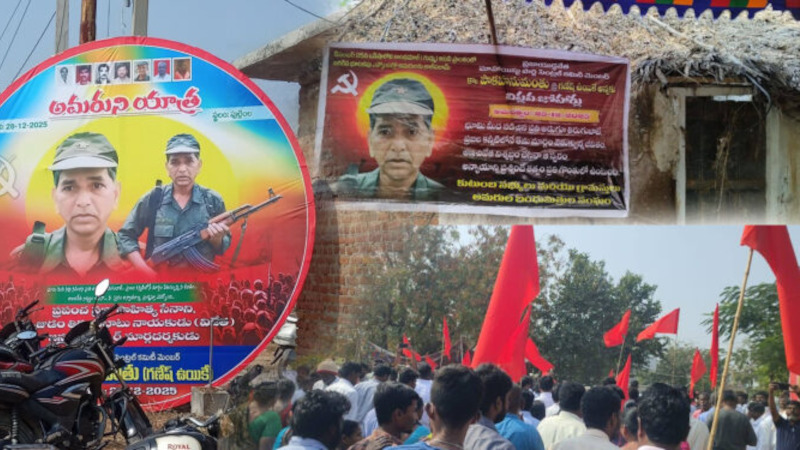
India - University students solidarize with the revolutionary movement and protest against the anti maoist reactionary demonstrators - ICSPWI info


University students solidarize with the revolutionary movement and protest against the anti maoist reactionary demonstrators

A newspaper article in the Indian bourgeois press reports the police detention of several university students from two universities in Hyderabad (the capital of the federal state of Telangana) in the Maradumilli area of ​​Andhra Pradesh, more than 400 kilometers away. The students were detained and later released following their visit to the area where a firefight reportedly took place a month ago between reactionary paramilitary forces and Maoist revolutionaries. The young students also protested an anti-Maoist sit-in organized by Hindutva fascists who support Prime Minister Modi's reactionary and fascist Hindutva government. In recent months, a solidarity movement has been developing in India among students, lawyers, intellectuals, and progressive sectors, in support of the Communist Party of India (Maoist) and against the genocidal military operation Kagaar against the revolutionary movement and the Adivasi tribal populations.                                                                                                 From the HansIndia english daily:

Students grilled after visit to Maoist encounter site
Created On: 7 Dec 2025
Police examined eight students from OU and UoH after they visited the Maredumilli encounter site but allowed them to leave Maredumilli (ASR district): Around eight students from prominent institutions, including Osmania University and the University of Hyderabad, were questioned by the police after they visited a Maoist encounter site in Alluri Sitaramaraju district, an official said on Saturday.
All of them were later allowed to leave, he added. Under 'Operation Sambhav', police gunned down 13 Maoists over two days — six on November 18 and seven on November 19 — in Maredumilli mandal of Alluri Sitaramaraju district.
Students were not detained. They were examined to prevent any further law-and-order issues," Alluri Sitaramaraju district superintendent of police (SP) Amit Bardar told PTI, adding that the students, who had visited the site on Friday, cooperated with police.
However, he said the students refused to share the contact details of their family members, which the police sought to inform them of the students' safety, especially at a time of increased Maoist activity along the Odisha border.
“We have information that there is heavy movement on the Odisha border now. Some trespassing has occurred from Chhattisgarh into Odisha,” Bardar said.
He noted that an altercation had broken out between the students and protesters campaigning against Maoism.
According to the SP, several protests and rallies have been held in recent days by families of victims of Maoist violence and pro-development groups.
A large rally was organised on November 20 at Annavaram to protest against Naxalism and Maoist activities, particularly by residents opposed to “foreign elements entering their areas," he said.
Following these protests, Bardar added, campaigners have submitted representations seeking the construction of roads, hospitals and other basic infrastructure.(PTI)

Actions Against Operation Kagar in Turkey and Germany - Partizan


Partizan, among other forces, will participate in a rally on December 13 under the slogan “Stop the Operation Kagar in India, End the Massacre.”.

In addition to denouncing murder, sexual violence and displacement, the call highlights that Operation Kagar is designed to “seize Indigenous lands and open the way for the plunder of lucrative mineral resources by overriding the rights of the local people, seeks to “cleanse” the region of Maoists in order to achieve this objective.”

Against this violence, revolutionary organizations in Turkey have called for a rally in front of the Indian consulate in Istanbul.

In the neighborhood of Blockdiek, in Bremen this week, Dem Volke Dienen reports that banners have appeared along the main street and the tram line denouncing Operation Kagaar and the attacks on the Adivasi population in India.

India: El Frente Democrático exige la liberación de presos políticos en Jalandhar, Punjab spanish traslation

 revolucion obrera

India: El Frente Democrático exige la liberación de presos políticos en Jalandhar, Punjab

India: El Frente Democrático exige la liberación de presos políticos en Jalandhar, Punjab 1

El Frente Democrático celebra una convención y protesta en Jalandhar contra los asesinatos en las regiones adivasi; exige la liberación de presos políticos en Jalandhar, Punjab

El Frente Democrático contra la Operación Cacería Verde (Punjab) organizó el 7 de diciembre una multitudinaria convención estatal y una protesta en Jalandhar para condenar los despiadados asesinatos de adivasis y revolucionarios maoístas, y exigir la liberación inmediata de los intelectuales, activistas democráticos y presos encarcelados que han cumplido sus condenas, pero continúan consumiéndose en la cárcel. Fue justo lo que recetó el médico, con una represión estatal que en los últimos tiempos ha trascendido los ámbitos neofascistas, sin precedentes. Esto dice mucho del movimiento democrático organizado de Punjab y continúa el legado de impulsar la protesta contra la autocracia del estado e iluminar la luz de la democracia genuina.

La convención, dedicada al Día Internacional de los Derechos Humanos, se celebró en el Salón Desh Bhagat Yadgar bajo la presidencia de los convocantes del Frente, el Dr. Parminder Singh, el Prof. AK Maleri, Yashpal y Boota Singh Mahimoodpur. Participaron agricultores, trabajadores, jóvenes, estudiantes, mujeres, organizaciones racionalistas, defensores de los derechos democráticos, escritores pro-pueblo, activistas culturales y artistas teatrales de todo el Punjab.

La reunión fue un éxito rotundo al simbolizar la mano implacable y la cristalización del protofascismo en el país, y fue un testimonio de la conciencia democrática revolucionaria y el potencial de organización de las masas oprimidas de Punjab, en todos los sectores. La ola de democracia revolucionaria brilló como una estrella. Los participantes hablaron en nombre del pueblo oprimido de la India en su conjunto. En ningún otro lugar del país se pudo presenciar una unidad tan amplia, abarcando estratos sociales tan diversos, ni un enfoque tan acertado para enfrentar la opresión estatal. Los oradores literalmente atacaron la ola de protofascismo o neofascismo en su punto más duro.

Thursday, December 11, 2025

Protest the U.S. Imperialist Conspiracy of Aggression in Venezuela! Resist the Unjust Capitalist-Imperialist Wars Across the World!

 Statement

Date: 4 September 2025

Protest the U.S. Imperialist Conspiracy of Aggression in Venezuela! Resist the Unjust Capitalist-Imperialist Wars Across the World!

Last September, US imperialism deployed military warships and naval forces in the Caribbean Sea near Venezuela and has extrajudicially killed more than 80 people under the pretext of so-called "drug eradication." At the same time, a conspiracy of military aggression remains underway to overthrow the anti-imperialist government of Maduro in Venezuela. We, the People's Democratic Students Unity, strongly condemn and denounce this act of military aggression by US imperialism an enemy of the people around the world against Venezuela.

As is true for the rest of the world, US imperialism seeks to seize Venezuela's oil and other mineral resources. For this reason, it continues to exert various forms of pressure on the anti-imperialist government and the people of that country. This has placed the national independence and sovereignty of Venezuela's government and people under severe threat. In the past, US imperialism has directly launched military invasions in countries such as Iraq and Egypt in the Middle East to seize mineral resources and control trade inflicting brutal harm upon the lives, survival, and security of the people there. In the same way today, Donald Trump seeks, through military aggression or coercion, to overthrow the Maduro government in Venezuela and seize control of its oil and mineral resources, imposing its unjust war upon the people. Any disruption of oil production in Venezuela will further worsen the global market system, as we witnessed recently in the war between NATO's puppet government in Ukraine and imperialist Russia. It must be noted that all of this is a result of the overall crisis of the global capitalist-imperialist world system.

We, the People's Democratic Students Unity, vehemently oppose the vile conspiracy of US imperialism to wage military aggression and impose unjust war upon the people of Venezuela, just as we oppose the brutal genocide carried out by Zionist Israel with the direct backing and support of US imperialism in Palestine. For the genuine liberation of our country and the entire world, and in the struggle for the establishment of socialism and communism, it is the historical responsibility of students, youths, and young workers like us to stand as comrades-in-struggle alongside the workers and peasants of the world. Standing in solidarity with, supporting, and assisting wherever possible the struggles of the people against capitalism and imperialism in any part of the world is therefore our revolutionary internationalist duty. Thus, in today's struggle, we stand with the people of Venezuela, with the oppressed people of Palestine, and with the Maoist revolutionaries and exploited Adivasi people of Dandakaranya. In this fight, we raise our voices on their side. We, the People's Democratic Students Unity, call upon revolutionary, democratic, and progressive people, organizations, and individuals around the world- Oppose US imperialist aggression in Venezuela! For the liberation of the people, unite and build struggle and organization against this capitalist-imperialist world order, guided by the philosophy of Marxism-Leninism-Maoism, to establish socialism and communism across nations!

Circulated by the Central Convening Committee of People's Democratic Students Unity Bangla Desh

Wednesday, December 10, 2025

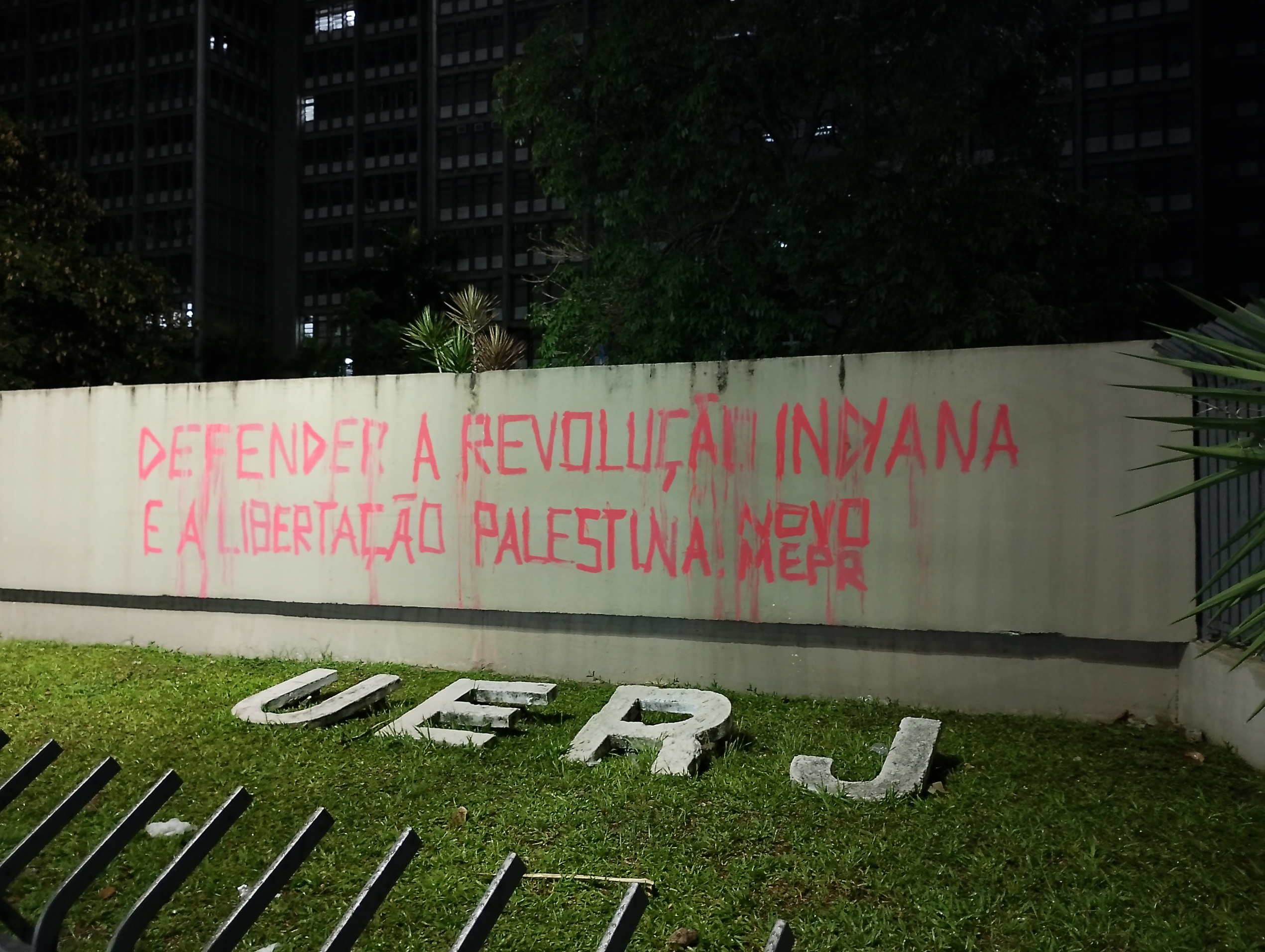
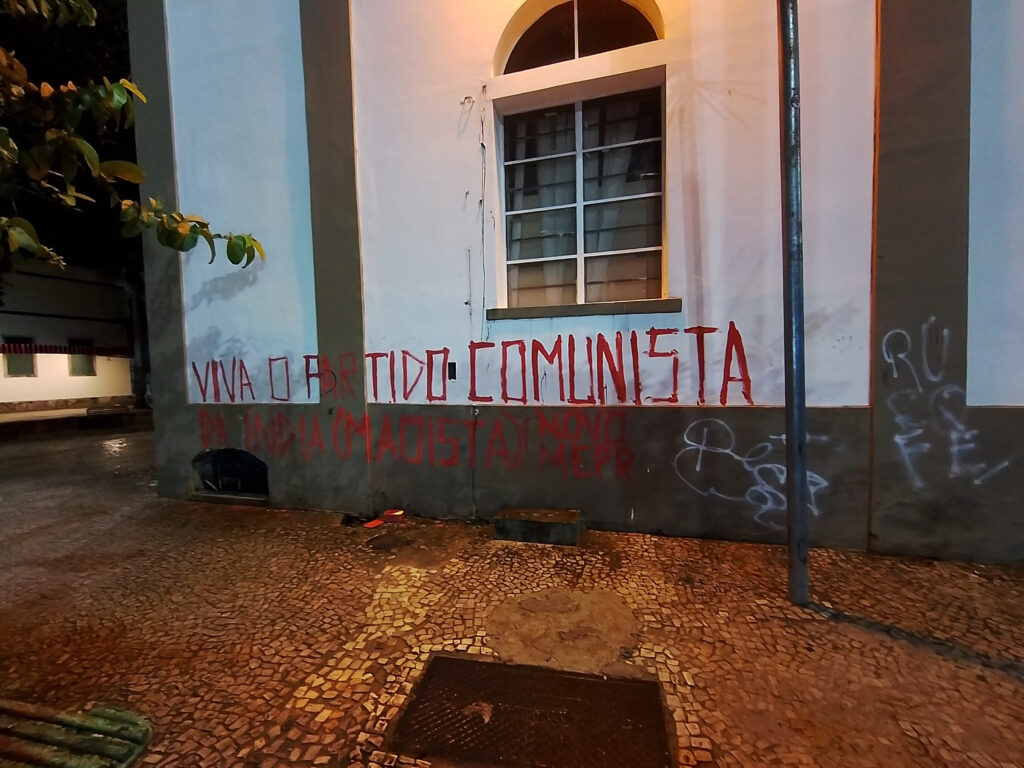
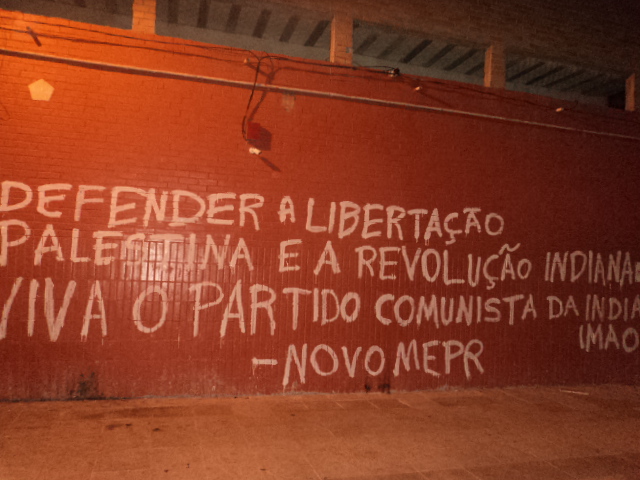
Brasil - Novo MEPR: Evento denuncia genocídio palestino, Operação Kagaar...


Revista Revolução Cultural

Novo MEPR: Evento denuncia genocídio palestino, Operação Kagaar e pede fim de convênio da UERJ com universidade israelense


Na terça (02), ocorreu, na Universidade Estadual do Rio de Janeiro (UERJ), o evento "O papel das universidades contra o genocídio do povo palestino: pelo fim dos convênios com o Estado sionista de Israel" organizado pela Asduerj, com apoio da Federação Árabe Palestina no Brasil (FEPAL) e do Novo Movimento Estudantil Popular Revolucionário (Novo MEPR).


O ato político-cultural contou com a participação do coletivo "Artistas pela Palestina" (@artistas_pela_palestina/ig), que recitou um poema e realizaram uma apresentação musical, dentre elas, "Palestina Livre", uma canção autoral de solidariedade ao povo palestino.


O Novo MEPR levantou a necessidade de, ao erguer a bandeira do povo palestino, denunciar o genocídio que tem sido promovido pelo Estado indiano e seu exército reacionário com a brutal Operação Kagaar (operação final), que, mirando atacar e exterminar o Partido Comunista da Índia (Maoista), tem promovido um genocídio étnico contra o povo adivasi e o extermínio da população camponesa, que já somam 600 mortos e diversos feridos até o momento desta nota.


Breno Altman, jornalista e fundador do portal Opera Mundi, relatou a história do sionismo e de sua ocupação sobre a Palestina; sua origem como corrente supremacista do judaísmo até seu desenvolvimento como processo de colonização com a criação e manutenção do Estado Sionista de Israel, supremacista e com base no apartheid sobre o povo palestino. Apontando também que a Resistência Palestina sempre esteve presente, apoiada pelos povos e demais países árabes

Revolutionary Communist Party of Nepal (RCPN) for elections' boykott


The Revolutionary Communist Party of Nepal (RCPN) has officially called for a vigorous boycott of the upcoming elections to the House of Representatives, scheduled for March 5. This decision was announced following the Party’s fourth Central Committee meeting. The party disclosed its stance during a press conference in Bharatpur, Chitwan.

In its statement, the RCPN reiterated its commitment to scientific socialism, emphasizing that the strategy for the forthcoming elections must align with its foundational principles. The party aims to forge a united front comprising patriots, republican revolutionaries, democrats, and leftists while advocating for an independent and unified government.

The party’s statement criticized both the ruling coalition and opposition parties, asserting they have neglected the fundamental issues affecting the people. They cited rising concerns such as corruption, impunity, unemployment, border disputes, and challenges to national sovereignty. According to RCPN, the current electoral process merely serves as a facade for the ruling parties, distracting from the pressing problems faced by the people.

The election has been characterized by the party as a means to “re-legitimize the brutal system,” claiming that the constitution, parliament, and the entire state apparatus inhibit progress toward social justice, equality, and scientific socialism. Gaurav stated, “Elections do not solve the real problems of the people; they only revive failed leadership. We move forward with a scientific socialist program in the direction of a new democratic revolution.”

The RCPN plans to cultivate a broad alliance through national political coordination among democratic, republican, revolutionary democratic, and leftist factions. In doing so, the party aims to spearhead a mass movement and escalate its struggle by encouraging widespread public participation.

In closing, General Secretary reaffirmed the party’s commitment to boycott the elections and to strengthen its revolutionary efforts against attacks on the people under the guise of electoral processes.

,

India - Democratic Front Holds Convention and Protest in Jalandhar Against Killings in Adivasi Regions; Demands Release of Political Prisoners Jalandhar, Punjab

The Democratic Front against Operation Green Hunt (Punjab), on December 7th, organised a massive state-level convention and a protest in Jalandhar, condemning the merciless killings of Adivasis and Maoist revolutionaries, and demanding the immediate release of incarcerated intellectuals, democratic activists, and prisoners who have completed their sentences but continue to languish in jail. It was literally just what the doctor ordered, with state repression in recent times transcending neo fascist realms, not previously scaled. It speaks volumes of the organised democratic movement of Punjab and continues the legacy of the state in churning protest against autocracy and illuminating the light of genuine democracy.

The convention, dedicated to International Human Rights Day, was held at Desh Bhagat Yadgar Hall under the chairpersonship of the Front’s conveners Dr. Parminder Singh, Prof. A.K. Maleri, Yashpal, and Boota Singh Mahimoodpur. Participants included farmers, workers, youth, students, women, rationalist organisations, defenders of democratic rights, pro-people writers, cultural activists, and theatre practitioners from across Punjab.

The gathering was a resounding success in symbolising the ruthless hand and crystallising of proto-fascism in the country and was a testament to the revolutionary democratic consciousness and potential to organise in the oppressed masses of Punjab, in all sectors. The wave of revolutionary democracy shimmered like a star. The participants spoke for the oppressed people of India, as a whole. No where in the country could one witness such broad-based unity, comprising such diverse strata of society., or such a correct approach to confronting state oppression. The speakers literally hit the wave of proto- or neo-fascism at it’s hardest point.


Addressing the gathering, activist Nadeem Khan, senior journalist Prashant Rahi, activist Asif Iqbal Tanha, and democratic rights advocate Dr. Navsharan stated that democratic and human rights are being extinguished through arrests, incarceration, and what they characterised as fabricated or framed criminal cases. They expressed grave concern over repeated public statements by the union Home minister calling on insurgents to “surrender or be prepared to die,” categorising such slandering or abuse as symbolising of consolidating escalating security approach. “Those in power may possess coercive force, but in the end, truth will prevail,” said Nadeem Khan.

Speakers alleged that large-scale paramilitary operations in Bastar and other Adivasi regions are cementing the path for corporate access to water, forests, land, and mineral resources. They also reflected on how the use of drones and helicopters in operations that have inflicted civilian harm, and warned that similar type repression could extend to people’s movements in other regions, including Punjab. They also cited cases involving Advocate Surendra Gadling, artists associated with Kabir Kala Manch, and activists and scholars including Umar Khalid and Gulfisha Fatima, summarising how many have been jailed under false branding such as “urban Naxal” and through other “manufactured narratives.” 

Speakers further emphasised hat, due to delays in the justice system, hundreds of prisoners inspite of having completed their sentences continue to languish in jails across the country. They called for a more powerful and wider based democratic movement to secure the release of such detainees.

Resolutions Adopted Resolutions presented by Jaswinder Phagwara were unanimously adopted by a show of hands. The gathering demanded: An immediate halt to all military and paramilitary operations in Adivasi areas, including “Operation Kagar.” An end “fake encounters,” and the removal of police camps from affected regions. Withdrawal of police and paramilitary forces and an end to aerial attacks, including the use of drones and helicopters. An end to the robbery of natural resources to corporate interests, and rejection of an “anti-people economic model.” Repeal of “black laws,” including UAPA and AFSPA, and withdrawal of anti-worker labour codes. Dissolution of the National Investigation Agency (NIA). Release of intellectuals and democratic rights activists jailed in what the speakers called fabricated cases, including those linked to the Delhi violence and Bhima Koregaon matters. Immediate release of activists detained for years without trial and all prisoners who have completed their sentences. A halt to privatisation and immediate reinstatement of suspended roadways employees. An end to state actions that restrict the democratic right to organise and to protest.

Revolutionary singers Gurmeet Juj and Dharminder Masani presented songs at the event. Refreshments (langar) were arranged by the Punjab Khet Mazdoor Union. The main speakers were honoured with books and an emblem commemorating Ghadri Gulab Kaur. At the conclusion of the protest outside Desh Bhagat Yadgar Hall, Dr. Parminder Singh thanked all participating organisations and supporters on behalf of the Front’s conveners and state committee. The convention ended with massive rally, illuminating the torch of revolutionary spirit at it’s utmost intensity.


Harsh Thakor is freelance journalist. Thanks information from Paraminder Singh and Buta Singh of the Democratic Front of Punjab


Tuesday, December 9, 2025

Genocidal Zionist Femicide In Gaza: Apartheid Israel Vastly Exceeds World In Killing Females


The core ethos of Humanity is Kindness and Truth but this is grossly violated by genocidally racist, egregiously mendacious and endlessly thieving Apartheid Israel. In its killing of Palestinians in the ongoing Gaza Genocide US-backed Apartheid Israel hugely  exceeds all countries in the killing of children and journalists on a per capita basis. Femicide is the intentional killing of women or girls and in the Gaza Genocide Apartheid Israel vastly exceeds all countries in the killing of females.

According to the World Population Review: “Femicide, also known as feminicide, is the intentional murder of women or girls because of their gender. It’s a severe form of violence against women, often occurring within intimate relationships or families, and can be linked to harmful gender roles, religious beliefs, or social practices” [1].

However in actuality the definition is broader and encompasses “intentional” killing of females  for a variety of reasons  e.g. the extreme narcissism of the psychotic killers, rejection of sexual advances, infidelity, sexist cultural reasons, and likely victim complaint to police about sexual and other violent abuse. Thus  in Australia  “femicides per year per 100K females” in 2025 is 0.4 [1]. The population of Australia in 2025 is 27.5 million and about 50%  (13.75 million) are female, this indicating (0.4 deaths per 100,000 females) x 137.5 = 55 femicides per year. This accords  with the Australian Institute of Criminology that estimated 72 female homicides in about 2023 (female population about 13.45 million) for  “femicides per year per 100K females” of (72 deaths / 13.45 million females) / 10 = 0.54 [2].

(A). 1.26 “femicides per year per 100K females” for the World.

Australian Institute of Health and Welfare (AIHW): “Females are disproportionately the victims of intimate partner and domestic homicide around the world. A United Nations Office on Drugs and Crime (UNODC) report on homicide estimated that globally, while 81% of all homicide victims were male, 82% of intimate partner homicide victims were female and 64% of intimate partner/family-related homicide victims were female in 2017 (UNODC 2019). A UNODC report on femicides estimated that 3 in 5 (60% or 51,100) women and girls who were intentionally killed worldwide in 2023 were killed by an intimate partner or other family member (UNODC and UN Women 2024). For Oceania (which includes Australia), the intimate partner/family-related homicide rate for females was 1.5 victims per 100,000 females in the population. Across global regions, the intimate partner/family-related homicide rate ranged from 0.6 victims per 100,000 females in Europe to 2.9 victims per 100,000 females in Africa (UNODC and UN Women 2024)” [3].

INDIA: CPI (Maoist): Build a public movement to hold a judicial inquiry into the murders of Comrades Hidma (Maredumilli) and Shankar (Rampachodavaram) and punish the culprits severely


We strongly condemn the false allegations made by Manish Kunjam and Soni Sodi that Comrade Devji was responsible for the murder of Comrade Hidmal.

Our Central Committee member and Secretary of Dandakaranya Special Zonal Committee, Comrade Hidmal, and his 5 comrades were arrested by the Andhra Pradesh Police on November 15, tortured for three days and killed on November 18. Comrade Hidmal went for treatment through a timber merchant from Vijayawada on October 27. After that, a few others went. The police spread a fabricated story that they were killed in an encounter in the Maredumilli forest area of Alluri Seetharamaraju district by capturing and killing six unarmed Comrades Hidmal and his associates. On November 19, the police announced that 7 more Maoists were killed in an encounter in Rampachodavaram mandal of the same district. In the incident of November 19, unarmed AOV S.Z.C. member Comrade Shankar and six others were arrested and killed in a fake encounter. The Dandakaranya Special Zonal Committee is offering revolutionary salutes to the comrades who lost their lives in the killings committed by the enemy armed forces on November 18 and 19. It is vowing to fight till the last breath for the realization of their aspirations. It expresses its deepest condolences and sympathy to their family members and relatives.

In both these incidents, it is now understood that the people who took them out were police informers. On November 9, a company party committee member named Kosal escaped from our forces and surrendered to the Telangana police. He knew the travel details of Comrade Hidmal and that he was outside. As soon as Kosal fled, our comrades informed Comrade Hidmal about this and asked him to come inside immediately. After receiving this information, he would have been ready to come inside with his team. When the people who took him informed the police about this, the police arrested Comrade Hidmal and the other 5 people with him, killed them and fabricated an encounter story. Similarly, when the people who took Shankar also informed the police, the Comrade Hidmal team and Comrade Shankar team were arrested at the same time and tortured and murdered by the Andhra Pradesh police. In both these incidents, the three responsible for the arrest of 50 Maoists in Vijayawada, N.T.R., Konaseema, Eluru and Kakinada districts were a wood trader-furniture trader from Vijayawada, a builder-civil contractor, and a contractor doing ITDA work in Alluri Seetharamaraju district. Kosal, who fled from us along with them and informed the police about the whereabouts of our comrades, was also responsible.
After Kosal fled from us, the police caught our comrades and killed 13 of them and arrested 50.

Philippines - freedom all political prisoners


Le 3 décembre 2025, à l’occasion de la Journée internationale de solidarité avec les prisonnieres politiques, les organisations Karapatan et Selda ont organisé une manifestation devant le Département de la Justice aux Philippines pour réclamer la libération des 696 prisonniers politiques En particulier, elles dénoncent l’utilisation des lois anti-terroristes comme instruments de répression.

Sunday, December 7, 2025

Italy - for the freedom of palestinian prisoners in Italy - info Soccorso Rosso proletario


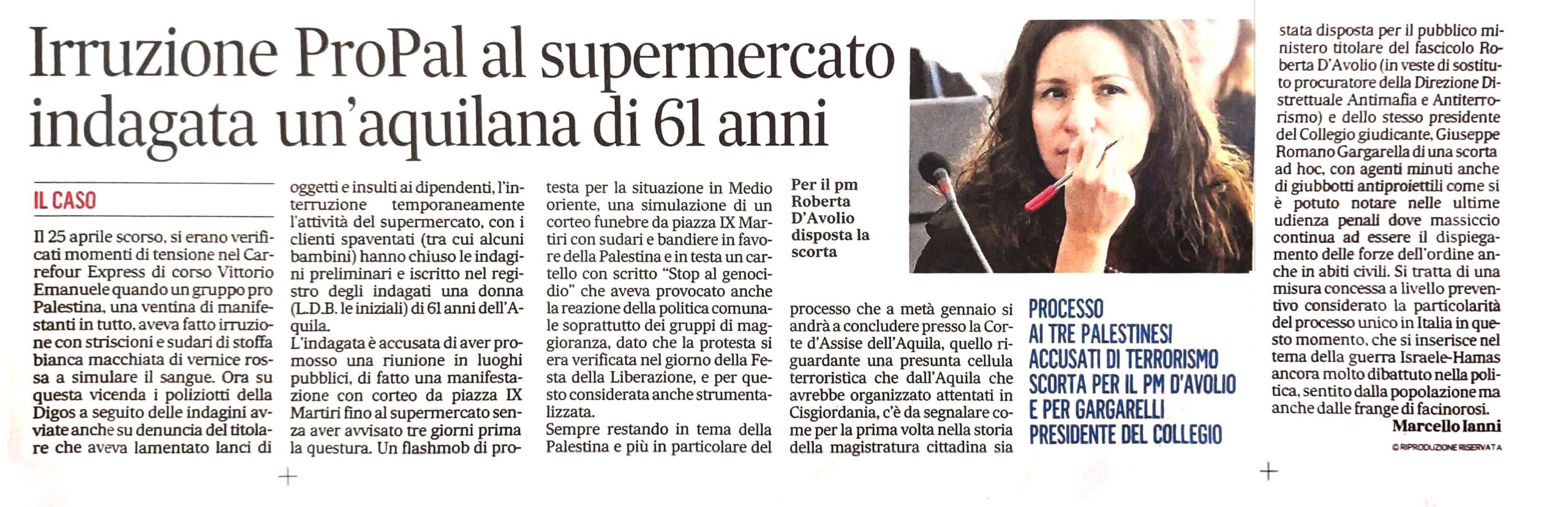
Processo alla Resistenza palestinese: chiesti 12 anni per Anan, 9 per Ali, 7 per Mansour

Una richiesta di pena veramente sproporzionata quella fatta dalla pm Roberta D’Avolio al termine di una requisitoria durata 4 ore.

Quando è stato processato da un tribunale militare israeliano, Anan fu condannato a 3 anni di reclusione e 5 di libertà vigilata per fatti risalenti alla seconda intifada, mentre la pm dell’Aquila ne ha chiesti 12 per fatti certamente meno gravi – e poi quali fatti?

Nella sua requisitoria, oltre a palesi falsità, come il fatto che la richiesta di estradizione di Anan fosse stata avanzata dall’autorità palestinese, l’accusa ha letteralmente LETTO gli atti delle indagini preliminari, senza tenere conto del dibattimento, né delle valutazioni espresse lo scorso anno dalla Corte di Cassazione, che su elementi analoghi non aveva ravvisato neppure la gravità indiziaria iniziale per Alì e Mansour. L’accusa non ha minimamente tenuto in considerazione le testimonianze della difesa, neppure quella odierna, che non ha provato neanche a contestare, come se avesse in mano un copione già scritto, o più semplicemente non era in grado di farlo, o entrambe.

Tantomeno si è sforzata di considerare il contesto politico e materiale in cui gli imputati avrebbero agito, né le attenuanti prospettate.

Di tutt’altro livello la testimonianza, invece, del Prof. Chiodelli. In circa un’ora, non solo ha parlato della connotazione ultra ortodossa di Avnei Hefetz per quanto riguarda l’insediamento civile, ma ha dato tutta una serie di riferimenti e informazioni sui checkpoint, sulle vie di accesso alla colonia e sulle restrizioni della mobilità per i palestinesi, oltre ad acclarare la presenza di una base militare all’ingresso dell’insediamento e di 2 checkpoint a ridosso di essa.

Chiodelli ha descritto la colonia come una struttura territoriale a tre cerchi, presidiata nel cerchio più esterno dall’esercito israeliano, che può intervenire in forze anche con i carri armati, il cerchio intermedio è presidiato dalle brigate, ossia unità dell’esercito che presidiano le colonie dentro i territori occupati, il cerchio più interno è presidiato dalle unità territoriali, formate da coloni residenti armati che possono svolgere funzioni di polizia insieme all’esercito. Queste squadre paramilitari sono composte da ex soldati e spesso sono anche all’interno della base militare, sono strettamente collegate con l’esercito da un coordinatore civile per la sicurezza nominato dall’esercito.

Chiodelli ha anche mostrato una foto del cancello di ingresso della base militare in cui si vede un cartello con il logo del battaglione che ha stazionato nella base di Avnei Hefetz fino al 2023, Il battaglione Netzah Yehuda.

L’unità Netzah Yehuda, che fa parte della brigata Kfir, è stata istituita nel 1999 per accogliere israeliani provenienti da comunità ultraortodosse e nazionaliste che non erano accettate da nessuna altra unità delle Idf. Nel corso degli anni è così diventata meta per molti “Hilltop youth”, cioè i giovani coloni di estrema destra, provenienti degli insediamenti illegali israeliani in Cisgiordania. L’unità è composta da soli uomini ed è stata impiegata per anni proprio in Cisgiordania, guadagnando fama per la brutalità riservata ai palestinesi.

Nel 2023 il battaglione è stato spostato nelle alture del Golan, per poi essere impiegato nel nord della Striscia di Gaza.

Anche questa volta la solidarietà non è mancata, una sessantina di persone hanno presidiato il Tribunale, soprattutto all’interno dell’aula, per salutare Anan e mostrare tutto il proprio schifo nei confronti dell’accusa.
“Vergogna” è stato urlato al termine dell’udienza, “Israele fascista stato terrorista”. E una bandiera palestinese è spuntata per salutare Anan, nonostante i controlli all’ingresso del tribunale fossero elevatissimi, tanto da non fare entrare neanche le borracce di acqua.
Ma bisogna fare di più. L’udienza finale del processo è prevista per il 19 dicembre, con l’arringa della difesa, eventuali dichiarazioni degli imputati e, forse, sentenza. Per allora bisognerà fare il massimo sforzo possibile, anche in termini di opinione pubblica, per spostare la giuria sul giusto binario.

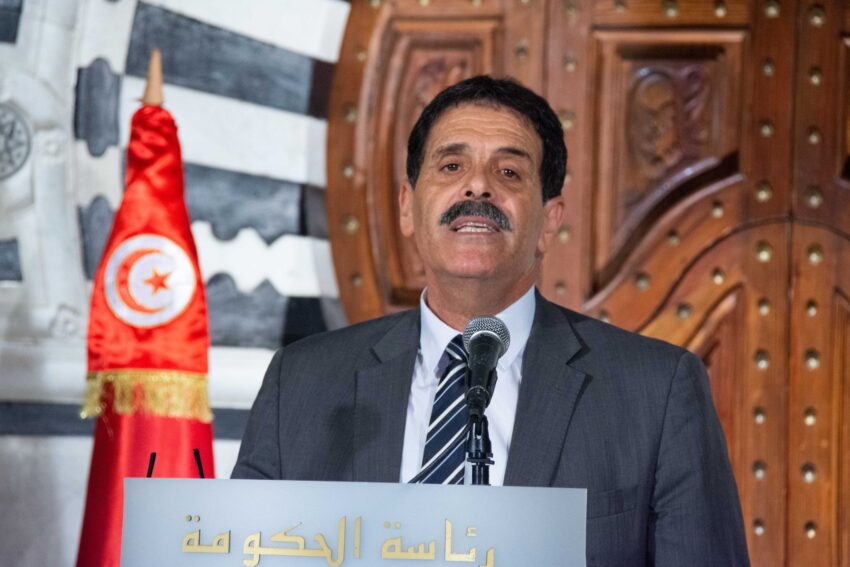
Tunisia: Eternal glory to comrade Madvi Hidma!


Tunisia: Eternal glory to comrade Madvi Hidma!


Unofficial translation

On November 18, 2025, the Indian reaction "executed" Comrade Mavi Hidma, a member of the Central Committee of the Communist Party of India (Maoist), accompanied by his wife and four Maoist fighters. The killing during a battle between the Maoist rebels and government forces was not, as the official authorities claimed, but was carried out after their arrest, was isolated from the weapon, then tortured them, and finally killed, with the claim that they were killed during a military confrontation.

It is with great sadness that the activists of the el Kadehin Party have received the news of the cold-blooded executions, and they reach out to the comrades of the Communist Party of India (Maoist), the People’s Liberation Army and the toiling and revolting masses in India.

El Kadehin Party condemns the killing of a cowardly reactionary authorities in India in an attempt to eradicate the people’s revolutionary war as part of Kagaar’s brutal campaign, which it has been carrying out for nearly two years.

We emphasizes that such practices will not discourage the rebels, fighters and fighters of the People’s Liberation Army in India and the Communist Party of India (Maoist), but that the blood of comrade Hamda and his heroism during his revolutionary militancy will be the best weapon to sharpen their resolve and their illusion of more struggle and fuel the toiling and oppressed masses to rise and walk the path of the protracted people’s war to victory and the establishment of popular democracy and socialism.

Eternal glory of Comrade Hidma!

Long live to the Communist Party of India (Maoist)!

Victory for the protracted people's war!

Long live Marxism-Leninism-Maoism!

El Kadehin Party, November 22, 2025

The rotten bureaucrat capitalist system will only be flushed out through revolution

The recent revelations of former representative Zaldy Co implicating Marcos Jr. and other top officials of the reactionary regime have only validated the longstanding position of the national democratic forces: the rotten stench of bureaucrat capitalist system has its source in Malacañang. The attempts of the regime (and accommodated politicians from Akbayan and affiliated groups) to cover up the clear links to Marcos Jr. himself have proven entirely ineffective. As the commander-in-thief throws scapegoat after scapegoat under the proverbial bus to save his own skin, he is only digging a deeper ditch for himself to fall into.

The growing calls of broad segments of Philippine society to oust Marcos and the similarly-corrupt Sara Duterte reflects the long-standing clamor for fundamental changes in Philippine society. The explosive situation brought about by the current political crisis presents a clear challenge to revolutionary forces, including those belonging to the STEM sector: we must all grasp the situation firmly and with conviction to forward the national democratic aspirations of the Filipino people. The situation presents us with the opportunity to agitate, organize, and mobilize ever-increasing numbers of scientists, engineers, professionals, and students against bureaucrat capitalism, feudalism, and imperialism. It is exactly in these trying and volatile times that we can make tangible contributions to advancing the national democratic revolution.

Ousting the top two officials of the reactionary regime and calling for the imprisonment and persecution of all officials involved in corruption corresponds with the urgent clamor for accountability from the corrupt officials of the bureaucrat capitalist regime. More and more Filipinos have also come to reject the reactionary electoral process as the means to address corruption, and are now pushing to establish a national transition council in the wake of a successful ouster. Should this opportunity present itself, this council will become a new battleground to forward critical reforms in line with genuine agrarian reform, national industrialization, and other national democratic demands.

Tribunal de los Pueblos sobre la Complicidad con el Genocidio Palestino en el Estado Español. Resolución final

Irlande : Plusieurs militants républicains arrêtés puis libérés sous caution


Le 1ᵉʳ décembre dernier, plusieurs militants républicains ont été arrêtés alors qu’ils tentaient d’empêcher une expulsion dans le quartier de Dublin 7. Les militants, détenus durant la nuit et agressés par la Garda, ont comparu au tribunal avant d’être libérés sous caution. Par ailleurs, la police a utilisé du gaz pour déloger les occupants 

Wednesday, December 3, 2025

Abdallah libéré : quel bilan tirer de notre action militante ? - CUpLGIA


Le texte ci-dessous est le dernier texte qui sera publié par la

CUpLGIA. Ainsi qu’il est écrit dans sa conclusion, ses militants s’engagent d’ores et déjà à poursuivre le combat – sous d’autres formes organisées – « contre le capitalisme, l’impérialisme, le sionisme et toute la réaction, et en défense aux prisonniers révolutionnaires en général et en particulier aux prisonniers palestiniens et libanais ». Quant à ce blog, s’il ne sera plus alimenté, il subsistera néanmoins comme témoignage militant d’une lutte victorieuse.

Abdallah libéré :

quel bilan tirer de notre action militante ?

Pourquoi un bilan ?

Georges Ibrahim Abdallah est sorti le 25 juillet 2025 de la prison française où il était détenu ; dans la foulée, il a été expulsé par avion au Liban, son pays, dans lequel il est arrivé libre le même jour.

Nous, militantes et militants qui nous sommes engagé•e•s et avons agi collectivement pour exiger et gagner la libération de Georges Abdallah, nous avons jugé nécessaire de revenir sur cette expérience politique et d’en tirer les leçons utiles pour nos combats présents et futurs.

Ce bilan, nous le faisons en ayant connu – une fois n’est pas coutume – le succès de notre action, puisque l’objectif que nous nous étions fixé a été atteint. Bien entendu, nous ne pouvons nous glorifier du fait que Georges Abdallah a dû attendre la 41e année de sa détention, soit 26 ans après la fin de sa peine incompressible, pour être enfin libéré. Mais comme la justice française l’avait elle-même reconnu lors d’une de ses dernières audiences : Georges Abdallah était devenu « un prisonnier bien encombrant ». Et le jugement décidant sa libération justifia d’ailleurs celle-ci, entre autres, par le fait que son maintien en détention constituait « un trouble à l’ordre public en raison des nombreuses et régulières manifestations en sa faveur. » Pour sa part, notre camarade a eu ces mots : « S’ils ont accepté de me libérer, c’est grâce à cette mobilisation qui est ascendante. »

Nous sommes donc en droit de considérer que notre action a joué son rôle dans cette libération. Nous pouvons même légitimement parler de victoire politique – ou de bataille gagnée, quel que soit le terme choisi. Et si nous savons bien que cette victoire a été avant tout gagnée par notre camarade lui-même, dont la devise était d’ailleurs intangible : « La victoire ou la victoire ! », il nous incombe maintenant à nous, ses camarades, d’analyser et de comprendre les raisons de ce succès.

Ce bilan, élaboré collectivement et proposé par des militants ayant animé la Campagne Unitaire pour la Libération de Georges Ibrahim Abdallah (CUpLGIA) depuis sa création en 2015, relève selon nous d’un principe démocratique : nous nous devons, par respect des militant•e•s, de rendre des comptes à tou•te•s celles et ceux qui se sont engagé•e•s dans le combat commun. Notre bilan s’adresse ainsi aux camarades qui ont participé à cette lutte, certains depuis de longues années, d’autres depuis plus récemment.

Pour nous, faire le bilan de notre expérience politique commune est en soi une partie intégrante de cette expérience politique, une expérience politique qu’il est essentiel de transmettre : si nous assumons bien sûr l’action que nous avons menée, celle-ci ne prend tout son sens que resituée dans un processus historique bien plus long, qui exige de s’appuyer sur l’héritage des combats précédents. Toute lutte s’inscrit en réalité dans un combat de longue haleine : si elle doit se nourrir des expériences passées, elle doit pouvoir nourrir nos expériences à venir. Et toute bataille gagnée, même partielle, est ainsi un jalon pour les victoires futures.

Avant tout, nous nous devons de rappeler que nos pensées vont vers celles et ceux qui nous ont quitté•e•s avant l’heure de la victoire, mais dont l’optimisme de la pratique et les noms restent en nous bien présents et dont nous reconnaissons toute la part qu’ils et elles ont prise dans le succès obtenu : Joëlle Aubron, Suzanne, Catherine, Pierrot, Évelyne, l’autre Joëlle, Gilbert, Patrice, Gisèle, Yoann, Badia…

Libérer Georges Abdallah : de quel combat s’agit-il ?

Big antifa demostration in Germany - info


Alemania. Según el medio Dem Volke Dienen (Servir al Pueblo), más de 50 mil personas participaron en la mayor movilización antifascista de la historia de la República Federal de Alemania (RFA). La ciudad de Giessen ha sido el epicentro de las protestas, cuyo objetivo era boicotear el congreso fundacional de la organización juvenil del AfD (Alternativa para Alemania, un partido político de extrema derecha). De acuerdo con algunos reportes, al menos 15 mil personas montaron 16 puntos de bloqueo, logrando retrasar la instalación del congreso por algunas horas. La policía por su parte había desplegado a 6 mil elementos con cañones de agua, gases lacrimógenos y equipos antimotines para abrir paso a los fachos. La policía golpeó a mucha gente, principalmente a aquellos que se manifestaban de forma pacífica, como lo denuncian algunas ONG alemanas. Pero el estado de fuerza no le alcanzó al imperialismo alemán para disolver las manifestaciones. Varios enfrentamientos se registraron entre la policía y la multitud antifascista que abarrotó las calles; seguramente los cerdos esperaban menor resistencia, pero encontraron lo contrario. Los manifestantes han dicho correctamente “no podemos permitir una nueva juventud hitleriana” y tienen razón. En medio de las escaramuzas un diputado del AfD, Julian Schmidt, resultó con lesiones leves por el puñetazo certero de un manifestante antifascista que ha sido detenido y acusado de “ataques contra un político”. Al respecto la policía ha informado… “El miembro del ‘Bundestag’ alemán habría sido agredido y herido alrededor de las 8:30 horas (7.30 GMT). El sospechoso fue detenido inmediatamente”. Saludamos la determinación y combatividad de los trabajadores y la juventud alemana que luchan contra el fascismo. ¡El fascismo avanza si no se le combate! ¡Muerte a AfD y sus juventudes hitlerianas!

India - The Four Labour Codes: Analysis and Political Prospects


December 3, 2025

This analysis was received from an activist in West Bengal

Introduction

The BJP led NDA government has replaced twenty nine labour laws with four consolidated labour codes, passed in Parliament but not yet fully implemented because the necessary rules have not been framed everywhere. With the exception of three states, including West Bengal, all states have already framed these rules. Earlier in 2025, the Union Ministry of Labour announced that the codes would come into force nationwide from 1 April. That deadline has passed, but the underlying legal architecture remains in place. Since labour is on the Concurrent List, the central government can at any time issue a notification extending central rules to those states that have not framed their own. When the codes eventually come into force across India, they will apply in West Bengal as well.

It is worth recalling that in 2020 the central government introduced three farm laws and four labour codes in the Lok Sabha as bills. The farmers’ movement, through a sustained and determined struggle, forced the withdrawal of the farm laws. Trade unions across the country did protest against the labour codes, but the intensity of that resistance was much weaker. It is this weakness of the workers’ movement that has allowed the labour codes to advance to the threshold of implementation.

This essay argues that the four labour codes represent a qualitative attack on the working class. They hollow out the specific protections embedded in earlier labour laws, push vast numbers of workers outside the purview of law, and seek to break class unity by turning workers into isolated individuals. They must be understood not simply as a technocratic “rationalisation” of labour regulation, but as a central component of the contemporary fascist project in India.

From specific protections to generic codes

The labour laws that came into being in earlier periods were not arbitrary or purely administrative. Each emerged from specific struggles and had a definite objective: regulation of contract labour, protection against arbitrary dismissal, recognition of trade unions, equal wages, and so on. By contrast, the labour codes stitch together widely different laws and subjects into four broad categories. In the process, the specific aims of each earlier law are diluted or removed.

THE GENERAL SITUATION IN TURKISH PRISONS - info@upotudak.net


THE GENERAL SITUATION IN TURKISH PRISONS

It is clear that the conflict between imperialist poles brings more poverty to all oppressed sections of society, especially the working class. The internal structures of imperialist states are rapidly being redesigned within the framework of a new imperialist war of division. The atmosphere of occupation and war that has been created affects the lives of workers in many ways through reactionary laws and the deprivation of rights. The fiscal deficits resulting from increased military budgets are burdening workers with new taxes. All reactionary states are attempting to reorganize themselves in preparation for this process. With the power that comes from controlling production and capital, bourgeois states operate the mechanisms called law and justice in their own interests. Of course, in such processes, the most dynamic and "threatening" segments of society will be targeted first. This is why the working class and its organized forces, as well as nations and representatives fighting for national liberation, are being targeted on our world. The rulers' approach to this is manifested either by eliminating them or filling prisons with them. For those they do not kill, they resort to isolation and torture by applying a complete enemy law in prisons.

During the 23 years of AKP rule, the state organization, which is the instrument of power of the Turkish ruling classes, has been reshaped according to the interests of imperialism and the local comprador bourgeoisie. The "Presidential Government System" is the current form of this transformation; it is an authoritarian restructuring required by capital and imperialist centers.

With this system, all state institutions have been centralized to serve the interests of imperialist monopolies and the ruling clique, not the people. Every sphere, from the judiciary to the media, from the legislature to the security forces, has been turned into an instrument of capital's oppression.

Underlying this restructuring is a "strategy of suppressing rebellion." The organizing efforts of the people, the working class, and revolutionary forces are being dismantled; unions, democratic institutions, and social opposition are being crushed. Any segment not aligned with the ruling bloc, even opposition within the system, is labeled "terrorist," and the space for politics is being completely narrowed.

In such a process, even the spontaneous economic and democratic demands of the working class and the laboring people have been suppressed by fascist tyranny. Strikes have been banned, demonstrations dispersed, and arrests and detentions have become routine. The Turkish state does not even comply with its own laws on paper. The immunity of members of parliament has been disregarded, and thousands of people have been imprisoned for their thoughts.

In Turkey's political history, prisons have been one of the state's tools for suppressing political opposition. Social opposition movements, particularly left-wing socialist movements, the Kurdish freedom struggle, women's and student resistance, have often been criminalized under the label of "terrorism," and thousands of people have been imprisoned for political reasons. Anti-terrorism laws enacted in recent years have almost completely restricted freedom of thought and expression. Thousands of people who shared posts on social media, participated in union actions, or engaged in journalism have been arrested on charges of "organization propaganda" or "organization membership."

The judiciary has largely lost its independence; prisons are filled with thousands of people detained for their political identity. This process symbolizes a period in which the suppression of opposition through the judiciary has become systematic.

Despite all the pressure, political prisoners in Turkey have created a strong tradition of resistance throughout history. From the hunger strikes of 1984 to the resistance in Type F prisons in the 2000s, political prisoners have continued their struggle not only with their bodies but also with their writings, practices of solidarity, and collective consciousness.

RIGHTS VIOLATIONS IN TURKISH PRISONS AND PRESSURES ON POLITICAL PRISONERS

For many years, prisons in Turkey have not only been places of punishment but also served as one of the political regime's tools for suppressing opposition. Particularly in the last decade, increasing authoritarianism, the politicization of the legal system, and the curtailment of freedom of thought have resulted in the arrest of thousands of people for political reasons. This situation has made rights violations in prisons systematic. Journalists, trade unionists, students, academics, and politicians are often sent to prison on charges of "membership in an organization" or "propaganda" simply for expressing their thoughts. In Turkey, where the judiciary has not been independent since its establishment, court proceedings have become a "political purge tool." Thus, prisons have turned into political spaces holding thousands of people from different segments of the social opposition.

Among the more than forty thousand political prisoners in Turkish prisons, there are people against whom no evidence of a crime has been found, as well as people who have been held hostage in prison despite having reports stating that over seventy percent of them are unfit to remain in prison.  Attacks against local and immigrant revolutionaries are intensifying in European countries. In many countries, particularly Germany and France, new laws have been passed to attack forces that criticize and oppose the imperialist capitalist system in street protests, arresting them en masse and imprisoning them for many years. 

Germany, relying on sections 129a and b of its constitution, is imposing long prison sentences on immigrant revolutionaries for fighting against fascist oppression in their own countries. Kurdish and Turkish revolutionaries, in particular, are subject to these attacks. 

Political prisoners are deprived not only of their freedom but also of their basic human rights. Reports by organizations such as the Turkish Human Rights Foundation (TİHV), the Human Rights Association (İHD), and the Civil Society Association in the Penitentiary System (CİSST) show that human rights violations in prisons are widespread and structural.

The main violations of rights are as follows:

-Restriction of the right to communication and correspondence: Political prisoners' letters are confiscated, telephone calls are censored, and visitors are arbitrarily prevented from visiting.

- Isolation and segregation: Particularly in high-security F-type prisons, prisoners are subjected to long periods of solitary confinement, minimizing their social contact.

-Violation of the right to health: Prisoners with chronic illnesses are denied necessary treatment, hospital transfers are delayed or arbitrarily refused.

-Suppression of cultural and political identity: Rights such as speaking Kurdish, possessing books, or accessing politically-oriented publications are restricted, and prisoners face disciplinary penalties.

-Violence and ill-treatment in prisons: Guard violence, strip searches, arbitrary disciplinary penalties, and deportation transfers have become a policy of intimidation that goes beyond punishment in prisons.

Turkey is a signatory to international legal texts such as the European Convention on Human Rights (ECHR) and the United Nations International Covenant on Civil and Political Rights. However, practices in prisons clearly contradict these obligations. Despite European Court of Human Rights (ECHR) rulings, arrests under the guise of freedom of expression continue, and the existence of the "political prisoner" category is denied.

RIGHTS VIOLATIONS IN PRISONS AND THE SITUATION IN PRISONS

According to data from the General Directorate of Prisons and Detention Centers, as of November 1, 2024, there are a total of 406 penal institutions in Turkey, including 273 closed penal institutions, 100 independent open penal institutions, 4 children's educational institutions, 12 closed women's penal institutions, 8 open women's penal institutions, and 9 closed children's penal institutions. The total capacity of these institutions is 299,042 people. However, it should be noted that this number represents the increased capacity. Under normal conditions, these prisons should house two-thirds of the number of inmates.

Twenty-two new prisons were opened in 2022, 19 in 2023, and 12 in 2024. According to the Ministry of Justice's 2025 budget proposal, the goal for next year is to open 11 more new prisons.  This shows that Turkey's current ruling ideology generally envisions a future based on imprisoning people." (IHD 2024 Prisons Report)

Prison architecture and the penal system in Turkey have been shaped in parallel with the security understanding of political powers and their approach to social opposition. The military coup of September 12, 1980, radically transformed not only the political regime but also the penal system. The new "type" of prisons that began to be built during this period emerged as a concrete expression of the state's security paradigm.

The prison architecture developed after the coup aimed to isolate political prisoners, fragment collective life, and suppress the culture of resistance. The E, H, F, D, L, T, Y, and S type prisons built from the 1980s to the present represent different stages of this strategy.

With the September 12 coup, the large dormitory systems of the past were abandoned and E-type prisons were built. These prisons consisted of dormitories for 16–20 people and restricted the collective life of prisoners. Subsequent H-type prisons reduced this number to rooms for 4–6 people, thereby deepening physical isolation. The political meaning of this transition is clear: the elimination of solidarity and the possibility of organization arising from communal living.

In 2000, F-type prisons, the most advanced form of this process, were introduced. Consisting entirely of one- or three-person cells, these structures are the institutionalized form of the "isolation regime." F-types have paved the way for the proliferation of practices described by national and international human rights organizations as "psychological torture."

According to June 2025 data, there are a total of 416,927 "detainees" and

 "convicts" in Turkish prisons. "In Turkey, 420,904 prisoners are held in 402 prisons with a total capacity of 304,964. 120,013 prisoners are held in open prisons, while 300,891 are held in closed prisons. Of these prisoners, 357,646 are convicts and 63,258 are detainees. 200 are LGBTQI+, 14,276 are foreigners, and 1,453 are serving aggravated life sentences.  There are 269 prisoners with disabilities in prisons: 19 with speech and language impairments, 42 with visual impairments, 28 with hearing impairments, 18 with hearing and speech impairments, and 162 with orthopedic impairments. 6,543 prisoners in prisons are over 65 years old. In 2025, the number of prisoners who can continue their education in prisons is 77,014, and there are 58,500 prisoners engaged in insured professional activities. There are 4,561 children between the ages of 12 and 18 held in prisons, 187 of whom are girls. Alongside 19,290 female prisoners, there are 434 children aged 0-3 and 388 children aged 4-6 with their mothers. (Civil Society Association in the Penitentiary System CİSST Report)

Prison capacities are known to have reached over 100,000 inmates. Turkey ranks first among Council of Europe countries in terms of the number of prisoners. According to 2022 Council of Europe prison statistics, 355 out of every 100,000 people in Turkey are in prison. This rate is 117 on average among Council of Europe countries. The overcrowding of prisons, which hold more prisoners than their capacity, has continued to increase exponentially since 2015.

Over the last 10 years, the Gezi Park and Fethullah Gülen Movement trials, the imposition of trustees on local administrations, and the investigations and subsequent arrests of politicians, journalists, and political figures have demonstrated that the fascist AKP-MHP alliance cannot tolerate any dissenting voices. 

Pressure continues to be exerted on sick prisoners in jails. The number of sick prisoners identified is 1,412 (161 women, 1,251 men). The number of prisoners considered seriously ill is 335 (230 of whom cannot survive on their own). The violations of the right to health here are as follows: examinations while handcuffed, lack of hygiene, and delayed transfers. In addition, the inhumane conditions of the transport vehicles stand out as another aspect of the attacks on sick prisoners. 

In recent years, high-security S and Y type prisons have been put into operation, deepening the isolation of political prisoners. Prisoners and human rights defenders describe these structures as "well-type prisons." This name symbolizes both the physical structure and the intensity of isolation.

According to data from the Turkish Ministry of Justice, 32 new prisons were opened in 2021, 22 in 2022, and 16 in 2023.

Seven of these are S-type prisons and 14 are Y-type prisons. S-type prisons are located in Manavgat, Antalya, Bodrum, Iğdır, Kırşehir, Kavak, and Çarşamba; Y-type prisons are located in Adana Suluca, Aksaray, Antalya, Burdur, Erzurum, Kırşehir, Konya Ereğli, and Tekirdağ Karatepe. The Ministry of Justice states that these prisons were built for "those sentenced to aggravated life imprisonment and those detained or convicted of terrorist crimes." However, in practice, a large number of political prisoners are being exiled to these prisons on vague grounds such as "breaking discipline" or "displaying dangerous behavior."

This situation demonstrates that isolation has become not only a form of punishment but also a mechanism of political control.

Although the new high-security prisons have been "modernized" architecturally, they are structures where human contact is minimized, creating serious problems in terms of prisoners' right to life, right to health, and freedom of communication. According to reports: Prisoners' rights to open visits and telephone calls are restricted, letters are censored, and books are confiscated. Social activities have been almost completely eliminated. Psychological disorders (anxiety, depression, suicidal tendencies) caused by long-term isolation have reached serious proportions.

The "good behavior" assessments introduced by the 2020 amendment to the Execution of Sentences Law have become a tool to arbitrarily prevent the release of political prisoners. Since September 12, Turkey's prison system has evolved into a policy of deeper isolation and oppression. S and Y type prisons are the spatial expression of the state's strategy to control the opposition.

Isolation is more than a physical practice; it is an ideological tool aimed at destroying political identity and social solidarity.

CONCRETE PROBLEMS EXPERIENCED IN PRISONS

1. Isolation and Seclusion

The most fundamental problem experienced by political prisoners is the practice of isolation. Type F, S, and Y high-security prisons are architecturally designed to "minimize human contact." Prisoners held in single, double, or triple rooms spend most of the day alone, and their right to participate in communal activities is either completely removed or left to the arbitrary decisions of the administration.  Solitary confinement causes serious psychological disorders in the long term. Isolation, loneliness, depression, anxiety, sleep disorders, and memory loss are common among political prisoners. This situation also coincides with the European Committee for the Prevention of Torture's (CPT) definition of "inhuman treatment."

2. Restriction of the Right to Communication and Contact

Political prisoners' contact with the outside world is constantly restricted. Letters are censored and sometimes not delivered at all on the grounds of "objectionable content." Family and lawyer visits are blocked under the pretext of "disciplinary punishment." The right to telephone calls is limited to once a week for 10 minutes in many prisons. These practices both worsen the psychological state of prisoners and effectively eliminate their right to defense.

3. Violations of the Right to Health

Access to healthcare in prisons is a serious problem. Political prisoners are often not referred to hospitals or are subjected to shackled examinations during referral. For many prisoners with chronic illnesses, medication is delayed, and dietary and treatment conditions are not provided. According to reports by the Human Rights Association (IHD) and the Human Rights Foundation of Turkey (TIHV), as of 2024, there are over 600 sick prisoners, 70 of whom are in critical condition. This situation demonstrates the systematic violation of the right to health.

4. Barriers to Accessing Books, Publications, and Thought

Political prisoners' right to read and write is also severely restricted. Books and magazines with political content are banned on the grounds of "organization propaganda." Censorship is applied in prison libraries, making it virtually impossible to access certain publications. Letters, poems, or writings composed by prisoners are often deemed "objectionable" and not sent outside. This situation is not only an individual rights violation but also a systematic form of pressure on freedom of expression.

5. Arbitrary Disciplinary Penalties and Release Barriers

With the amendments made to the Enforcement Law in 2020, the release of political prisoners began to be arbitrarily postponed under the name of "good behavior assessment." The subjective assessments of the administration and observation boards, such as "showing no remorse" or "not rehabilitated," have caused many political prisoners to exceed their legal release period. Furthermore, even the slightest demand for rights or protest is considered a "disciplinary offense" and used as grounds for solitary confinement or transfer to another prison.

6. Specific Problems Experienced by Female Political Prisoners

Women prisoners are subjected to double discrimination due to both their gender and their political identity. Issues such as forced strip searches, restrictions on access to hygiene products, and the lack of female psychologists or doctors are frequently reported. Female prisoners are also made invisible within the male-dominated prison culture, and the gender-based violence they are subjected to often goes unpunished.

7. Exile Transfers and Severing of Family Ties

Political prisoners are often arbitrarily "exiled" to prisons in different cities. This practice makes family visits impossible and makes it difficult for prisoners to continuously rebuild their prison life. Some prisoners have been transferred to different provinces four or five times in a few years. This clearly constitutes a violation of the right to family unity.

PROBLEMS FACED BY LGBT PRISONERS IN PRISONS

Prisons in Turkey are one of the institutions where social inequalities are most visibly experienced. This situation has even more severe consequences for LGBT+ prisoners who face discrimination due to their sexual orientation and/or gender identity.

LGBTI+ prisoners are often held alone in cell-like areas for "protection" from other prisoners. However, this practice effectively amounts to solitary confinement and leads to the prisoner's complete isolation from social life. In some prisons, LGBT+ prisoners are placed in male wards, exposing them to the risk of violence, harassment, and sexual assault. In such cases, authorities often cite the reason that "other prisoners may be disturbed," which constitutes a clear example of institutional homophobia.

LGBTQ+ prisoners may be subjected to verbal, physical, and sexual violence by both staff and other prisoners. Insults, derogatory language, "forced searches," and strip searches have been frequently reported, especially for trans women prisoners. Such practices constitute both inhuman treatment and a clear violation of the Convention Against Torture and Other Cruel, Inhuman or Degrading Treatment or Punishment.

One of the most critical issues for trans prisoners is the denial of access to healthcare related to gender affirmation. Prisoners undergoing hormone therapy often have their medication denied or arbitrarily cut off. Furthermore, LGBT+ prisoners' requests for psychological support are either rejected or postponed on the grounds that no suitable specialist is available. This inequality in access to the healthcare system seriously jeopardizes prisoners' physical and mental health.

Trans prisoners face the problem of their identities not being recognized by prison authorities unless the name or gender information in their population records is changed. This situation leads to trans women who should be placed in women's prisons being sent to men's prisons, thereby exposing them to a direct risk of violence. Furthermore, the failure to use the prisoner's preferred name or pronoun constitutes a constant form of identity denial.

In many prisons, LGBT+ prisoners are unable to participate in workshops, courses, sports, or educational activities on the grounds of "security." This practice effectively eliminates the right to rehabilitation and preparation for social life. In some prisons, the hours during which LGBT+ prisoners are allowed to access common areas are even different from those of other prisoners—this both reinforces stigmatization and increases social isolation.

Social support mechanisms for LGBT+ prisoners in prisons are virtually non-existent. As civil society organizations have limited access to prisons, prisoners are often left alone. LGBT+ prisoners who are allowed visits may also be excluded by their families, which deepens their psychological distress. As a result, many LGBT+ prisoners are forced to live under the threat of suicide.

IN CONCLUSION; 

The pressure, torture, and isolation practices experienced in prisons should be seen not only as affecting prisoners but also as part of the restriction of the democratic rights and freedoms of the entire society. However, historically, both internal and external forms of resistance have created powerful examples of struggle against these pressure policies. Looking at the history of Turkish prisons, we see that prisoners have protested against rights violations through hunger strikes, death fasts, and mass protests. These actions are not merely a "physical resistance," but also a means of making visible the violations that the state has rendered invisible.  We must support the struggles of political prisoners through collective solidarity, legal appeals, and public pressure. Joint petitions organized among prisoners, signature campaigns, and letter solidarity networks established with the outside world will both provide moral support and facilitate the documentation of rights violations. This method will keep human contact and collective will alive, especially under conditions of isolation. Every solidarity network developed against isolation, censorship, discrimination, and torture will both defend human dignity and shed light on the dark areas of fascism.


ALLGEMEINE SITUATION IN DEN GEFÄNGNISSEN DER TÜRKEI