Monday, August 3, 2026

Revolutionary Students’ Front for the Martyrs’ Week


During the ongoing Martyrs' Week, a martyrs' commemoration program was organized by the Revolutionary Students' Front (RSF) on the grounds of Presidency University yesterday (31/07/2026). The martyrs of the Maoist revolutionary communist movement around the world, including the martyrs of the Indian state-run Kagar war, were remembered. A mass song was performed by the cultural wing of the Revolutionary Students' Front, Red Lantern. After the speeches of the comrades, the program ended with the singing of the tune 'Internationale', uniting the exploited working people of the world for the purpose of liberation

Sunday, August 2, 2026

In memory of the martyrs, in killing the enemy - Raise the red flag of Marxism-Leninism-Maoism!


  in memory of the martyrs, in killing the enemy

Pay off the blood debt

During the Martyrs’ Week from July 28th to August 3rd, the Revolutionary Students’ Front (RSF) is organizing a program to commemorate the martyrs of Operation Kagaar in India and all the martyrs of the revolutionary communist movement around the world. Every revolutionary, progressive and democratic organization and individual is called upon to join this program and make it a success.

Raise the red flag of Marxism-Leninism-Maoism!

Tomorrow, July 31st, at 4 pm

Location: College Street, Kolkata


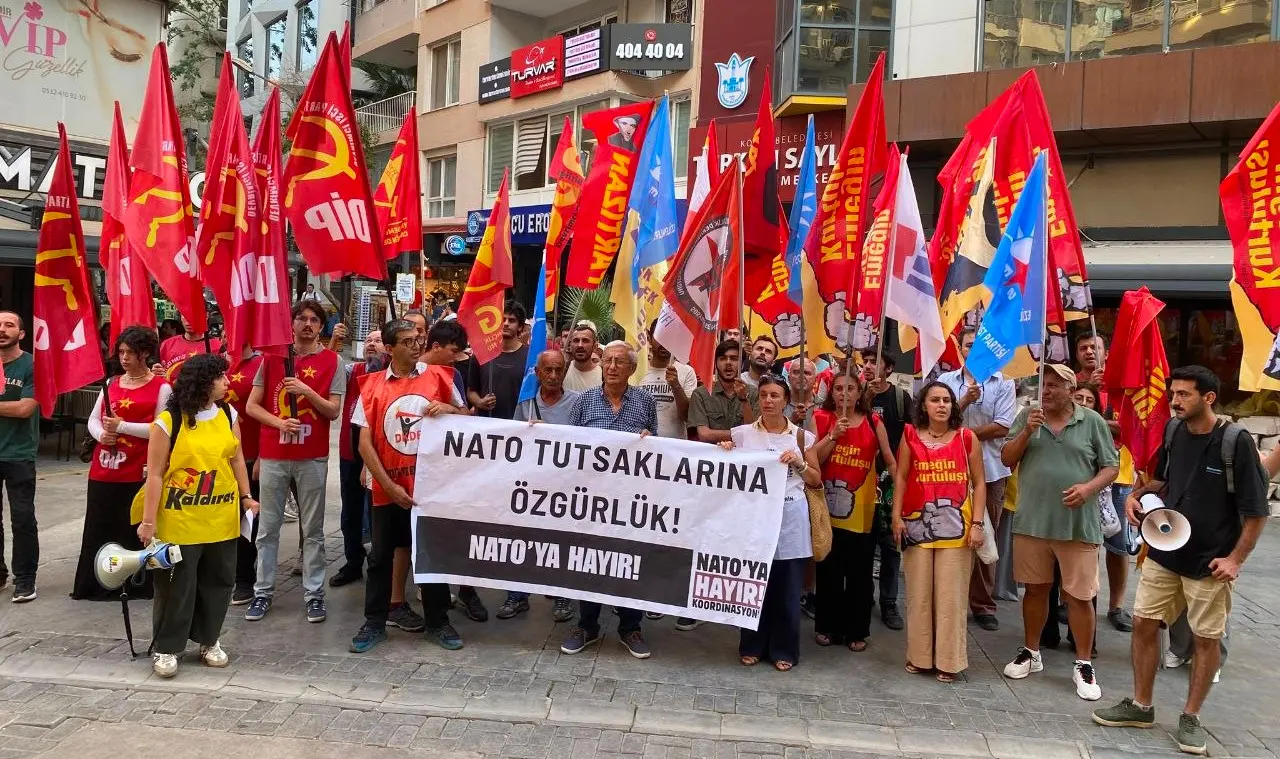
Istanbul - exiger la libération de militants révolutionnaires et progressistes arrêtés avant le sommet de l’OTAN


Des rassemblements se sont tenus le 2 août à Istanbul et Izmir pour exiger la libération de militants révolutionnaires et progressistes arrêtés avant le sommet de l’OTAN. Les organisateurs affirment que des centaines de personnes ont été arrêtées afin d’empêcher toute contestation du sommet et accusent l’OTAN de soutenir les politiques impérialistes et les guerres en Asie occidentale. Par ailleurs, les participants ont exigé la fermeture des bases de l’OTAN en Turquie.

observing the martyrs’ week from the 28th of July to 3 august


...... We continue the

revolutionary tradition of rededicating ourselves to achieve the ideals of the

comrades who laid down their lives in the fight against imperialism and

comprador exploitive classes with the objective to accomplish New Democratic

Revolution in our country and establish Socialism-Communism all over the world

as a part of the World Socialist Revolution...


.....There were several losses in the International Communist Movement in

the planned brutal fascist attacks unleashed by the imperialists and their

comprador ruling classes in the past one year, with their objective to eliminate

the Socialist revolutions in the capitalist-imperialist countries and New

Democratic revolutions, nationality liberation struggles in semi-colonial, semi-

feudal countries and the worldwide anti-imperialist national democratic

movements going on as a part of the World Socialist Revolution to root out

imperialism from the earth.....


....Revolution demands sacrifice. There is no instance in history where

revolutions advanced and became successful without fight with strong

determination, dedication, rigorous style of struggle and sacrifice. The struggles

and revolutionary movements of the oppressed classes advance and ultimately

gain success only with several sacrifices. In the Indian Revolutionary movement,

thousands of comrades became martyrs in the country upholding the traditions

of great sacrifices. The countering of intense repressive attacks of the enemy

began since the time of the great Naxalbari Armed Peasant revolution. The party

ranks, people’s armed forces and the revolutionary people armed with the

theory of MLM are clear about the objective of revolution and are fighting

heroically amidst enemy offensives....


....The revolutionary movement has been

advancing in waves amidst several difficulties, losses, tears, bloodshed and ebbs

and flows and ups and downs in the spirit of the martyrs. The sacrifices of the

martyrs shall never go waste. Let us uphold their sacrifice and fight with the firm

determination to achieve their great ideals.....


CPI maoist Declaration 2024 

Saturday, August 1, 2026

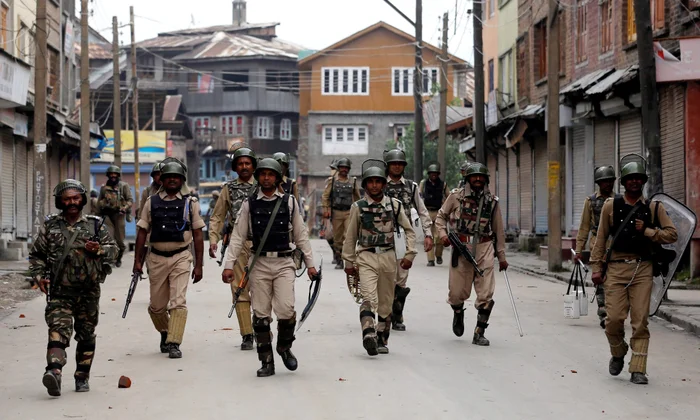
Cachemire : Plus de 3 000 arrestations lors d’une vaste opération menée par la police indienne


Les forces indiennes ont arrêté plus de 3 000 personnes au Cachemire administré par l’Inde lors d’une vaste opération de répression lancée après la mort, le 22 juillet 2026 à Anantnag, d’un membre du groupe spécial de police. Des perquisitions et arrestations massives ont suivi dans plusieurs zones, ainsi que des détentions arbitraires. Ces arrestations s’ajoutent aux milliers de Cachemiris déjà détenus dans les prisons indiennes pour des motifs politiques présumés.

secoursrouge 

Solidali con i migranti nostri fratelli arrivati in massa a Ceuta - accoglienza solidarietà permessi di soggiorno per tutti

 I paesi imperialisti e neocoloniali il loro sfruttamento e rapina, oppressione e repressione, guerre e dittature sono responsabili della grande fuga delle masse povere, attuate con la complicità dei governi al loro servizio nei paesi oppressi

I governi imperialisti tutti rispondono con espulsioni repressione - i governi imperialisti europei tutti sono responsabili e si assestano sulla linea del blocco delle frontiere, espulsioni e deportazioni, leggi razziste e fasciste

Il governo Meloni punta reazionaria in Europa, maga e trumpiana, fa dello sciacallaggio contro il governo spagnolo, a fini anche elettorali, sulla pelle della povera gente mentre tutela gli interessi esclusivi di padroni, mercanti d'armi, signori del petrolio e della finanza  

Rovesciare i governi dei padroni, unire i proletari e le masse sulla linea della solidarietà di classe e internazionalista

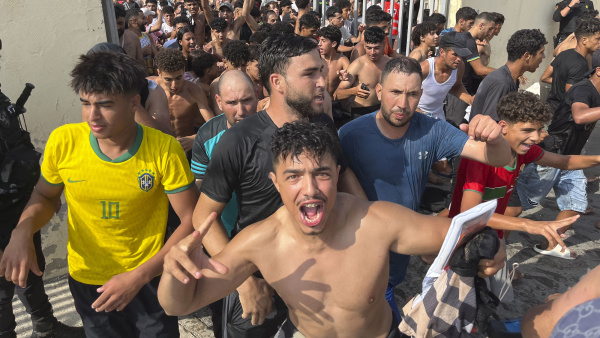
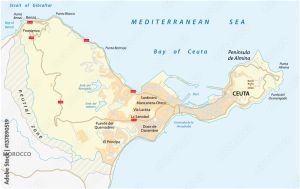
Migliaia di persone provenienti dal Marocco hanno attraversato i frangiflutti di confine verso Ceuta, l’enclave spagnola sul territorio marocchino. Si tratta di ingressi che si vanno ad aggiungere a centinaia di altri arrivati a nuoto negli ultimi giorni e contro i quali il governo spagnolo sta operando per la lororiconsegna” al Marocco. tanti sono morti in mare cercando di raggiungere a nuoto o con mezzi di fortuna l’enclave spagnola.

Migliaia di persone hanno varcato la barriera negli ultimi dieci giorni e altre migliaia si sono diretti ieri, giovedì, verso la frontiera tra Castillejos (Marocco) e Ceuta per tentare di oltrepassare il muro che separa le due città.

r

Le barriere di protezione non erano presidiate in quel momento da agenti di polizia, e i migranti hanno avuto accesso al territorio spagnolo mentre gli agenti delle forze ausiliarie marocchine, che si occupano della sicurezza a terra, si ritiravano al passaggio dei giovani. Nel pomeriggio di giovedì, continuavano ancora ad entrare persone nel territorio spagnolo.

Gli agenti di sicurezza interpellati dall’agenzia spagnola EFE hanno dichiarato di non conoscere il motivo del massiccio raduno di giovani per oltrepassare il valico, che coincide con la celebrazione della Festa del Trono in Marocco.

Fino al 15 luglio, il governo non aveva registrato alcun arrivo di migranti via mare a Ceuta. La principale via d’ingresso per i migranti irregolari in Spagna rimane infatti l’arcipelago delle Isole Canarie, al largo della costa africana.

I governi di Spagna e Marocco hanno concordato di attuare misure per la riconsegna “il prima possibile” di “tutte” le persone migranti che sono entrate illegalmente a Ceuta nei giorni scorsi, e in particolare giovedì, quando hanno superato in massa la barriera attraverso il molo di El Tarajal.

Fonti del Ministero dell’Interno hanno indicato questo giovedì che i due paesi hanno concordato di “rafforzare il coordinamento e gli sforzi per far fronte a questi flussi e si sono impegnati a rivedere e attuare misure per la riconsegna, il prima possibile, di tutte le persone che sono entrate illegalmente” nella città autonoma.

Le Forze Armate spagnole stanno rafforzando la Guardia Civile nella città di Ceuta dopo il massiccio e improvviso arrivo dei migranti.

Il governo italiano ha scelto di strumentalizzare l’episodio chiedendo di sospendere gli accordi di Shengen per la Spagna (ripristinando cioè i controlli di frontiera su merci e persone). E la Spagna per protesta ha convocato l’ambasciatore italiano.

Le immagini che arrivano da Ceuta dimostrano come la scelta del Governo di Madrid di dare la cittadinanza spagnola, quindi europea, ad oltre 500mila immigrati irregolari sia profondamente sbagliata e incentivi il traffico di essere umani”, ha dichiarato il ministro degli Esteri Antonio Tajani dichiarandosi a favore della chiusura dello spazio Schengen con la Spagna.

Ma le parole di Tajani hanno irritato il governo spagnolo.Questo messaggio è inappropriato da parte del ministro degli Esteri di un Paese partner e amico, dal quale ci aspettiamo solidarietà europea e non demagogia di parte, ho convocato per domani l’ambasciatore d’Italia”, ha annunciato su X il ministro degli Esteri spagnolo José Manuel Albares, commentando il tweet di Tajani. 

Il Marocco infatti è uno dei paesi arabi più schierato con l’Occidente,  mentre il governo Sanchez ha mantenuto una certa differenza su diverse questioni di grande rilevanza (uso delle basi e dello spazio aereo per la guerra all’Iran, critiche radicali ad Israele per il genocidio a Gaza e l’attacco al Libano, ecc) e ha spesso tensioni con il Marocco sulla questione dell’autodeterminazione del popolo Sharawi.

notizie da contropiano 

A preview from the upcoming issue of the magazine currently in preparation... of Two Lines Struggle N° 5 for debate

Maoist Communist Committee – Brazil


Words lead to actions”: Do it all for the Maoist International Conference!


Communist greetings, Comrades


It is with great joy and an inseparable sense of proletarian, Marxist-Leninist-Maoist, internationalist duty that we welcome this very important meeting of the international maoist. We are among the growing number of advanced elements, among revolutionary intellectuals and vanguard workers, who recognize the role played by the New Democratic Revolution in India as a strategic anchor of the World Socialist Revolution (WSR). In this century, marked so far by the intensification of class and national struggles resulting from the crisis of the imperialist system (and imperialism is nothing more than capitalism on its deathbed), the most relevant favorable subjective event in the communist field was the founding of the Communist Party of India (Maoist) in September 2004. By merging the two main currents continuing the “spring thunder” of Naxalbari in 1967—whose experience, systematized at the 9th Congress in 2007, is a valuable and impressive reservoir of lessons for new generations of communists— the Indian Maoist comrades not only gave new impetus to the revolution in their own country, but also provided the Communist International Movement (CIM) a solid base of ideological, political, and material support in the form of a concrete revolutionary experience to be defended and propagated.


In this century, as in the course of the revolutions of the last century, communists are fighting on two fronts: against imperialism and its machinations and aggressions on the one hand, and against opportunism on the other. There is a path that leads from life to books and from books to life, and it is a fact proven by historical experience that every revolution is preceded by an acute theoretical struggle over which path to follow in order to achieve the initially proposed objectives1. Similarly, counterrevolutions penetrate the ideological plane by proposing all sorts of “shortcuts” or intertwining between proletarian ideology and bourgeois ideology. Of course, the main discernment, the final word in this debate, is given by conscious revolutionary practice, and it is the commitment and ability to carry out its formulations that distinguishes a committed and theoretically relevant debate from a mere scholastic exercise. However, it would be a serious mistake to fall into the opposite error of underestimating the crucial importance of the ideological struggle in the name of escaping empty theorizing. As our Chinese comrades correctly summarized, “we must fully recognize the protracted nature of the class struggle and the struggle of two lines2. Every new condition generates as a unity the possibility and necessity of new advances in Marxist-Leninist-Maoist revolutionary theory and, alongside it, falsely original forms of its revision.


On the ideological front, we must wage a relentless struggle against both blatant forms of opportunism (in the contemporary world, its most clumsy expression is the so-called “Xi Jinping Thought,” which uses Chairman Mao's slogans to promote imperialism with Chinese characteristics) and subtle, supposedly respectable, and revolutionary forms. No pragmatic criterion could override the need to apply what Lenin constantly emphasized, that “a policy of principles is the only correct policy3. This applies, of course, not only within the party, but also to the international communist movement. This example of swimming against the tide in defense of principles—which makes the situation of isolation only temporary, because to stand by principles is ultimately to stand with the fundamental historical current that is revolution—was put into practice by Lenin and the Bolsheviks when they denounced the majority of social democratic parties that voted in favor of war credits in 1914. In this extremely difficult context, full of lessons for the present day, as we march toward a new war of division, he said, in defending the founding of a new International regardless of the number of its supporters:

And if socialists of that type are few, let every Russian worker ask himself whether there were many really class-conscious revolutionaries in Russia on the eve of the February-March revolution of 1917. It is not a question of numbers, but of giving correct expression to the ideas and policies of the truly revolutionary proletariat. The thing is not to “proclaim” internationalism, but to be able to be an internationalist in deed, even when times are most trying. (...) It is better to remain with one friend only, like Liebknecht, and that means remaining with the revolutionary proletariat (...) Let the dead bury their dead. Whoever wants to help the waverers must first stop wavering himself” (Lênin, “The Tasks of the Proletariat in Our Revolution”, april 1917).


Whether on the international or national stage, a communist cannot fear fighting in the minority, nor use their momentary weakness as an excuse for inertia and the adoption of a policy of appeasement with opportunistic positions. The crucial point of dialectical materialism is that there is no knowledge outside of practice, no strength outside of intervention in the class struggle. In this sense, it is crucial that we equip the international proletariat with solid theoretical and political principles, as well as solid combat organizations in each country, to face the pressing tasks of rejecting the imperialist war in preparation and taking advantage of all the possibilities that this explosive situation offers for the development of the revolutionary movement. Precisely for this reason, the most subtle forms of revisionism are the most dangerous, because of their ability to deceive, above all, the new and inexperienced generations about their “revolutionary” nature. This is what the master Lenin said about the “sophisticated” attempts to merge Marxism with fideism, against which he waged a relentless struggle in his “Materialism and Empirio-Criticism”.