Wednesday, December 3, 2025

Abdallah libéré : quel bilan tirer de notre action militante ? - CUpLGIA


Le texte ci-dessous est le dernier texte qui sera publié par la

CUpLGIA. Ainsi qu’il est écrit dans sa conclusion, ses militants s’engagent d’ores et déjà à poursuivre le combat – sous d’autres formes organisées – « contre le capitalisme, l’impérialisme, le sionisme et toute la réaction, et en défense aux prisonniers révolutionnaires en général et en particulier aux prisonniers palestiniens et libanais ». Quant à ce blog, s’il ne sera plus alimenté, il subsistera néanmoins comme témoignage militant d’une lutte victorieuse.

Abdallah libéré :

quel bilan tirer de notre action militante ?

Pourquoi un bilan ?

Georges Ibrahim Abdallah est sorti le 25 juillet 2025 de la prison française où il était détenu ; dans la foulée, il a été expulsé par avion au Liban, son pays, dans lequel il est arrivé libre le même jour.

Nous, militantes et militants qui nous sommes engagé•e•s et avons agi collectivement pour exiger et gagner la libération de Georges Abdallah, nous avons jugé nécessaire de revenir sur cette expérience politique et d’en tirer les leçons utiles pour nos combats présents et futurs.

Ce bilan, nous le faisons en ayant connu – une fois n’est pas coutume – le succès de notre action, puisque l’objectif que nous nous étions fixé a été atteint. Bien entendu, nous ne pouvons nous glorifier du fait que Georges Abdallah a dû attendre la 41e année de sa détention, soit 26 ans après la fin de sa peine incompressible, pour être enfin libéré. Mais comme la justice française l’avait elle-même reconnu lors d’une de ses dernières audiences : Georges Abdallah était devenu « un prisonnier bien encombrant ». Et le jugement décidant sa libération justifia d’ailleurs celle-ci, entre autres, par le fait que son maintien en détention constituait « un trouble à l’ordre public en raison des nombreuses et régulières manifestations en sa faveur. » Pour sa part, notre camarade a eu ces mots : « S’ils ont accepté de me libérer, c’est grâce à cette mobilisation qui est ascendante. »

Nous sommes donc en droit de considérer que notre action a joué son rôle dans cette libération. Nous pouvons même légitimement parler de victoire politique – ou de bataille gagnée, quel que soit le terme choisi. Et si nous savons bien que cette victoire a été avant tout gagnée par notre camarade lui-même, dont la devise était d’ailleurs intangible : « La victoire ou la victoire ! », il nous incombe maintenant à nous, ses camarades, d’analyser et de comprendre les raisons de ce succès.

Ce bilan, élaboré collectivement et proposé par des militants ayant animé la Campagne Unitaire pour la Libération de Georges Ibrahim Abdallah (CUpLGIA) depuis sa création en 2015, relève selon nous d’un principe démocratique : nous nous devons, par respect des militant•e•s, de rendre des comptes à tou•te•s celles et ceux qui se sont engagé•e•s dans le combat commun. Notre bilan s’adresse ainsi aux camarades qui ont participé à cette lutte, certains depuis de longues années, d’autres depuis plus récemment.

Pour nous, faire le bilan de notre expérience politique commune est en soi une partie intégrante de cette expérience politique, une expérience politique qu’il est essentiel de transmettre : si nous assumons bien sûr l’action que nous avons menée, celle-ci ne prend tout son sens que resituée dans un processus historique bien plus long, qui exige de s’appuyer sur l’héritage des combats précédents. Toute lutte s’inscrit en réalité dans un combat de longue haleine : si elle doit se nourrir des expériences passées, elle doit pouvoir nourrir nos expériences à venir. Et toute bataille gagnée, même partielle, est ainsi un jalon pour les victoires futures.

Avant tout, nous nous devons de rappeler que nos pensées vont vers celles et ceux qui nous ont quitté•e•s avant l’heure de la victoire, mais dont l’optimisme de la pratique et les noms restent en nous bien présents et dont nous reconnaissons toute la part qu’ils et elles ont prise dans le succès obtenu : Joëlle Aubron, Suzanne, Catherine, Pierrot, Évelyne, l’autre Joëlle, Gilbert, Patrice, Gisèle, Yoann, Badia…

Libérer Georges Abdallah : de quel combat s’agit-il ?

Big antifa demostration in Germany - info


Alemania. Según el medio Dem Volke Dienen (Servir al Pueblo), más de 50 mil personas participaron en la mayor movilización antifascista de la historia de la República Federal de Alemania (RFA). La ciudad de Giessen ha sido el epicentro de las protestas, cuyo objetivo era boicotear el congreso fundacional de la organización juvenil del AfD (Alternativa para Alemania, un partido político de extrema derecha). De acuerdo con algunos reportes, al menos 15 mil personas montaron 16 puntos de bloqueo, logrando retrasar la instalación del congreso por algunas horas. La policía por su parte había desplegado a 6 mil elementos con cañones de agua, gases lacrimógenos y equipos antimotines para abrir paso a los fachos. La policía golpeó a mucha gente, principalmente a aquellos que se manifestaban de forma pacífica, como lo denuncian algunas ONG alemanas. Pero el estado de fuerza no le alcanzó al imperialismo alemán para disolver las manifestaciones. Varios enfrentamientos se registraron entre la policía y la multitud antifascista que abarrotó las calles; seguramente los cerdos esperaban menor resistencia, pero encontraron lo contrario. Los manifestantes han dicho correctamente “no podemos permitir una nueva juventud hitleriana” y tienen razón. En medio de las escaramuzas un diputado del AfD, Julian Schmidt, resultó con lesiones leves por el puñetazo certero de un manifestante antifascista que ha sido detenido y acusado de “ataques contra un político”. Al respecto la policía ha informado… “El miembro del ‘Bundestag’ alemán habría sido agredido y herido alrededor de las 8:30 horas (7.30 GMT). El sospechoso fue detenido inmediatamente”. Saludamos la determinación y combatividad de los trabajadores y la juventud alemana que luchan contra el fascismo. ¡El fascismo avanza si no se le combate! ¡Muerte a AfD y sus juventudes hitlerianas!

India - The Four Labour Codes: Analysis and Political Prospects


December 3, 2025

This analysis was received from an activist in West Bengal

Introduction

The BJP led NDA government has replaced twenty nine labour laws with four consolidated labour codes, passed in Parliament but not yet fully implemented because the necessary rules have not been framed everywhere. With the exception of three states, including West Bengal, all states have already framed these rules. Earlier in 2025, the Union Ministry of Labour announced that the codes would come into force nationwide from 1 April. That deadline has passed, but the underlying legal architecture remains in place. Since labour is on the Concurrent List, the central government can at any time issue a notification extending central rules to those states that have not framed their own. When the codes eventually come into force across India, they will apply in West Bengal as well.

It is worth recalling that in 2020 the central government introduced three farm laws and four labour codes in the Lok Sabha as bills. The farmers’ movement, through a sustained and determined struggle, forced the withdrawal of the farm laws. Trade unions across the country did protest against the labour codes, but the intensity of that resistance was much weaker. It is this weakness of the workers’ movement that has allowed the labour codes to advance to the threshold of implementation.

This essay argues that the four labour codes represent a qualitative attack on the working class. They hollow out the specific protections embedded in earlier labour laws, push vast numbers of workers outside the purview of law, and seek to break class unity by turning workers into isolated individuals. They must be understood not simply as a technocratic “rationalisation” of labour regulation, but as a central component of the contemporary fascist project in India.

From specific protections to generic codes

The labour laws that came into being in earlier periods were not arbitrary or purely administrative. Each emerged from specific struggles and had a definite objective: regulation of contract labour, protection against arbitrary dismissal, recognition of trade unions, equal wages, and so on. By contrast, the labour codes stitch together widely different laws and subjects into four broad categories. In the process, the specific aims of each earlier law are diluted or removed.

THE GENERAL SITUATION IN TURKISH PRISONS - info@upotudak.net


THE GENERAL SITUATION IN TURKISH PRISONS

It is clear that the conflict between imperialist poles brings more poverty to all oppressed sections of society, especially the working class. The internal structures of imperialist states are rapidly being redesigned within the framework of a new imperialist war of division. The atmosphere of occupation and war that has been created affects the lives of workers in many ways through reactionary laws and the deprivation of rights. The fiscal deficits resulting from increased military budgets are burdening workers with new taxes. All reactionary states are attempting to reorganize themselves in preparation for this process. With the power that comes from controlling production and capital, bourgeois states operate the mechanisms called law and justice in their own interests. Of course, in such processes, the most dynamic and "threatening" segments of society will be targeted first. This is why the working class and its organized forces, as well as nations and representatives fighting for national liberation, are being targeted on our world. The rulers' approach to this is manifested either by eliminating them or filling prisons with them. For those they do not kill, they resort to isolation and torture by applying a complete enemy law in prisons.

During the 23 years of AKP rule, the state organization, which is the instrument of power of the Turkish ruling classes, has been reshaped according to the interests of imperialism and the local comprador bourgeoisie. The "Presidential Government System" is the current form of this transformation; it is an authoritarian restructuring required by capital and imperialist centers.

With this system, all state institutions have been centralized to serve the interests of imperialist monopolies and the ruling clique, not the people. Every sphere, from the judiciary to the media, from the legislature to the security forces, has been turned into an instrument of capital's oppression.

Underlying this restructuring is a "strategy of suppressing rebellion." The organizing efforts of the people, the working class, and revolutionary forces are being dismantled; unions, democratic institutions, and social opposition are being crushed. Any segment not aligned with the ruling bloc, even opposition within the system, is labeled "terrorist," and the space for politics is being completely narrowed.

In such a process, even the spontaneous economic and democratic demands of the working class and the laboring people have been suppressed by fascist tyranny. Strikes have been banned, demonstrations dispersed, and arrests and detentions have become routine. The Turkish state does not even comply with its own laws on paper. The immunity of members of parliament has been disregarded, and thousands of people have been imprisoned for their thoughts.

In Turkey's political history, prisons have been one of the state's tools for suppressing political opposition. Social opposition movements, particularly left-wing socialist movements, the Kurdish freedom struggle, women's and student resistance, have often been criminalized under the label of "terrorism," and thousands of people have been imprisoned for political reasons. Anti-terrorism laws enacted in recent years have almost completely restricted freedom of thought and expression. Thousands of people who shared posts on social media, participated in union actions, or engaged in journalism have been arrested on charges of "organization propaganda" or "organization membership."

The judiciary has largely lost its independence; prisons are filled with thousands of people detained for their political identity. This process symbolizes a period in which the suppression of opposition through the judiciary has become systematic.

Despite all the pressure, political prisoners in Turkey have created a strong tradition of resistance throughout history. From the hunger strikes of 1984 to the resistance in Type F prisons in the 2000s, political prisoners have continued their struggle not only with their bodies but also with their writings, practices of solidarity, and collective consciousness.

RIGHTS VIOLATIONS IN TURKISH PRISONS AND PRESSURES ON POLITICAL PRISONERS

For many years, prisons in Turkey have not only been places of punishment but also served as one of the political regime's tools for suppressing opposition. Particularly in the last decade, increasing authoritarianism, the politicization of the legal system, and the curtailment of freedom of thought have resulted in the arrest of thousands of people for political reasons. This situation has made rights violations in prisons systematic. Journalists, trade unionists, students, academics, and politicians are often sent to prison on charges of "membership in an organization" or "propaganda" simply for expressing their thoughts. In Turkey, where the judiciary has not been independent since its establishment, court proceedings have become a "political purge tool." Thus, prisons have turned into political spaces holding thousands of people from different segments of the social opposition.

Among the more than forty thousand political prisoners in Turkish prisons, there are people against whom no evidence of a crime has been found, as well as people who have been held hostage in prison despite having reports stating that over seventy percent of them are unfit to remain in prison.  Attacks against local and immigrant revolutionaries are intensifying in European countries. In many countries, particularly Germany and France, new laws have been passed to attack forces that criticize and oppose the imperialist capitalist system in street protests, arresting them en masse and imprisoning them for many years. 

Germany, relying on sections 129a and b of its constitution, is imposing long prison sentences on immigrant revolutionaries for fighting against fascist oppression in their own countries. Kurdish and Turkish revolutionaries, in particular, are subject to these attacks. 

Political prisoners are deprived not only of their freedom but also of their basic human rights. Reports by organizations such as the Turkish Human Rights Foundation (TİHV), the Human Rights Association (İHD), and the Civil Society Association in the Penitentiary System (CİSST) show that human rights violations in prisons are widespread and structural.

The main violations of rights are as follows:

-Restriction of the right to communication and correspondence: Political prisoners' letters are confiscated, telephone calls are censored, and visitors are arbitrarily prevented from visiting.

- Isolation and segregation: Particularly in high-security F-type prisons, prisoners are subjected to long periods of solitary confinement, minimizing their social contact.

-Violation of the right to health: Prisoners with chronic illnesses are denied necessary treatment, hospital transfers are delayed or arbitrarily refused.

-Suppression of cultural and political identity: Rights such as speaking Kurdish, possessing books, or accessing politically-oriented publications are restricted, and prisoners face disciplinary penalties.

-Violence and ill-treatment in prisons: Guard violence, strip searches, arbitrary disciplinary penalties, and deportation transfers have become a policy of intimidation that goes beyond punishment in prisons.

Turkey is a signatory to international legal texts such as the European Convention on Human Rights (ECHR) and the United Nations International Covenant on Civil and Political Rights. However, practices in prisons clearly contradict these obligations. Despite European Court of Human Rights (ECHR) rulings, arrests under the guise of freedom of expression continue, and the existence of the "political prisoner" category is denied.

RIGHTS VIOLATIONS IN PRISONS AND THE SITUATION IN PRISONS

According to data from the General Directorate of Prisons and Detention Centers, as of November 1, 2024, there are a total of 406 penal institutions in Turkey, including 273 closed penal institutions, 100 independent open penal institutions, 4 children's educational institutions, 12 closed women's penal institutions, 8 open women's penal institutions, and 9 closed children's penal institutions. The total capacity of these institutions is 299,042 people. However, it should be noted that this number represents the increased capacity. Under normal conditions, these prisons should house two-thirds of the number of inmates.

Twenty-two new prisons were opened in 2022, 19 in 2023, and 12 in 2024. According to the Ministry of Justice's 2025 budget proposal, the goal for next year is to open 11 more new prisons.  This shows that Turkey's current ruling ideology generally envisions a future based on imprisoning people." (IHD 2024 Prisons Report)

Prison architecture and the penal system in Turkey have been shaped in parallel with the security understanding of political powers and their approach to social opposition. The military coup of September 12, 1980, radically transformed not only the political regime but also the penal system. The new "type" of prisons that began to be built during this period emerged as a concrete expression of the state's security paradigm.

The prison architecture developed after the coup aimed to isolate political prisoners, fragment collective life, and suppress the culture of resistance. The E, H, F, D, L, T, Y, and S type prisons built from the 1980s to the present represent different stages of this strategy.

With the September 12 coup, the large dormitory systems of the past were abandoned and E-type prisons were built. These prisons consisted of dormitories for 16–20 people and restricted the collective life of prisoners. Subsequent H-type prisons reduced this number to rooms for 4–6 people, thereby deepening physical isolation. The political meaning of this transition is clear: the elimination of solidarity and the possibility of organization arising from communal living.

In 2000, F-type prisons, the most advanced form of this process, were introduced. Consisting entirely of one- or three-person cells, these structures are the institutionalized form of the "isolation regime." F-types have paved the way for the proliferation of practices described by national and international human rights organizations as "psychological torture."

According to June 2025 data, there are a total of 416,927 "detainees" and

 "convicts" in Turkish prisons. "In Turkey, 420,904 prisoners are held in 402 prisons with a total capacity of 304,964. 120,013 prisoners are held in open prisons, while 300,891 are held in closed prisons. Of these prisoners, 357,646 are convicts and 63,258 are detainees. 200 are LGBTQI+, 14,276 are foreigners, and 1,453 are serving aggravated life sentences.  There are 269 prisoners with disabilities in prisons: 19 with speech and language impairments, 42 with visual impairments, 28 with hearing impairments, 18 with hearing and speech impairments, and 162 with orthopedic impairments. 6,543 prisoners in prisons are over 65 years old. In 2025, the number of prisoners who can continue their education in prisons is 77,014, and there are 58,500 prisoners engaged in insured professional activities. There are 4,561 children between the ages of 12 and 18 held in prisons, 187 of whom are girls. Alongside 19,290 female prisoners, there are 434 children aged 0-3 and 388 children aged 4-6 with their mothers. (Civil Society Association in the Penitentiary System CİSST Report)

Prison capacities are known to have reached over 100,000 inmates. Turkey ranks first among Council of Europe countries in terms of the number of prisoners. According to 2022 Council of Europe prison statistics, 355 out of every 100,000 people in Turkey are in prison. This rate is 117 on average among Council of Europe countries. The overcrowding of prisons, which hold more prisoners than their capacity, has continued to increase exponentially since 2015.

Over the last 10 years, the Gezi Park and Fethullah Gülen Movement trials, the imposition of trustees on local administrations, and the investigations and subsequent arrests of politicians, journalists, and political figures have demonstrated that the fascist AKP-MHP alliance cannot tolerate any dissenting voices. 

Pressure continues to be exerted on sick prisoners in jails. The number of sick prisoners identified is 1,412 (161 women, 1,251 men). The number of prisoners considered seriously ill is 335 (230 of whom cannot survive on their own). The violations of the right to health here are as follows: examinations while handcuffed, lack of hygiene, and delayed transfers. In addition, the inhumane conditions of the transport vehicles stand out as another aspect of the attacks on sick prisoners. 

In recent years, high-security S and Y type prisons have been put into operation, deepening the isolation of political prisoners. Prisoners and human rights defenders describe these structures as "well-type prisons." This name symbolizes both the physical structure and the intensity of isolation.

According to data from the Turkish Ministry of Justice, 32 new prisons were opened in 2021, 22 in 2022, and 16 in 2023.

Seven of these are S-type prisons and 14 are Y-type prisons. S-type prisons are located in Manavgat, Antalya, Bodrum, Iğdır, Kırşehir, Kavak, and Çarşamba; Y-type prisons are located in Adana Suluca, Aksaray, Antalya, Burdur, Erzurum, Kırşehir, Konya Ereğli, and Tekirdağ Karatepe. The Ministry of Justice states that these prisons were built for "those sentenced to aggravated life imprisonment and those detained or convicted of terrorist crimes." However, in practice, a large number of political prisoners are being exiled to these prisons on vague grounds such as "breaking discipline" or "displaying dangerous behavior."

This situation demonstrates that isolation has become not only a form of punishment but also a mechanism of political control.

Although the new high-security prisons have been "modernized" architecturally, they are structures where human contact is minimized, creating serious problems in terms of prisoners' right to life, right to health, and freedom of communication. According to reports: Prisoners' rights to open visits and telephone calls are restricted, letters are censored, and books are confiscated. Social activities have been almost completely eliminated. Psychological disorders (anxiety, depression, suicidal tendencies) caused by long-term isolation have reached serious proportions.

The "good behavior" assessments introduced by the 2020 amendment to the Execution of Sentences Law have become a tool to arbitrarily prevent the release of political prisoners. Since September 12, Turkey's prison system has evolved into a policy of deeper isolation and oppression. S and Y type prisons are the spatial expression of the state's strategy to control the opposition.

Isolation is more than a physical practice; it is an ideological tool aimed at destroying political identity and social solidarity.

CONCRETE PROBLEMS EXPERIENCED IN PRISONS

1. Isolation and Seclusion

The most fundamental problem experienced by political prisoners is the practice of isolation. Type F, S, and Y high-security prisons are architecturally designed to "minimize human contact." Prisoners held in single, double, or triple rooms spend most of the day alone, and their right to participate in communal activities is either completely removed or left to the arbitrary decisions of the administration.  Solitary confinement causes serious psychological disorders in the long term. Isolation, loneliness, depression, anxiety, sleep disorders, and memory loss are common among political prisoners. This situation also coincides with the European Committee for the Prevention of Torture's (CPT) definition of "inhuman treatment."

2. Restriction of the Right to Communication and Contact

Political prisoners' contact with the outside world is constantly restricted. Letters are censored and sometimes not delivered at all on the grounds of "objectionable content." Family and lawyer visits are blocked under the pretext of "disciplinary punishment." The right to telephone calls is limited to once a week for 10 minutes in many prisons. These practices both worsen the psychological state of prisoners and effectively eliminate their right to defense.

3. Violations of the Right to Health

Access to healthcare in prisons is a serious problem. Political prisoners are often not referred to hospitals or are subjected to shackled examinations during referral. For many prisoners with chronic illnesses, medication is delayed, and dietary and treatment conditions are not provided. According to reports by the Human Rights Association (IHD) and the Human Rights Foundation of Turkey (TIHV), as of 2024, there are over 600 sick prisoners, 70 of whom are in critical condition. This situation demonstrates the systematic violation of the right to health.

4. Barriers to Accessing Books, Publications, and Thought

Political prisoners' right to read and write is also severely restricted. Books and magazines with political content are banned on the grounds of "organization propaganda." Censorship is applied in prison libraries, making it virtually impossible to access certain publications. Letters, poems, or writings composed by prisoners are often deemed "objectionable" and not sent outside. This situation is not only an individual rights violation but also a systematic form of pressure on freedom of expression.

5. Arbitrary Disciplinary Penalties and Release Barriers

With the amendments made to the Enforcement Law in 2020, the release of political prisoners began to be arbitrarily postponed under the name of "good behavior assessment." The subjective assessments of the administration and observation boards, such as "showing no remorse" or "not rehabilitated," have caused many political prisoners to exceed their legal release period. Furthermore, even the slightest demand for rights or protest is considered a "disciplinary offense" and used as grounds for solitary confinement or transfer to another prison.

6. Specific Problems Experienced by Female Political Prisoners

Women prisoners are subjected to double discrimination due to both their gender and their political identity. Issues such as forced strip searches, restrictions on access to hygiene products, and the lack of female psychologists or doctors are frequently reported. Female prisoners are also made invisible within the male-dominated prison culture, and the gender-based violence they are subjected to often goes unpunished.

7. Exile Transfers and Severing of Family Ties

Political prisoners are often arbitrarily "exiled" to prisons in different cities. This practice makes family visits impossible and makes it difficult for prisoners to continuously rebuild their prison life. Some prisoners have been transferred to different provinces four or five times in a few years. This clearly constitutes a violation of the right to family unity.

PROBLEMS FACED BY LGBT PRISONERS IN PRISONS

Prisons in Turkey are one of the institutions where social inequalities are most visibly experienced. This situation has even more severe consequences for LGBT+ prisoners who face discrimination due to their sexual orientation and/or gender identity.

LGBTI+ prisoners are often held alone in cell-like areas for "protection" from other prisoners. However, this practice effectively amounts to solitary confinement and leads to the prisoner's complete isolation from social life. In some prisons, LGBT+ prisoners are placed in male wards, exposing them to the risk of violence, harassment, and sexual assault. In such cases, authorities often cite the reason that "other prisoners may be disturbed," which constitutes a clear example of institutional homophobia.

LGBTQ+ prisoners may be subjected to verbal, physical, and sexual violence by both staff and other prisoners. Insults, derogatory language, "forced searches," and strip searches have been frequently reported, especially for trans women prisoners. Such practices constitute both inhuman treatment and a clear violation of the Convention Against Torture and Other Cruel, Inhuman or Degrading Treatment or Punishment.

One of the most critical issues for trans prisoners is the denial of access to healthcare related to gender affirmation. Prisoners undergoing hormone therapy often have their medication denied or arbitrarily cut off. Furthermore, LGBT+ prisoners' requests for psychological support are either rejected or postponed on the grounds that no suitable specialist is available. This inequality in access to the healthcare system seriously jeopardizes prisoners' physical and mental health.

Trans prisoners face the problem of their identities not being recognized by prison authorities unless the name or gender information in their population records is changed. This situation leads to trans women who should be placed in women's prisons being sent to men's prisons, thereby exposing them to a direct risk of violence. Furthermore, the failure to use the prisoner's preferred name or pronoun constitutes a constant form of identity denial.

In many prisons, LGBT+ prisoners are unable to participate in workshops, courses, sports, or educational activities on the grounds of "security." This practice effectively eliminates the right to rehabilitation and preparation for social life. In some prisons, the hours during which LGBT+ prisoners are allowed to access common areas are even different from those of other prisoners—this both reinforces stigmatization and increases social isolation.

Social support mechanisms for LGBT+ prisoners in prisons are virtually non-existent. As civil society organizations have limited access to prisons, prisoners are often left alone. LGBT+ prisoners who are allowed visits may also be excluded by their families, which deepens their psychological distress. As a result, many LGBT+ prisoners are forced to live under the threat of suicide.

IN CONCLUSION; 

The pressure, torture, and isolation practices experienced in prisons should be seen not only as affecting prisoners but also as part of the restriction of the democratic rights and freedoms of the entire society. However, historically, both internal and external forms of resistance have created powerful examples of struggle against these pressure policies. Looking at the history of Turkish prisons, we see that prisoners have protested against rights violations through hunger strikes, death fasts, and mass protests. These actions are not merely a "physical resistance," but also a means of making visible the violations that the state has rendered invisible.  We must support the struggles of political prisoners through collective solidarity, legal appeals, and public pressure. Joint petitions organized among prisoners, signature campaigns, and letter solidarity networks established with the outside world will both provide moral support and facilitate the documentation of rights violations. This method will keep human contact and collective will alive, especially under conditions of isolation. Every solidarity network developed against isolation, censorship, discrimination, and torture will both defend human dignity and shed light on the dark areas of fascism.


ALLGEMEINE SITUATION IN DEN GEFÄNGNISSEN DER TÜRKEI

PCI (Maoísta) – ¡Celebremos el 25º aniversario del EGPL! en espanol


PCI (Maoísta) – ¡Celebremos el 25º aniversario del EGPL!

¡Protejamos al Partido! ¡Protejamos al EGPL! ¡Protejamos a las organizaciones de masas! ¡Protejamos el movimiento revolucionario! Todo esto es necesario ante la guerra revolucionaria y la defensiva de Kagaar.

¡Intensifiquemos la lucha de clases contra la alianza de las clases capitalista burocrática compradora, terratenientes e imperialistas! ¡Intensifiquemos la lucha contra los gobiernos fascistas hindúes brahmánicos RSS-BJP en el centro y en los Estados!

Con motivo del 25º aniversario del EGPL, la Comisión Militar Central (CMC) y el PCI (maoísta) envían este mensaje a todo el Partido, al EGPL, a las estructuras populares y al pueblo oprimido.

Comisión Militar Central Comité Central, PCI (maoísta)


Queridos compañeros y pueblo:

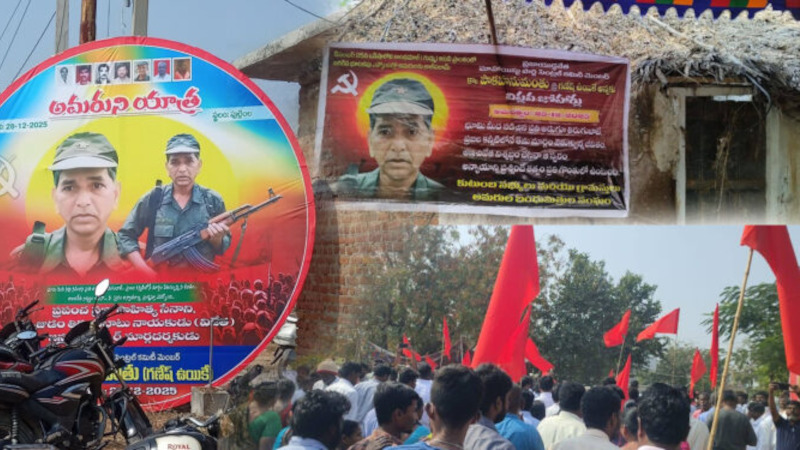
El Ejército Guerrillero Popular de Liberación (EGPL), que lleva adelante la guerra popular por la victoria de la Revolución de Nueva Democracia en el país, cumple veinticinco años el 2 de diciembre. En esta ocasión, la Comisión Militar Central (CMC) hace un llamado a todos los comités del Partido, a todos los rangos del Partido, a todos los mandos del EGPL, a todas las unidades, a todas las organizaciones de masas y al pueblo revolucionario para que celebren el vigésimo quinto aniversario del EGPL del 2 al 8 de diciembre en todo el país. Debe hacerse en los bosques, en las llanuras y en las zonas urbanas. Debe hacerse con fervor revolucionario. Debe hacerse con firme determinación.

La CMC hace el siguiente llamamiento a todo el campo revolucionario.

Protejamos al Partido. Protejamos al EGPL. Protejamos a las organizaciones de masas. Protejamos al movimiento revolucionario. Todo esto es necesario ante la guerra revolucionaria y la defensiva de Kagaar. Intensifiquemos la lucha de clases contra la alianza de las clases capitalista burocrática compradora, terratenientes e imperialistas. ¡Intensifiquemos la lucha contra los gobiernos fascistas hindúes brahmánicos RSS-BJP en el centro y en los Estados!

Con motivo del 24º aniversario del EGPL, el CMC planteó estas tareas a todo el Partido, al EGPL, a las organizaciones populares y al pueblo revolucionario. Durante el último año, todos los comités del Partido han trabajado con entusiasmo. Han trabajado con determinación, valentía y disciplina. La CMC transmite un saludo revolucionario a todas las filas del partido, a todos los mandos y comandantes del EGPL, a todos los combatientes, a todos los líderes de las organizaciones de masas, a todos los activistas, a todos los miembros de la milicia popular y a todo el pueblo revolucionario.

La CMC transmite saludos revolucionarios a todos los compañeros que han participado en los esfuerzos políticos, militares, organizativos, culturales y tácticos durante el último año. Lo han hecho mientras se enfrentaban con sus propias fuerzas a la guerra revolucionaria y la defensiva contra la Operación Kagaar. La CMC también expresa su confianza en que los compañeros que resultaron heridos en la guerra de guerrillas en las diversas regiones revolucionarias del país se han recuperado rápidamente con valentía. Cree que han vuelto a ocupar su lugar y han cumplido con sus responsabilidades en la guerra de guerrillas.

Durante el último año, nuestros compañeros se enfrentaron solos a la guerra de Kagaar y resistieron con determinación inquebrantable. Muchos guerrilleros valientes se convirtieron en mártires en estas batallas. Muchos perdieron la vida en operaciones de cerco y aniquilamiento. Numerosos compañeros sacrificaron sus vidas en enfrentamientos con el enemigo. Muchos fueron asesinados en enfrentamientos falsos. Otros alcanzaron el martirio durante acciones ofensivas contra el enemigo. Algunos perdieron la vida debido a traiciones. Unos pocos compañeros murieron en accidentes, mientras que otros fallecieron por motivos de salud. La Comisión Militar Central (CMC) inclina la cabeza y ofrece un humilde homenaje revolucionario a todos estos mártires. A partir de enero de 2024, la guerra de Kagaar se volvió cada día más severa. Nuestros compañeros no la temieron. Se enfrentaron al enemigo. No se retiraron. Lucharon hasta el último aliento. Los mártires mostraron un valor sin igual. Mostraron un desafío que nunca se rindió ante el enemigo. Exhibieron un estilo de lucha que no temía a la muerte. Mostraron una perseverancia que nunca se cansó. Demostraron su compromiso y dedicación al pueblo. Demostraron una fe inquebrantable en la victoria revolucionaria. Son un gran ejemplo para nosotros. Son un ejemplo eterno. Defenderemos sus ideales. Llevaremos su heroica resistencia y sus hazañas al mundo. Alabaremos sus principios. Seguiremos sus pasos. Nos comprometemos a luchar con firmeza hasta nuestro último aliento por el cumplimiento de sus ideales.

En los últimos once meses, desde diciembre de 2024 hasta noviembre de 2025, 320 compañeros se convirtieron en mártires en todo el país en el curso de la resistencia a la guerra de Kagaar. De ellos, 183 eran compañeros varones. Ciento diecisiete eran compañeras mujeres. La identidad de 20 personas aún se desconoce.

Veintidós compañeros se convirtieron en mártires en Bihar y Jharkhand. Uno en Assam. Doscientos cuarenta y tres en Dandakaranya. Treinta y tres en Odisha. Siete en MMC. Ocho en Telangana. Seis en AOB. Entre ellos se encontraba el secretario general de nuestro partido, el compañero Basavaraju (BR).

Entre los mártires había ocho miembros del Comité Central y quince de diversos comités estatales. Veinticinco eran miembros del Comité de Distrito y setenta y tres pertenecían a comités de zona. Ciento dieciséis eran miembros del partido. Trece pertenecían al EGPL. Treinta y tres eran cuadros y activistas de diversas organizaciones de masas. Varias masas revolucionarias también dieron su vida. Además, murieron treinta y siete personas cuya pertenencia a la organización no se pudo determinar de forma concluyente.

Muchos líderes y activistas revolucionarios, progresistas y democráticos de organizaciones de masas se convirtieron en mártires en todo el país durante las luchas populares. También fallecieron algunos intelectuales, revolucionarios, simpatizantes y amigos. En Filipinas, algunos miembros del Comité Central del Partido Comunista de ese país, algunos comandantes y miembros del Nuevo Ejército Popular y algunos líderes y activistas del Frente Democrático Nacional se convirtieron en mártires. 75 000 palestinos y combatientes fueron asesinados en la guerra genocida llevada a cabo por Israel con el apoyo del gobierno de Estados Unidos durante los últimos dos años en Gaza. La CMC rinde homenaje revolucionario a todos estos mártires.

Durante la guerra de Kagaar, perdimos al camarada Basavaraju, secretario general de nuestro partido. Perdimos a ocho miembros del Comité Central y a quince miembros del Comité Estatal. Perdimos a 320 camaradas en total. El movimiento ha sufrido graves pérdidas. En esta situación, algunos, como Sonu y Satish, se rindieron. Entregaron las armas al enemigo y huyeron. Causaron un daño inmenso al movimiento. Celebramos el vigésimo quinto aniversario del EGPL en este contexto.

En un momento así, la tarea de nuestro partido y de nuestro EGPL es responder a las preguntas que surgen en el campo revolucionario sobre el futuro del movimiento. Nuestra tarea es eliminar el miedo y la ansiedad. Nuestra tarea es infundir valor y fomentar la confianza en nosotros mismos. Nuestra tarea es liderar a todo el campo revolucionario con firme determinación y con un valor sin igual. Como parte de esta tarea general, celebramos el aniversario del EGPL.

Para cumplir esta tarea, debemos identificar las causas de las graves pérdidas que se están produciendo actualmente en el movimiento. Debemos corregirlas. Debemos identificar las condiciones objetivas. Debemos examinar las condiciones subjetivas. Debemos identificar los factores que favorecen el avance del movimiento. Basándonos en estos factores, debemos revitalizar el Partido. Debemos consolidar el EGPL y las organizaciones de masas.

Desde el comienzo de la guerra de Kagaar, nuestro Partido, nuestras fuerzas del EGPL y las organizaciones populares secretas locales sufrieron grandes pérdidas. Todavía las están sufriendo. La razón fundamental es esta. Nuestras organizaciones y fuerzas no siguieron los métodos necesarios del trabajo secreto. No aplicaron las reglas de la guerra de guerrillas. No aplicaron correctamente las tácticas políticas instruidas por el Comité Central.

Según las tácticas establecidas por el Comité Central y el Politburó, nuestras fuerzas no deben limitarse a áreas más pequeñas. Deben trabajar en áreas más amplias. No deben permanecer centralizadas. Deben cambiar a formaciones descentralizadas. Deben moverse en pequeñas formaciones. Deben coordinar las formas legales e ilegales, abiertas y secretas de lucha y organización. Deben liderar la lucha de clases de esta manera coordinada. Tienen que movilizar a los trabajadores, los campesinos, las clases medias, la pequeña burguesía, la burguesía nacional, los sectores sociales oprimidos y las nacionalidades oprimidas en las ciudades, las llanuras y las regiones forestales. Deben integrar a estos sectores en el movimiento revolucionario.

Nepal: Former People’s Liberation Army Reorganizes - info

 unofficial translation of a report published by Moolbato.

Former People’s Liberation Army (PLA) Nepal combatants celebrated the 24th founding day of the PLA with a grand program at Sangram Barracks in Dang. Organizers said the program was held with the aim to continue intervening in the new political situation, sharing common experiences and memories, and strengthening unity.

On the occasion of the program, a 17-member former PLA Coordination Committee has been formed under the coordination of the former PLA Commander Bhimdutta Khadka ‘Santosh’.

The members of the committee include Dipendra Gharti ‘Prabhakar’, Sita BK ‘Samjhana’, Tilak Pun, Ramji Tharu ‘Milan’, Indra Gautam ‘Adarsh’, Ganabahadur Gharti ‘Parvat’, Pradeep Oli, Bikash Malla ‘Jalan’, Shanti Mahat, Ajat Khadka, Ujjal, Man Bahadur Shahi, Ashish Malla, Hukum Khadka, Bharat B.K and Fighter.

Similarly, a 9-member advisory committee has also been formed. The advisors include Harkaman Budha ‘Akarshan’, Jitman Pun ‘Marshal’, Jayabir Gharti ‘Jeni’, Anant K.C., Sabin Pokhrel, Sameer K.C., K. Gurung and Purna Budha ‘Bimarsh’.

According to a commander, although the committee has not made its formal decision public, the initial conclusions include reorganizing the former PLA, guaranteeing employment to family members of martyrs and missing persons, arranging proper treatment for injured and disabled warriors, and pressuring so that the martyrs of the People’s War and People’s Movement are declared national martyrs.

Similarly, demands have been raised for ensuring free education and health for all citizens, creating jobs for the youth in the country, and investigating the assets of high-ranking officials, political leaders, and security chiefs since 1989 and nationalizing the assets of those found guilty.

The committee is preparing to advance the struggle to increase production and build a self-reliant economy by operating national industries, ending foreign interference, and stopping the uncontrolled activities of NGO’s.

In this regard, the organizers have stated that they will urge the government to convert barracks across the country where former PLA soldiers were stationed into ‘war museums’ and, if necessary, they have decided to create pressure through protests.

The Fascist Indian State Will Be Destroyed; The Indian New Democratic Revolution Will Win! - TKP-ML TİKKO Command


The Fascist Indian State Will Be Destroyed; The Indian New Democratic Revolution Will Win!

The People's Liberation Guerrilla Army, which is continuing the People's War with great perseverance and determination for the victory of the new democratic revolution, is completing its 25th year of struggle. We, the commanders and fighters of the Workers and Peasants Liberation Army of Turkey, celebrate the anniversary of the founding of the People's Liberation Guerrilla Army (PLGA), led by the Communist Party of Indian (Maoist), which is the fighting force of all oppressed laborers, oppressed nations and nationalities, women, and youth, especially the workers and peasants of India. We salute all the fighters and command structure of the People's Liberation Guerrilla Army with our most sincere revolutionary feelings.

The red flag waving in the depths of the forests, on the peaks of the mountains, on the roof of South Asia heralds the future of humanity. The People's War, launched under the leadership of Comrade Charu Mazumdar, the great leader of the Indian revolution, together with the Naxalbari uprising, has come to the present day through different stages, difficult paths, and twisting trails.

We know that in the struggle for New Democratic Revolution, Socialism, and Communism, the Indian Revolution passed great tests and held high the red flag of Marxism-Leninism-Maoism. The People's War struggle lost thousands of fighters, members, and cadres. However, it never gave up its determination to continue the revolutionary war. And that is why it trained tens of thousands more fighters, members, and cadres. It became the hope of the Indian people, the oppressed Dalits, and the Adivasis.

Today, the People's War in India is going through a very difficult process. The Brahmanical Hindutva fascist RSS-BJP regime has increased its attacks on the Indian people. In a massacre attempt called “Operation Kagar”, 850,000 police, commandos, Indian army and air force personnel were mobilized against the People's Liberation Guerrilla Army forces as part of this operation. The aim of “Operation Kagar” is clear. They plan to encircle and destroy the guerrilla forces.

Faced with the fascist “Kagar war”, the sons and daughters of India, the brave fighters and commanders of the People's Liberation Guerrilla Army, are responding with heroic resistance, determination, and counterattacks they have developed. In this war, 320 comrades have been martyred in the last year, including Comrade Basavaraju, General Secretary of the PCI (Maoist), members of the Central Committee, members of the Regional Committee, and PLGA commanders. Most recently, we learned that Comrade Madvi Hidma, a member of the Central Committee and one of the commanders of the PLGA, was captured unarmed and brutally murdered. Undoubtedly, the losses suffered over the past year are heavy and, in terms of their consequences, irreparable.

No matter how heavy the losses and the price paid, we know that the wheel of history always turns forward. The losses suffered can only create a bend in the path of the Indian revolution's march to victory, but they cannot stop it.

Those who eat the people's bread but betray the people's hope for liberation, who surrender the people's and the revolution's weapons to the fascist Indian government, and who call for a life of dishonor—the clique of Sonu and Satish—will also take their cursed place in history. The workers and peasants of India will never forget that photo took by the fascist rulers of the Indian state while their own children were heroically fighting and dying as martyrs. In accordance with the dialectical flow of history, on one side heroism and glorious resistance are displayed, while on the other side stands the despair of fear and discouragement. Sonu and Satish, the clique of traitors, will spend the rest of their lives in shame under the weight of their cowardice. We have no doubt that the bright path of Marxism-Leninism-Maoism will triumph over the ideological chaos that this clique of traitors has tried to create in the ranks of the revolution.

As imperialists and their local collaborator governments prepare for a new war of partition, their greatest fear is that Armed People's Uprisings and People's Wars will break the imperialist capitalist chain in their places. That is why imperialists and governments under their control, while allocating enormous budgets to armament and using developing technology to produce more deadly weapons, have launched a massive wave of attacks to disarm workers, peasants, and the oppressed peoples of the world.

As Comrade Mao Zedong clearly stated, “without a people’s army, the people have nothing.” They are attempting to deprive the oppressed of their own liberation armies and strip them of their right to use force. But these efforts are futile.

While reformists, revisionists, and all kinds of left-looking movements with a conciliatory line are accelerating their ideological attacks by claiming that the era of armed struggle is over, on the other hand, they are carrying out campaigns of destruction and genocide, as they did against the New People's Army in the Philippines and the resistance movements in Palestine. The “Kagar Operation” is part of this attack unfolding worldwide. And this attack will be answered by the anti-imperialist struggles of the oppressed peoples of the world and the united international resistance of the proletariat.

In light of these developments, we celebrate the 25th year of struggle of our sister army, the People's Liberation Guerrilla Army, fighting with great determination under the leadership of the CPI (Maoist), and we reiterate that absolute victory will belong to the workers and peasants of India, and that Indian fascism cannot escape the fate that awaits it.


Comrade Basavaraju, Comrade Madvi Hidma, and the Martyrs of the People's War in India are Immortal!

Long live the Communist Party of India (Maoist)!

Long live the People's Liberation Guerrilla Army!

Long live Marxism-Leninism-Maoism!


November 30, 2025


TKP-ML TİKKO Command


Global Week of Action for Free All Political Prisoners and to Fight for Peoples’ Rights! - info


Across the globe, countless individuals—primarily rights defenders, activists, and leaders of national liberation movements—are unjustly detained for challenging the status quo.


The persecution of these individuals is a core tactic used by authoritarian and imperialist states to suppress effective movements for change and self-determination.


This Week of Action, connecting the International Day in Solidarity with Political Prisoners (December 3) and International Human Rights Day (December 10), is a strategically crucial period for global solidarity.


This sustained mobilization bridges two vital concerns: it confirms that the quest for people’s rights is intrinsically linked to the struggle for the freedom of political prisoners. This is the moment to unleash a militant, unified front against repression. Our solidarity is our weapon; their freedom is our victory!


Events and actions will be called for between December 3 and December 10. Days of action can happen throughout whenever they are most relevant for the organizations involved, but the key mobilization days will be called from ILPS on the first and final day, International Day in Solidarity with Political Prisoners and International Human Rights Day.


Types of activities can include:

  • Protest mobilizations

  • Photo actions with placards provided

  • Educational discussions

  • Film screenings

  • Production of primers and other educational materials

  • Shared prop – graphics, statements, brochures, etc.

  • A Sign-on statement

  • Social media coverage of mobilizations

  • Other creative means to share the experiences of political prisoners and families of prisoners and victims of human rights violations