Thursday, January 22, 2026

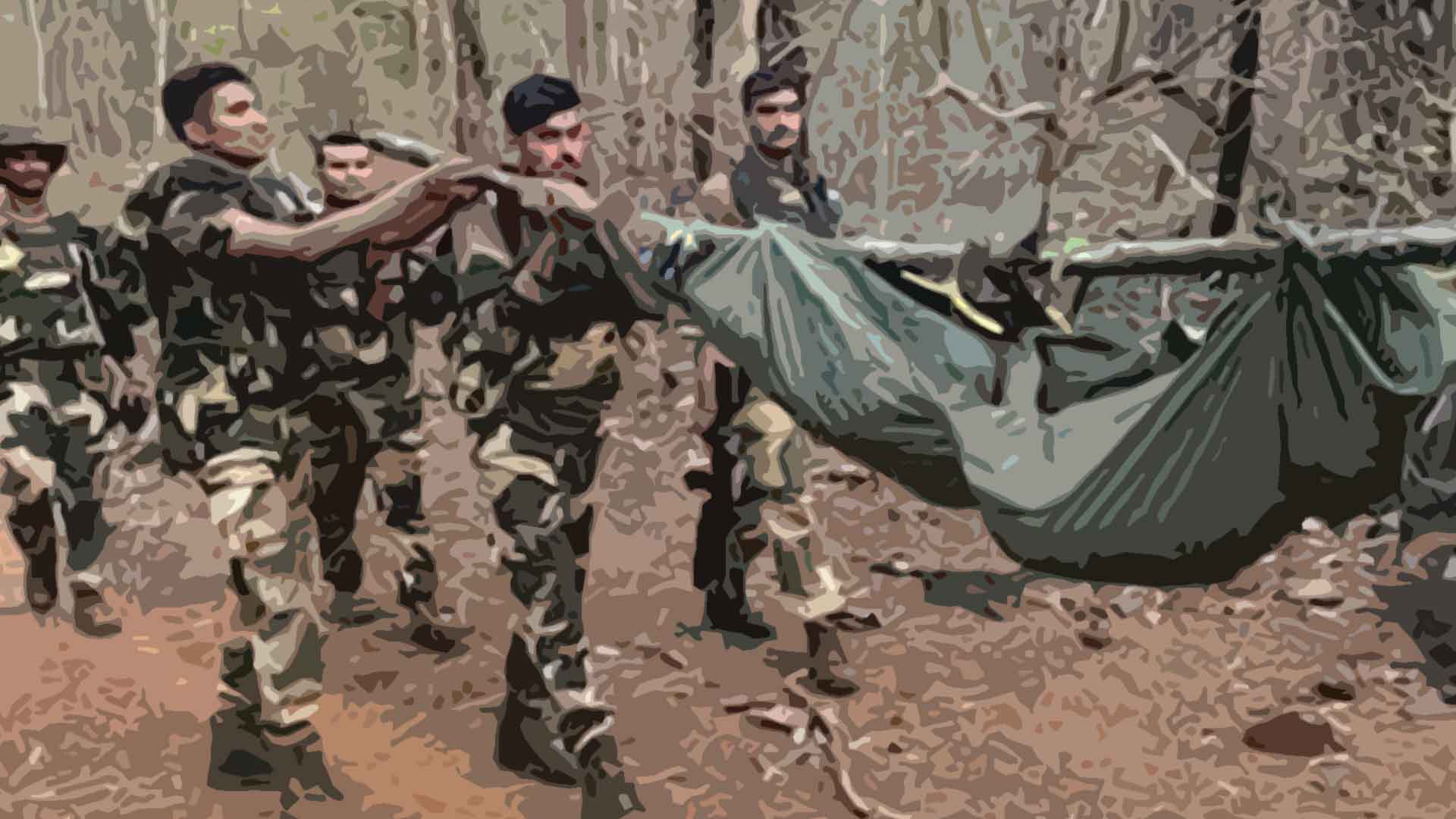
CPI (Maoist) Central Committe member comrade Onol Da killed by the reactionary paramilitaries -Long Live comrade Onol Da! _ICSPWI

 
Onol Da was the secretary of the Committee special zone of Bihar-Jharkhand for the CPI (Maoist). He joined the revolutionary movement when He was young, he is remembered as a very capable leader coming from the ground of adivasi, his assassination is a big loss for the revolutionary movement but the martyrs are immortal and they show to the new generations the way...
Long Live comrade Onol Da!
Long Live the New Democratic Revolutions in India!
Long Live the Communist Party of India (Maoist)

towards Bruxelles - 27th january - Indigenous Peoples’ Un-Freedoms and Our Academic Freedom A Call for Solidarity


We, the undersigned, note with deep concern and urgency the escalating drone attacks by security forces on India's Indigenous (Adivasi) people, particularly the recent bombings of Adivasi areas in Bastar. These acts not only violate the Indian Constitution but also infringe upon the fundamental rights and dignity of Adivasi communities. As scholars concerned about indigenous communities, we consider it our responsibility to draw attention to these attacks on Adivasi lives and livelihoods, and advocate for justice for the people whose lives are intertwined with our research and scholarship.

In April 2023, there were reports of yet another aerial drone bomb attack carried out by security forces in the Bijapur district of Bastar, Chhattisgarh. These attacks represent a disquieting expansion of state-sanctioned terror against the Adivasi population and pose an imminent threat to their lives and existence. It is crucial to recognize that these attacks are not isolated incidents but occur within the wider context of Adivasi resistance against state-led efforts to displace and dispossess them from their ancestral lands, enabling corporate access to the region's mineral wealth. The use of aerial bombardment against civilians demands immediate attention and action. We express deep concern about the silence within the academic community regarding this critical issue......

The latest drone attack marks the fourth instance of such attacks within a span of three years. Investigations have verified the allegations of aerial attacks. In February 2023, the Coordination of Democratic Rights Organizations (CDRO) Fact-Finding Team was initially denied access to the villages of Usoor Block in Bijapur to investigate the aerial bombings that occurred on January 11, 2023. However, in March 2023, the CDRO successfully conducted an inquiry, visiting Mettuguda, Bottethong, and Errapalli villages, where evidence and testimonies confirmed multiple drones dropped nine bombs, followed by intense firing from two helicopters. Such compelling evidence leaves little room for doubt regarding the allegations made by the villagers of Bastar. Similar claims of aerial bombings were reported in 2021 and 2022, further corroborating the distressing reality. Denying access to a reputable rights organization like the CDRO, who subsequently confirmed the allegations, strongly suggests an ongoing aerial war waged by the Indian state in Bastar.

The testimonies of affected villagers poignantly reflect the trauma and fear inflicted by these attacks, with drones indiscriminately dropping bombs on individuals engaged in their daily routines. This wanton use of force serves as a strategic tool to instill fear and coerce Adivasi communities into abandoning their villages, effectively facilitating the takeover of the region by mining corporations. The dismissive response of the police to these allegations compounds the injustice.

International laws explicitly prohibit the use of aerial attacks in internal conflicts or areas inhabited by civilians. However, the Indian state appears to be gearing up towards an all-encompassing war against the Adivasi populace, relentlessly supporting the plundering of rich mineral resources in the region by both Indian and multinational corporations and conglomerates. The latest drone attack must be contextualized within Operation SAMADHAN-Prahar, an ongoing military operation initiated in 2017 as an extension of Operation Green Hunt explicitly designed to suppress the democratic resistance of the Adivasi people against corporate exploitation. These operations clearly involve procuring drones and weapons, establishing numerous paramilitary camps, and effectively transforming security forces into private militias for corporations, despite the Supreme Court of India declaring Salwa Judum, a government-funded vigilante organization, as unlawful. In other words, an undeclared civil war is being waged upon the people to facilitate resource exploitation in the interest of capital.

These attacks also flagrantly violate not only the rights of the Adivasis but also contravene the Indian Constitution. Article 14 guarantees the right to equality before the law, which is severely compromised by the targeted nature of these attacks. Article 21 safeguards the right to life and personal liberty, undermined by the use of force and the creation of a climate of fear. Article 19 protects freedom of speech, expression, and assembly, all of which are suppressed by silencing Adivasi voices and dissent. Moreover, the erosion of constitutional safeguards intended to protect Adivasis further exacerbates their vulnerability to state-sanctioned attacks. Special provisions designed to prevent displacement have been systematically undermined, leaving these communities defenseless. The diminishing authority of Tribal Advisory Councils, responsible for ensuring Adivasi participation in decision-making processes, curtails their agency and perpetuates the violation of their rights and traditional practices.

The resounding silence of the opposition, judiciary, media, and the larger citizenry of India in response to these drone attacks and paramilitary camps is a stark mockery of democracy. Academic research has contributed to the evidence that the fundamental conflict in the central Indian forests centers around the Adivasis' unwavering defense of their ancestral lands against the encroachment of powerful corporate entities seeking valuable mineral resources. Academic work has also paid due recognition to the dire consequences of displacement and dispossession, which the Adivasis have bravely chosen to resist despite becoming primary targets of violence and human rights violations, exacerbating their persistent marginalization and pre-existing socio-economic disparities perpetuated by a negligent state.

As academics, we recognize our social responsibility to use our academic freedom to unequivocally condemn these attacks and ardently advocate for the restoration and fortification of constitutional safeguards. It is imperative that we utilize our academic platforms, expertise, and influence to raise awareness of these violations, and demand immediate action to safeguard the rights and lives of Adivasi communities.

We commend Member of the European Parliament, Marisa Matias, for raising the issue in the European Parliament and asking, “How is the Commission, and specifically DG ECHO [Directorate-General for European Civil Protection and Humanitarian Aid Operations], supporting the victims of aerial bombing and the indigenous environmental defenders who are suffering persecution in India?” This question was asked shortly after a statement on the bombings was released by several global civil society organisations, a few days after the fourth attack. The EU has acknowledged that “Due to access restrictions imposed for security reasons by the Government of India in Bijapur district, no humanitarian or human rights organizations are allowed to operate in these regions.” It is crucial to question the security reasons behind these access restrictions, as they may impact our academic freedom to work in these areas.

We strongly believe that it is our responsibility to amplify the voices of the Adivasis and to stand in unwavering solidarity with them. We pledge our support to their fight for justice and a more equitable India, where the rights and dignity of all individuals are upheld.

Sign the statement here

SIGNATORIES

  1. American Anthropological Association, USA

  2. Indigenous Environmental Network, USA

  3. International Work Group for Indigenous Affairs, Denmark

  4. First Peoples Worldwide, USA

  5. Association of Social Anthropology in Aotearoa, New Zealand

  6. International Solidarity for Academic Freedom in India

  7. Tarcila Rivera Zea, CHIRAPAQ Centro de Culturas Indígenas del Perú, Peru

  8. Ruth Buffalo, Human Rights Program Advocate, International Indian Treaty Council, USA

  9. Ben Silverstein, Australian National University; Co-Editor, Aboriginal History, Australia

  10. Fany Kuiru Castro, Coordinadora de las Organizaciones Indígenas de la Cuenca Amazónica, Colombia

  11. J. Kēhaulani Kauanui, Professor of Anthropology and American Studies, Wesleyan University, USA

  12. Jeff Corntassel, Professor, Indigenous Studies, University of Victoria, Canada

  13. Teresa L. McCarty, Distinguished Professor and GF Kneller Chair in Education and Anthropology; Faculty, American Indian Studies; Co-Editor, Journal of American Indian Education, University of California, Los Angeles, USA

  14. Jaume Franquesa, Associate Professor, University at Buffalo-SUNY, USA

  15. Michael Yellow Bird, Dean and Professor, University of Manitoba, USA

  16. Manuela Lavinas Picq, Professor of International Relations, Universidad San Francisco de Quito, Ecuador, USA

  17. Noelani Goodyear-Kaopua, Professor of Political Science & Indigenous Politics, University of Hawai’i, USA

  18. Jon Charles Altman, Emeritus Professor, Australian National University, Australia

  19. Temitope Oriola, Professor, University of Alberta (signed as an individual), Canada

  20. Aileen Moreton-Robinson, Professor of Indigenous Studies University of Queensland, Australia

  21. Ramy Bulan, Research Fellow, University Malaya, Malaysia

  22. Marisol de la Cadena, Professor (Anthropology and STS) University of California-Davis, USA

  23. Meena Dhanda, InSAF India

  24. John Harriss, Simon Fraser University, Vancouver, Canada

  25. Chandra Talpade Mohanty, Syracuse University, USA

  26. Priya Chacko, University of Adelaide, Australia

  27. Ilan Kapoor, Professor, York University, Toronto, Canada

  28. Haroon Akram-Lodhi, Trent University, Canada

  29. Ania Loomba, University of Pennsylvania, USA

  30. Suvir Kaul, University of Pennsylvania, USA

  31. Sourayan Mookerjea, Professor, University of Alberta, Canada

  32. Gyan Prakash, Professor, Princeton University, USA

  33. Alpa Shah, Professor, London School of Economics, UK

  34. Jayant Lele, Professor Emeritus. Queen's University, Canada

  35. Felix Padel, Research Associate, Centre for World Environment History, University of Sussex, UK

  36. Gyanendra Pandey, Professor, Emory University, USA

  37. Jens Lerche, Professor, SOAS University of London, UK

  38. Lotika Singha, InSAF India

  39. Alvin So, Professor Emeritus, Hong Kong University of Science and Technology, Hong Kong

  40. Vinay Lal, Professor of History, University of California, Los Angeles, USA

  41. Raju J Das, Professor, York University, Toronto, Canada

  42. John Hutnyk, Professor, Ton Duc Thang University, Vietnam

  43. Vamsi Vakulabharanam, Co-Director Asian Political Economy Program, Associate Professor of Economics, University of Massachusetts Amherst, USA

  44. Subir Sinha, Reader, Development Studies, SOAS London, UK

  45. Walden Bello, Most Distinguished Defender of Human Rights Awardee from Amnesty International Philippines, International Adjunct Professor of Sociology, State University of New York, Binghamton, USA

  46. David Nugent, Professor of Anthropology, Emory University, USA

  47. Vinita Damodaran, Professor University of Sussex, UK

  48. Jan C Breman, Professor, Amsterdam Institute for Social Science Research, The Netherlands

  49. Chandana Mathur, Associate Professor, Department of Anthropology Maynooth University, Ireland

  50. Alessandra Mezzadri, Reader in Global Development, SOAS, UK

  51. Marion Werner, Professor, University at Buffalo, State University of New York, USA

  52. David Ludden, Professor of History, New York University, USA

  53. Dina M. Siddiqi, Clinical Associate Professor, New York University, USA

  54. Sruti Bala, Associate Professor, University of Amsterdam, The Netherlands

  55. Zoe Todd, Associate Professor, Indigenous Studies, Simon Fraser University, Canada

  56. Audra Mitchell, Professor, Balsillie School of International Affairs/Wilfrid Laurier University, USA

  57. May-Britt Öhman, Associate Professor, Uppsala University, Sweden

  58. Stephanie Leder, Associate Professor/Researcher, Sweden

  59. Leanne Betasamosake Simpson, Independent Scholar, Canada

  60. Bonita Lawrence, Indigenous Studies Program, York University, USA

  61. Grazia Borrini-Feyerabend, University of California Berkeley Alumna. USA

  62. Harry Fischer, Swedish University of Agricultural Sciences, Uppsala, Sweden

  63. Patricia McGuire, Associate Professor, Carleton University, Canada

  64. Neepa Majumdar, Associate Professor, University of Pittsburgh, USA

  65. Hoang Tan Nguyen, Associate Professor of Literature, University of California, San Diego, USA

  66. Mehana Vaughan, Faculty, University of Hawai’i at Mānoa, USA

  67. Sunaina Maira, Professor, UC Davis, USA

  68. Usha Iyer, Stanford University, USA

  69. Jyotsna Kapur, Professor/Southern Illinois University, Carbondale, USA

  70. Lyla, Professor, Institute of Development Studies, UK (personal not institutional endorsement)

  71. Clint Carroll, Associate Professor, University of Colorado Boulder, USA

  72. Jennifer L. Fluri, Professor of Geography, University of Colorado Boulder, Boulder, Colorado, USA

  73. Sudeep Dasgupta, University of Amsterdam, The Netherlands

  74. Joe T. Berry, retired, City College of San Francisco and University of Illinois, Labor Studies/Labor Education, USA

  75. The London Story, Advocacy Officer, UK

  76. Kirsten Anker, McGill University, Canada

  77. Robert Warrior, Hall Distinguished Professor, University of Kansas, USA

  78. Circe Sturm, Professor, The University of Texas at Austin, USA

  79. Sally McAra, Honorary Research Fellow, University of Auckland, New Zealand 

  80. Malvika Gupta, DPhil Candidate, University of Oxford, UK

  81. Marco Bassi, Associate Professor, University of Palermo, Italy

  82. Shiri Pasternak, Associate Professor, Criminology, Toronto Metropolitan University, Canada

  83. Irene Shankar, Associate Professor, Mount Royal University, Canada

  84. Nancy Glazener, Professor of English and GSWS, University of Pittsburgh, USA

  85. Naomi Lightman, Associate Professor, Toronto Metropolitan University, Canada

  86. Lucy Fowler, Assistant Professor, Faculty of Education, University of Manitoba, Canada

  87. Katyayani Vidmahe, Prajaswamika Rachayitrula Vedika, India

  88. Nayantara Ranganatha, Student, University of Amsterdam, The Netherlands

  89. Rahul Rao, Reader, University of St Andrews, Scotland

  90. Shyam Prasad, Bangalore, India

  91. Ian Wall, Professor, Heriot Watt University, Scotland

  92. Prabir Chatterjee, Medical Officer/ Independent

  93. Maithri, Junior Lecturer, Tilburg University, The Netherlands

  94. Rajesh Misra, Professor (Retired)

  95. Paula Chakravartty, James Weldon Johnson Associate Professor of Media Studies, New York University, USA

  96. Hindus for Human Rights, Sunita Viswanath, Executive Director

  97. University of Alberta, Social Justice & International Education Specialization

  98. Dayton Andrews, Public School Teacher with the San Francisco Unified School District, California, USA

  99. Malini Roy, Freelance writer, UK

  100. Dr. Steve Macek, Professor, Communication, North Central College, Illinois, USA.

  101. Shiva Shankar, Professor, Retired from IITB and CMI

  102. Paul Eisenberg, Retired Professor

  103. Aneil Rallin, Unaffiliated Scholar, USA

  104. Dia Da Costa, Professor of Social Justice and International Studies in Education, University of Alberta, Canada

  105. Raj Patel, Research Professor, University of Texas at Austin, USA

  106. Douglas L. Paterson, Retired Professor of Theatre and Social Change

  107. Gurpreet Kaur, Independent Researcher

  108. Rashmi Varma, University of Warwick, UK

  109. Dr. Philipp Zehmisch, Senior Academic Staff, South Asia Institute, Heidelberg, Germany

  110. Satyaki Majumdar, Researcher, Jadavpur University

  111. Association for the Protection of Democratic Rights (APDR), Member

  112. Putul Sathe, Associate Professor, SNDT Women’s University

  113. Nisha Thapliyal, Senior Lecturer, University of Newcastle

  114. Asmita Aasaavari, Sociologist, University Of Connecticut, USA

  115. Leslie Martin D, Advisor to Dalit Bahujan Shramik Union, Telangana and Andhra Pradesh

  116. Deepa, Independent Activist

  117. Anand Doraswami, Private Citizen

  118. Ayelen, London Mining Network

  119. Rohini Hensman, Writer and Independent Scholar

  120. Sue Willman, King’s College Legal Clinic, Lecturer, UK

  121. Anne Harley, Senior Lecturer, UKZN, KwaZulu-Natal

  122. K. Ravi Chander, Activist, Hyderabad, India                          

  123. Ashok Danavath, Independent Researcher                       

  124. Amal Chatterjee, Senior Course Tutor, University of Oxford, UK 

  125. Basav Sen, Climate Policy Director, Institute for Policy Studies, Washington DC, USA

  126. Priya Jaikumar, Professor, University of Southern California, USA

  127. Ian Woolford, Lecturer, LaTrobe University, Australia

  128. Dr Andy Higginbottom, Associate Professor (Retd)

  129. Chhaya Datar, Retired Professor at TISS

  130. Ronak M Soni, Research Associate, University of Cambridge, UK

  131. Prakash Kashwan, Associate Professor of Environmental Studies, Brandies University

  132. Pritam Singh, Professor Emeritus in Economics, Oxford Brookes Business School, Oxford, UK

  133. Purnima Bose, Professor, Indiana University, USA

  134. Professor A. K. Maleri, President, Shaheed Bhagat Singh Vichar, Punjab, India

  135. James Igoe, Professor of Anthropology, University of Virginia

  136. MV Ramana, Journalist

  137. Shivani Upadhyaya, UC Berkeley, USA

  138. Rohan Poojary, TU Wein, Austria

  139. Harshita Gupta, Independent Researcher

  140. Nandita Narain, Associate Professor (Retd), St Stephen’s College, Delhi University

  141. Sujit Chaudhary, Environmental Activist


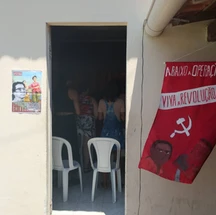
Brasil - Organizações comemoraram o Natalício do Presidente Mao Tse-Tung

e8b626_279b4406433f49bcb57d7c0ad97ad781~mv2

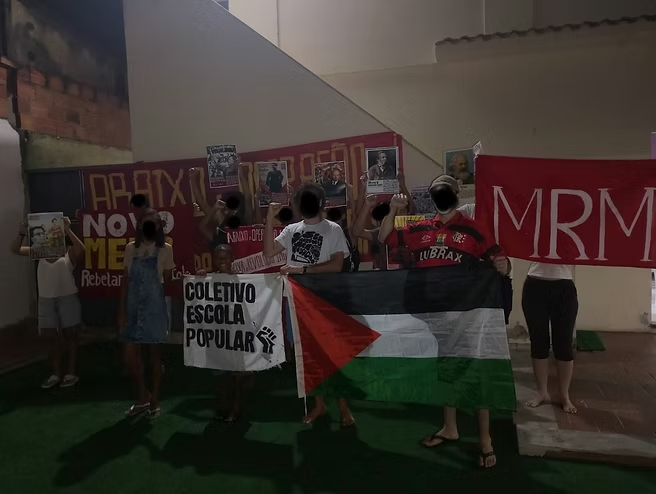
Republicamos aqui a matéria da Revista Revolução Cultural sobre a comemoração do aniversário do Presidente Mao organizada por nós junto ao MRM e ao Coletivo Escola Popular.


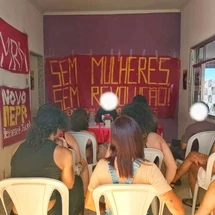
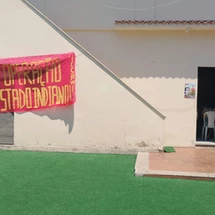
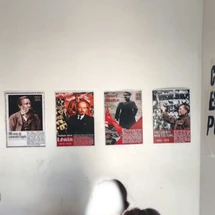
No 132° aniversário de natalício do Presidente Mao Tsetung, no último dia 26/12, o Novo Movimento Estudantil Popular Revolucionário (Novo MEPR), o Movimento Revolucionário de Mulheres (MRM) e o Coletivo Escola Popular (CEP), realizaram celebração conjunta em sua homenagem. Além de celebrar o natalício do grande timoneiro, também foi pautada a defesa internacionalista da revolução indiana e a sua importância na atualidade.

O dia começou com uma plenária do Movimento Revolucionário de Mulheres, com o objetivo de elevar a organização das mulheres e sua autodefesa. Durante a plenária, as companheiras leram e debateram o texto “Feminicídio, a face extrema do capitalismo” e estrearam a cartilha pela autodefesa das mulheres nos relacionamentos. O material “Companheira, fique atenta a esses comportamentos!” identifica comportamentos abusivos que constam em casos famosos de feminícidios no Brasil, como forma a identificar e se proteger de violências.

Também foi lido e distribuído o documento do Partido Comunista da Índia (Maoista) dos 25° anos do Exército Guerrilheiro Popular de Libertação, cumprindo o dever internacionalista proletário e a defesa da revolução indiana. Enquanto isso, os companheiros faziam os preparativos do almoço e a creche das crianças.

towards bruxelles 27th january -Operation Kagar: The War on Adivasis and Their Land

Adivasis have become the victims of collective punishment as the state wages a war against them, and the brutality of Operation Kagar is intended to strip Adivasis of any claim over the forests, land and dignity.

This policy of militarisation and war on Adivasis has to end, and there must be the guarantee of a democratic space and environment for the deprived and oppressed Adivasis in Bastar and other areas of Adivasi unrest.

The escalated war on Maoists under “Operation Kagar”, has seen security forces in Chhattisgarh, Andhra Pradesh, Jharkhand and Maharashtra claim the lives of hundreds of Adivasis over the past year, and in particular since January 2025. The use of advanced warfare equipment including Israeli drones, fake encounters, extra-judicial violence by the state, and large-scale proliferation of security camps particularly in Bastar, Chhattisgarh, have to be seen in the context of Home Minister Amit Shah setting March 2026 as the deadline to make India Maoist-free.This alarming militarisation has been met with peaceful and sustained protests by Adivasis against the establishment of security camps in Fifth Schedule Areas without any consultation and consent of the concerned Gram Sabhas, and illegal appropriation of their forests, lands and other resources while also demanding proper schools, health facilities and other basic amenities. The Chhattisgarh government has responded by banning a people's rights organisation like the Moolvasi Bachao Manch, in October 2024, under the provisions of the draconian Chhattisgarh Special Public Security Act. More recently, the Chhattisgarh’s police has targeted Manish Kunjam, prominent Adivasi leader in the Bastar region, who has been at the forefront of the struggle seeking investigation into the irregularities of distribution of tendu patta bonus amounting to crores of rupees.


In the name of 'Naxal-mukt Bharat' the BJP-led governments have unleashed a campaign of complete militarisation of resource-rich Adivasi areas like Bastar and launch an unbridled war on the Adivasi people and all kinds of protests and people's rights campaigns. This focus on military operations rather than the socio-economic development of the region is condemnable and lays bare the true intentions of the government to enable corporate take-over of these mineral-rich regions. The reported plans to convert these military camps into so-called “integrated development centres” to provide various welfare services including hospitals, schools, rations and other services, points to a plan of permanent military presence in the region.

Speaking at the Press Conference organised by the Coordination Committee for Peace at Press Club, New Delhi on 9th May 2025, Comrade Dipankar emphasised that Bastar is passing through an entirely new phase which is qualitatively different from earlier ones like Salwa Judum, Operation Green Hunt or encounters. Whatever name the government gives it, this time around it is essentially an extrajudicial extermination campaign which is not acceptable by any democracy irrespective of ideologies. Amit Shah has fixed a March 2026 deadline which translates into a licence to kill indiscriminately. In fact, the increasing numbers of encounters coming now explicitly make it clear that people are being killed one sidedly, and on a large scale.

Com Dipankar urged that, firstly, we must recognise this as an extrajudicial extermination campaign by the government which if continues, will be fatal for the democracy. This violence by the state is a killing spree, which is unacceptable and must be stopped. Such an approach irrespective of what Maoists or any other movement, organisation or ideology have done must be opposed. Com Dipankar hope that the Coordination Committee for Peace will succeed in raising this issue throughout the country and will build enough pressure on the government, recognising the hard task at hand given that the recalcitrant attitude of the Union government which neither listens to the people’s voices nor takes any responsibility and accountability on its shortcomings, and yet efforts must be made in that direction.

Com Dipankar also made the point about Bastar and Adivasis, and that these were Scheduled areas, which are mineral rich, and has a very rich cultural and historical heritage, has been facing complete violations of Scheduled area norms and the rights of the Gram Sabhas only to facilitate militarisation and corporatisation. Com Dipankar also made it clear that mining and land acquisitions in this area cannot take place without the help of military camps even when there were no Maoists in Bastar. It is for this reason that it is not only the Maoists facing repression, but even Gandhiwadis like Himanshu Kumar were forced to leave that area. He added that it is a complete suppression of dissent and whoever talks about Adivasis through whatever angle and means are being jailed.


The civil society as democratic medium of this country should collectively demand this because it is in the common interest of all beyond ideological leanings. Otherwise any future struggle or movement belonging to any ideology will face a similar kind of repression.

Adivasis have become the victims of collective punishment as the state wages a war against them, and the brutality of Operation Kagar is intended to strip Adivasis of any claim over the forests, land and dignity. This policy of militarisation and war on Adivasis has to end, and there must be the guarantee of a democratic space and environment for the deprived and oppressed Adivasis in Bastar and other areas of Adivasi unrest.


RJ: O terrorismo de Estado continua no Complexo do Salgueiro


Na última quarta-feira (16), mesmo sem cumprir as regras da criminosa ADPF das favelas que está em vigor, a Polícia Civil do Rio de Janeiro, juntamente com policiais do 7⁰ batalhão da Polícia Militar (PM), mataram pelo menos 22 pessoas em uma operação no Complexo do Salgueiro, segundo relatos de fontes do Núcleo da Revolução Cultural em São Gonçalo.


Ao início da operação, que durou cerca de 12 horas, a energia de toda a favela foi cortada (prática comum das polícias neste tipo de ação), em um dia em que toda a região metropolitana estava em estado de emergência devido ao calor de estágio 4 de 5 de perigo. Isto condenou os moradores a aguentar uma sensação térmica que beirou os 50⁰C, sem ventilador ou ar condicionado, e confinados em suas casas que, em sua maioria, possuem telhas “brasilit” ou embolso nas paredes que intensificam a sensação de calor.


Dentre os assassinados, está um mototaxista, que foi fuzilado na parte de fora da comunidade, embaixo do viaduto da BR-101, após não ter parado em uma blitz. Relatos dão conta que o rapaz teria continuado andando após os policiais acenarem para ele, sendo baleado pelas costas, "sem mais nem menos". Nas favelas do país, a pena de morte já é aplicada desde tempos imemoriáveis para pessoas pobres e pretas. A família do rapaz assassinado não quis seu nome divulgado com medo de represálias.


Questionado sobre o motivo da operação, o porta-voz do 7⁰ batalhão afirmou que o objetivo era “recuperar carros roubados”, que, por sinal, não foram recuperados. Essa afirmação é uma comprovação do quanto a vida das pessoas do Salgueiro não vale nada para a instituição terrorista da Polícia Militar do estado do Rio de Janeiro, pois coloca a propriedade, neste caso veículos, à frente da vida de todas as milhares de pessoas que lá residem.


Uma operação que mata 22 pessoas, que não sabemos nome nem o porquê de terem sido assassinadas, e que empurra tantas outras milhares a enfrentar um cenário calamitoso das ondas de calor extremo dentro da favela, deve ser chamada pelo o que ela é: terrorismo de Estado! É isso que são essas operações.


Até a última atualização desta matéria, nem a Polícia Militar ou a Polícia Civil confirmaram ou divulgaram os nomes dos mortos ou o número estimado de 22 mortes.


Italy - demostration for the freedom of antifa judged in Budapest


corteo il 24 a milano per Gino e gli antifascisti processati a Budapest

A quasi un anno di distanza dall’ultimo corteo cittadino contro la repressione delle antifasciste e degli antifascisti, abbiamo deciso di tornare per le strade di Milano a manifestare la nostra rabbia, determinazione e solidarietà antifascista.
Nel mese di gennaio le vicende giudiziarie del processo di Budapest subiranno una brusca accelerazione: il tribunale di Parigi si pronuncerà sulla richiesta di estradizione per Zaid e Gino, a Dusseldorf inizierà il processo per Nele, Paula, Emmi, Clara, Luca e Moritz (attualmente in carcere in Germania) e il 22 gennaio è prevista la sentenza per Maja e Gabri.

Non vogliamo farci scoraggiare ma rispedire al mittente questo accanimento repressivo, rafforzando la presenza nelle strade e la solidarietà internazionale dal basso a partire dal 15 gennaio, quando sono in programma manifestazioni e iniziative di solidarietà e lotta in tutta Europa.

A Milano è previsto un aperitivo benefit con dibattito venerdì 16 a SOCS (via Celoria, 26), un concerto matinèe benefit domenica 25 in T28 (via dei Transiti, 28) e il corteo cittadino di sabato 24 alle 18, da Porta Genova.

Durante il corteo in particolare vogliamo opporci alla logica repressiva che punta a spezzare i legami di solidarietà arrivando a San Vittore, dove ad oggi ancora sono detenuti anche i compagni palestinesi accusati di associazione con finalità di terrorismo.

Per Maja, Gabri, Gino, in solidarietà a tuttx lx imputatx del processo di Budapest e a tutti i prigionieri politici.

#FreeAllAntifas

towards Bruxelles 27th january - Build unity of all oppressed minorities, Dalits, tribals, women and working people against Brahminical Hindutva fascism!

We see that for the last few days, the fascist RSS-BJP goons have been attacking various places including churches focusing on the religious festivals of Christian minorities in India. Hindutva mobs attacked school students while singing Christmas carols in Kerala. Similar incidents took place in Delhi too. Several schools have been forcibly closed across the country for the 'crime' of celebrating Christmas. Christian tribals are being attacked in Chhattisgarh. Yesterday, i.e. on the 25th, Bajrang Dal vandalized several shops selling cakes and other items in Raipur, Chhattisgarh. These are all pre-planned incidents. For the past few days, the Sangh has been making several anti-Christian statements. It has been said that "India is a Hindu state. There is no place for Christians here". All these are continuous incidents of minority oppression across the country. We have been witnessing fascist attacks on the Muslim people almost every day in the country. On the 24th, a Muslim worker from West Bengal was murdered in Odisha on the pretext of 'suspecting Bangladeshi'. The Sangh's parliamentary face, Modi's government, is ready to appease the vulture eyes of corporates on the water, forests and land of the tribals. Atrocities on Dalits are increasing in the state. Incidents of sexual violence against women and the marginalized sex are increasing. For a week now, we have been witnessing continuous attacks by Hindutva mobs on the Christian minorities. In most cases, the victims of mob attacks are the working class. In the interests of imperialism and their agents, the ruling class of India is not willing to make any concessions in implementing the fascist agenda of Hindi-Hindu-Hindustan. All the social sections that stand in its way, those who do not consider the poisonous philosophy of Brahmanical Hindutva to be compatible with their own agenda, will be oppressed. In the case of some, earlier, in the case of others. For example, creating religious divisions among the tribals of Chhattisgarh and pitting one section against the upper section is actually a blueprint to destroy their unity and hand over the natural resources there to the corporates. From previous experience, we have seen that this oppression of minorities is increasing along with the fascistization or saffronization of the state. And in this case too, this fascist mob will get the direct support of the administration and judiciary. Therefore, to build resistance against this mob, every oppressed section of society, including minorities, Dalits, tribals, must unite. The Revolutionary Students Front (RSF) is calling on every oppressed section of society to form a united militant mass resistance against the attacks of the Brahminical Hindutva fascist mob on the minority Christians across the country. Along with this, democratic, progressive, leftist organizations and individuals are being called upon to call for strong opposition at all levels against this continuous violence.