
Adivasis have become the victims of collective punishment as the state wages a war against them, and the brutality of Operation Kagar is intended to strip Adivasis of any claim over the forests, land and dignity.
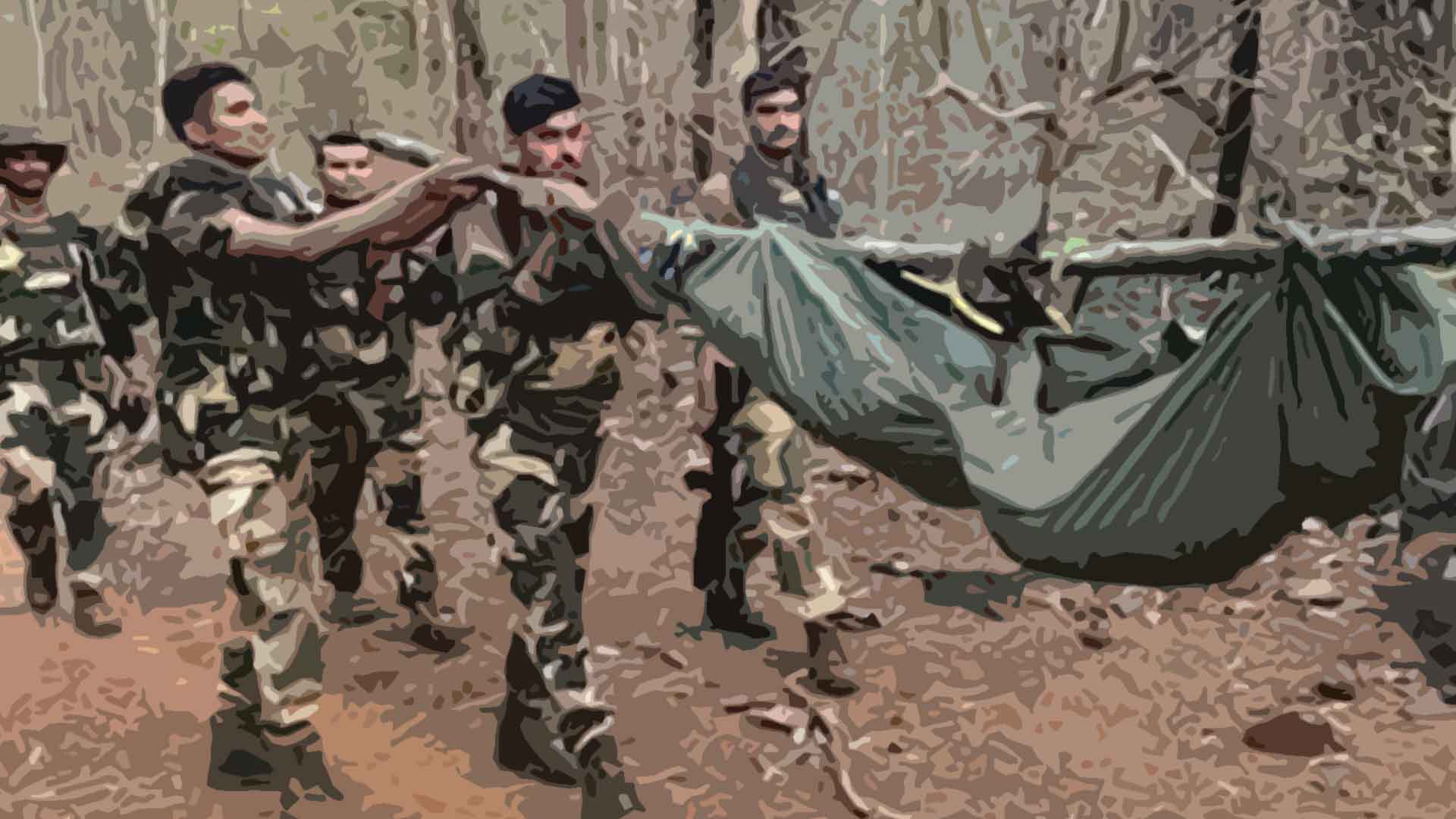
This policy of militarisation and war on Adivasis has to end, and there must be the guarantee of a democratic space and environment for the deprived and oppressed Adivasis in Bastar and other areas of Adivasi unrest.
In the name of 'Naxal-mukt Bharat' the BJP-led
governments have unleashed a campaign of complete militarisation of
resource-rich Adivasi areas like Bastar and launch an unbridled war on
the Adivasi people and all kinds of protests and people's rights
campaigns. This focus on military operations rather than the
socio-economic development of the region is condemnable and lays bare
the true intentions of the government to enable corporate take-over of
these mineral-rich regions. The reported plans to convert these military
camps into so-called “integrated development centres” to provide
various welfare services including hospitals, schools, rations and other
services, points to a plan of permanent military presence in the
region.
Speaking at the Press Conference organised by the
Coordination Committee for Peace at Press Club, New Delhi on 9th May
2025, Comrade Dipankar emphasised that Bastar is passing through an
entirely new phase which is qualitatively different from earlier ones
like Salwa Judum, Operation Green Hunt or encounters. Whatever name the
government gives it, this time around it is essentially an extrajudicial
extermination campaign which is not acceptable by any democracy
irrespective of ideologies. Amit Shah has fixed a March 2026 deadline
which translates into a licence to kill indiscriminately. In fact, the
increasing numbers of encounters coming now explicitly make it clear
that people are being killed one sidedly, and on a large scale.
Com
Dipankar urged that, firstly, we must recognise this as an
extrajudicial extermination campaign by the government which if
continues, will be fatal for the democracy. This violence by the state
is a killing spree, which is unacceptable and must be stopped. Such an
approach irrespective of what Maoists or any other movement,
organisation or ideology have done must be opposed. Com Dipankar hope
that the Coordination Committee for Peace will succeed in raising this
issue throughout the country and will build enough pressure on the
government, recognising the hard task at hand given that the
recalcitrant attitude of the Union government which neither listens to
the people’s voices nor takes any responsibility and accountability on
its shortcomings, and yet efforts must be made in that direction.
Com
Dipankar also made the point about Bastar and Adivasis, and that these
were Scheduled areas, which are mineral rich, and has a very rich
cultural and historical heritage, has been facing complete violations of
Scheduled area norms and the rights of the Gram Sabhas only to
facilitate militarisation and corporatisation. Com Dipankar also made it
clear that mining and land acquisitions in this area cannot take place
without the help of military camps even when there were no Maoists in
Bastar. It is for this reason that it is not only the Maoists facing
repression, but even Gandhiwadis like Himanshu Kumar were forced to
leave that area. He added that it is a complete suppression of dissent
and whoever talks about Adivasis through whatever angle and means are
being jailed.
The civil society as
democratic medium of this country should collectively demand this
because it is in the common interest of all beyond ideological leanings.
Otherwise any future struggle or movement belonging to any ideology
will face a similar kind of repression.
Adivasis have become the
victims of collective punishment as the state wages a war against them,
and the brutality of Operation Kagar is intended to strip Adivasis of
any claim over the forests, land and dignity. This policy of
militarisation and war on Adivasis has to end, and there must be the
guarantee of a democratic space and environment for the deprived and
oppressed Adivasis in Bastar and other areas of Adivasi unrest.

No comments:
Post a Comment