During Hasina’s administration, statistical manipulations were a
frequent occurrence involving GDP growth, per capita income, purchasing
power, food self-sufficiency, population figures, agricultural
production and consumption, foreign exchange reserves, and more.
Economists and domestic and international organizations have long
questioned the credibility of GDP growth figures, citing discrepancies
with export and remittance data, industrial growth, and private
investment rates.
The manipulation of GDP statistics was particularly evident during
the COVID-19 pandemic. Despite significant setbacks in transport,
hospitality, and small industries, the Bangladesh Bureau of Statistics (BBS) reported substantial growth in these sectors. For example, during July 2020 to June 2021, despite restrictions on public transportation, BBS claimed an additional 240 billion BDT or over 10% value addition.
Initial estimates for GDP growth during 2020-2021 were 5.43% based
on data from the first nine months. However, despite economic
stagnation in the final quarter due to COVID-19, the finalized figure
was reported as 6.94%, raising doubts about its
accuracy. A former secretary of the statistics department remarked, “GDP
growth figures are predetermined, and then the calculations are
retrofitted to match.”
Unreliable Inflation Figures
Inflation statistics reported by BBS often failed to align with
reality. For example, during a time of skyrocketing global and domestic
prices for essentials like rice, lentils, and cooking oil, BBS claimed
inflation had decreased. In January 2022, it reported a drop in
inflation compared to December 2021. Monthly inflation rates
(point-to-point) were cited as 6.05% in December and 5.86% in January. However, according to the South Asian Network on Economic Modeling (SANEM), actual food inflation rates for January 2022 were 11.36% in urban areas and 11.21% in rural areas—more than double the BBS figures.
pc 18 gennaio - Palestina/Siria - Una valutazione e un lavoro in corso e da fare - Editoriale
In Palestina avanza dietro la “foglia di fico” del cessate il
fuoco e dello scambio degli ostaggi con prigionieri palestinesi il
piano genocida dello stato sionista israeliano, appoggiato
dall’imperialismo Usa, pronto a passare, nel cambio presidenziale
da Biden a Trump, ad uno stadio di piena realizzazione ed a scrivere
l’ennesima pagina nera del sistema capitalista/imperialista nella
storia dei crimini dell’umanità e dei genocidi.
Su questo non c’è
altra soluzione che il sostegno alla resistenza palestinese, la sua
unità e alla guerra ad Israele da parte di tutto il mondo arabo
entro cui si sviluppi il movimento di resistenza anti imperialista di
tutte le masse arabe, volto a rovesciare e a prendere il posto dei
regimi arabi complici o inconseguenti.
Bisogna avere
fiducia nelle masse, sostenere la resistenza fino alla vittoria dal
fiume al mare per la liberazione della Palestina.
Lo stato di Israele,
appoggiato dall’imperialismo, tutto, e non contrastato dalle
cosiddette “potenze alternative” all’imperialismo Usa, Russia e
Cina, ha occupato una parte del Libano e “domato” la lotta degli
Hezbollah. Naturalmente tutto questo è sempre di natura temporanea
nell’incendio del Medio Oriente.
A questo si è
aggiunta la crisi siriana, su cui è assolutamente da fare una
distinzione. Da un lato è del tutto evidente che lo stato sionista
di Israele, approfittando della “pace” temporanea in Libano ha
concentrato la sua azione militare in Siria, occupando le alture del
Golan e ulteriori territori, con lo scopo anche qui di restarci per
sempre e ha colpito pesantemente le strutture militari siriane per
evitare che esse possano svolgere funzione anti Israele. E quindi, è
senz’altro giusto che la crisi siriana abbia
favorito questa azione
di Israele, ed è altrettanto giusto che la resistenza palestinese
denunci tutto questo, così come avviene nelle mobilitazioni
internazionali solidali in tutto il mondo e segnatamente nel mondo
imperialista e capitalista.
Altra cosa è voler
giudicare solo su questo metro, come elemento principale, lo stato
delle cose in Siria. E’ falso che il regime di Assad fosse un
regime antimperialista, e meno che mai che fosse in grado di
partecipare realmente a un fronte di resistenza per la Palestina e
antimperialista. Il regime di Assad era ed è l’anello debole in
Siria per la sua natura reazionaria, dittatoriale, nepotista e
criminale, ed è responsabile della perdita di ogni sostegno
popolare, cosa che ha favorito l’avanzata delle forze che hanno ora
conquistato il potere in Siria.
Le stesse
dichiarazioni di Assad dimostrano l’oscenità del personaggio e del
suo regime. E’ scappato imboscando i soldi a Mosca e ora dichiara
di essere stato costretto da Mosca a rifugiarsi nell’esilio dorato
in Russia; fatto che sarebbe anche peggio e che dimostrerebbe quanto
pura pedina della Russia fosse il regime di Assad.
Noi siamo
incondizionatamente per la caduta del regime di Assad. Certo un
regime anti popolare può cadere, per così dire, da destra come da
“sinistra”, e quando non cade da “sinistra” finisce per
cadere da destra. E questo da vita ad un regime pur sempre
antipopolare, asservito all’imperialismo, e nel caso concreto
all’influenza determinante della aspirante potenza regionale della
Turchia di Erdogan.
Per le masse in
Siria si passa obiettivamente “dalla padella alla brace”. Ma
naturalmente ci vorrà del tempo perché questo diventi chiaro e
soprattutto che si ricostruisca un’opposizione popolare,
progressista e antimperialista in Siria, non al servizio di nessun
imperialismo, di nessun regime reazionario nell’area. Sia chiaro
che la nostra posizione è di appoggio solo a un movimento di
resistenza di questa natura.
All’interno della
questione siriana e con l’azione della Turchia è chiaro che esiste
un’emergenza del movimento di liberazione del Kurdistan,
un’emergenza Rojava.
La Turchia
approfitta dello Stato delle cose per una resa dei conti di stampo
genocida verso il popolo curdo, il suo movimento di liberazione,
l’esperienza avanzata di resistenza e di auto determinazione
rappresentata da Rojava.
Per questo siamo
dalla parte di tutti coloro che difendono il movimento di liberazione
del Kurdistan e l’esperienza Rojava dall’annientamento. Guerra
nella guerra nella vicenda siriana e nel movimento attuale.
Noi, però, non
riteniamo che il movimento di liberazione curdo possa ottenere l’auto
determinazione legandosi ora a quello ora a quell’altro
imperialismo e potenza regionale. Tutte sono contro uno Stato di
autodeterminazione curdo. E pensiamo che esistano in realtà nel
movimento di liberazione cordo, compreso il Pkk, posizioni illusorie,
socialdemocratiche e riformiste, illusioni di sfruttare a proprio
vantaggio le contraddizioni inter imperialiste, sia relative ai paesi
imperialisti occidentali, Usa in testa, sia al ruolo della Russia.
In questo contesto
sono le masse, le forze rivoluzionarie e progressiste nell’area i
padroni del loro destino. Ed è, come l’esperienza insegna, la
guerra di popolo di lunga durata l’unica arma vincente, finora non
applicata come strategia vincente nella lotta di liberazione curda,
nelle sue tre armi indispensabili: Partito comunista, fronte unito,
esercito popolare.
Naturalmente, nel
cuore dei paesi imperialisti il nostro problema è un altro.
Da un lato
combattere il nostro imperialismo e le sue alleanze imperialiste che
agiscono eccome nella regione; dall’altro contrastare le posizioni
nel nostro paese di forze presunte comuniste e antimperialiste,
pronte come sempre a fare confusione invece che chiarezza.
L’area che difende
il regime di Assad, oltre che sbagliare analisi della realtà, è
fatta di “grilli parlanti”, complottisti, inutili e impotenti
sostenitori della lotta di liberazione delle masse.
Chi si diletta nel
discorso “a chi giova la caduta di Assad” (vedi Contropiano) fa
un discorso che non tiene assolutamente conto delle masse siriane e
vuole pilotarci ancora una volta al carro delle potenze imperialiste
alternative all’imperialismo Usa.
Più complessa è la
posizione di altre forze che descrivono più esattamente la
situazione reale che si è creata e non vogliono schierarsi coi
regimi arabi antipopolari e sono contro ogni imperialismo nell’area.
La questione è però che non è sufficiente dire questo senza
guardare dentro le forze di resistenza del popolo e alla necessità
di appoggiare comunque, all’interno di una realtà complessa e
frastagliata, le forze progressiste e anti imperialiste, e in
particolare i Partiti comunisti turchi di orientamento
marxista-leninista-maoista e le forze ad essi vicine che sono la
punta più avanzata nell’area, che lottano contro l’imperialismo,
contro il regime turco, contro le forze reazionaria post Isis, Al Qaida,
e sicuramente non sono al servizio dei regimi arabi dell’area.
proletari comunisti - dicembre 2024
PS. Stiamo
approfondendo le posizioni, stiamo prendendo contatti con le forze
comuniste mlm e antimperialiste dell’area per approfondire e
migliorare la nostra analisi, partecipare ai movimenti di solidarietà
generali e particolari e contribuire alla chiarezza e alla
mobilitazione nel nostro paese e a livello internazionale.
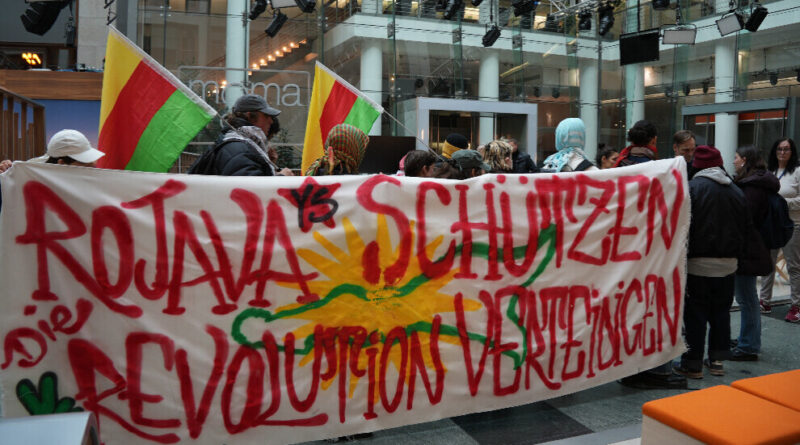
Berlin, Germany, December 19, 2024: In Berlin,
Germany, around twenty activists occupied the foyer of the ZDF
television studio to draw attention to the attacks by the Turkish
military and the Syrian National Army (SNA) on Rojava and to demand
appropriate coverage. The activists also demanded the recognition of the
Autonomous Administration in Rojava. The peaceful protest ended with a
police operation.
The activists said that before the evacuation there was a
constructive discussion with those responsible for running the ZDF. The
discussion ended with an exchange of contacts and the prospect of a
meeting. “We then declared that we were leaving the building
voluntarily,” said the activists.
The police, however, insisted on getting the identities of the
activists “in order to be able to file charges of trespassing. We asked
ZDF to withdraw the complaint of trespassing due to the positive outcome
of the discussion and our willingness to leave voluntarily,” said the
activists, adding that “ZDF did not want to give us this guarantee. We
then refused to leave the building voluntarily without a guarantee that
the complaint would be withdrawn and were then evicted by the police
using painful holds.”
The activists demanded, among other things, that German and, above
all, public media companies fulfill their duty of democratic and
all-round reporting and cover the escalating attacks by Turkey and the
SNA on the Democratic Autonomous Administration in Northern and Eastern
Syria (DAANES), also known as Rojava
By Kallol Mustafa. This article appeared in the webzine Sarbojonkatha
Through a mass uprising of students and the public, the highly
corrupt and oppressive autocratic rule under Sheikh Hasina came to an
end on August 5. Understanding the political economy behind why Sheikh
Hasina’s government, once elected with overwhelming public support,
became deeply despised and rejected is crucial. Her prolonged regime was
marked by the suppression of voting rights and freedom of speech,
enforced disappearances of opposition and dissenters, extrajudicial
killings, police brutality, looting of banks, widespread corruption and
money laundering, the collapse of various state institutions, rampant
inflation, and a submissive stance toward India’s injustices.
These factors cumulatively fueled widespread public resentment. The
brutal killing of students and citizens protesting for rightful demands
triggered the explosion of this accumulated anger. This article
highlights the key aspects of corruption and misrule during Sheikh
Hasina’s one-and-a-half-decade-long tenure.
Sheikh Hasina was forced to resign and leave the country on
August 5 following a bloody mass uprising led by students and citizens. The
immediate cause of her downfall was the indiscriminate shooting by law
enforcement on agitated students and citizens during the quota reform
movement, resulting in the deaths of hundreds. Reports indicate that at
least 800 people were killed, and more than 18,000 were injured and
received treatment in hospitals during this period.
However, the underlying reasons for this were rooted in the systemic
issues that plagued Sheikh Hasina’s lengthy rule. These included the
suppression of voting rights and freedom of expression, enforced
disappearances, extrajudicial killings, and police repression;
state-backed looting of banks in the guise of loans; extensive
corruption and money laundering by government allies; widespread
partisan control over state institutions from the secretariat to the
judiciary; skyrocketing prices of essential goods; and a submissive
foreign policy toward India. Despite attempts to mask this misrule by
monopolizing media, promoting fabricated statistics of economic growth
under the guise of the “spirit of the Liberation War,” and showcasing
visible infrastructural development, these measures ultimately failed to
prevent the regime’s downfall.
This article presents an in-depth analysis of the major aspects of Sheikh Hasina’s misgovernance during her prolonged tenure.
Electoral Authoritarianism
In the 2008 national parliamentary elections held under a caretaker
government, Sheikh Hasina was elected as Prime Minister with a landslide
victory. However, after coming to power, she abolished the caretaker
government system and established an electoral framework where regular
elections were held every five years but without genuine competition.
Opposition parties either did not participate in these elections or were
unable to do so due to systemic suppression. Even when opposition
parties participated, they faced widespread voter fraud. This fraud was
not limited to election day; opposition parties were systematically
prevented from engaging in any political activities in the lead-up to
elections. Thousands of fabricated cases were filed against opposition
members, leading to arrests and forced displacement, effectively
rendering the election field devoid of competition.
In the 2014 parliamentary elections, which were conducted
unilaterally without the participation of opposition parties, the ruling
Awami League formed the government by winning 153 seats uncontested. In
the subsequent 2018 elections, despite the participation of opposition
parties, the Awami League secured victory by pre-stamping ballots the
night before the elections using government officials and party
activists. Similarly, in the 2024 parliamentary elections, the ruling
party ensured victory by nominating independent candidates from within
its own ranks as “dummy” competitors, while opposition parties remained
excluded.
Thus, while formal elections were held every five years in
Bangladesh, there was no real participation by the people. This
unchecked and unaccountable governance led to severe degradation of
human rights and the rule of law, plunging the nation into economic
crises that severely impacted public life.
Suppression of Freedom of Expression
During Sheikh Hasina’s tenure, freedom of expression was
systematically curtailed through the enactment of laws. These included
the amended ICT Act of 2006 (revised in 2013), the Digital Security Act
of 2018, and the Cyber Security Act of 2023. These laws allowed law
enforcement agencies to arrest and detain individuals indefinitely
without a warrant under charges such as “damaging reputation,”
“defamation,” “spreading false information,” “hurting religious
sentiments,” or “opposing the spirit of the Liberation War.”
This created an atmosphere of fear, suppressing the freedom of speech
of journalists, political activists, and ordinary citizens. Between
October 2018 and January 31, 2023, a total of 7,001 cases were filed
under the Digital Security Act. According to an analysis by the Center
for Governance Studies (CGS) of 1,436 cases filed between October 2018
and September 2023, a total of 4,520 individuals were accused, and 1,549
were arrested. On average, 24 cases were filed, and 26 individuals were
arrested per month. Among those accused, over 32% were politicians, and
29.40% were journalists. Approximately 78% of the complainants were
affiliated with the ruling Awami League.
This widespread use of these laws created a climate of fear,
effectively suppressing the voice of dissent across the nation.
Journalists were accused under these laws for publishing news reports,
with a significant number of them being from outside Dhaka. A total of
908 cases were filed for posts or comments made on Facebook, while 528
cases were filed on allegations of hurting religious sentiments. During
this period, 190 defamation cases were filed against individuals for
allegedly insulting the Prime Minister, most of which were initiated by
her supporters. Following this, law enforcement agencies filed the
highest number of cases. Even children were not exempt from being
prosecuted under the Digital Security Act, with 28 minors accused and 22
arrested during this time.
Beyond cases and arrests, one way to control the flow of news was
through the establishment of control over the media by appointing
party-affiliated businessmen, editors, and journalists. This included
shutting down media outlets and exerting pressure on them through
military intelligence agencies and other governmental institutions. To
further suppress citizens’ freedom of expression, the government, at
various times, resorted to shutting down the internet, requesting global
tech corporations like Facebook, Google, and TikTok to deactivate user
accounts or pages, and to remove content.
Enforced Disappearances and Extrajudicial Killings
Sheikh Hasina’s government was involved in crimes against humanity,
such as enforced disappearances, to suppress opposition movements and
dissenting voices. Over the past decade and a half, individuals were
taken from their homes, offices, or streets by personnel identifying
themselves as members of law enforcement, only for the authorities to
later deny these actions. Some of the disappeared individuals returned,
some were found dead, while many remain missing. Families searched
tirelessly, going from one agency to another, but often without finding
any trace of their loved ones.
According to the Asian Human Rights Commission (AHRC), from 2009 to
2022, 623 individuals were victims of enforced disappearances. Among
them, 84 bodies were recovered, 383 individuals returned alive or were
later shown as arrested, and 153 remain missing. There is no information
available about three individuals.
One infamous secret detention facility, known as the “Ayna Ghor” (Mirror
Room), became notorious during this period. It was controlled by the
Directorate General of Forces Intelligence (DGFI), the military
intelligence agency. While the Hasina government dismissed these
disappearances as individuals “hiding voluntarily,” it was revealed that
within two days of the government’s fall, at least three individuals
who had been victims of enforced disappearances were released from “Ayna
Ghor.”
Extrajudicial killings by law enforcement agencies became a regular
occurrence under the guise of combating terrorism, militancy, and drug
trafficking. Newspapers frequently reported incidents of “crossfire,”
“shootouts,” or “encounters,” in which alleged terrorists, militants, or
drug traffickers were killed. The descriptions of these incidents were
almost identical: authorities would claim that an alleged criminal was
taken to recover weapons or drugs and, during the operation, the suspect
was killed in crossfire or a gunfight following an attack by other
criminals.
According to statistics from the Ain o Salish Kendra (Law
and Arbitration Center), between 2009 and 2023, a total of 2,617
individuals were killed in incidents of crossfire, gunfights,
encounters, or due to torture in police custody.
Banking Scandals
Under Sheikh Hasina’s regime, the looting of thousands of crores of
taka under the pretense of loans became a regular occurrence. Over the
past decade and a half, multiple high-profile scandals unfolded,
including the Hallmark, Bismillah Group, Basic Bank, Janata Bank,
Bangladesh Bank reserve heist, Farmers Bank, and Islami Bank scandals.
These incidents involved various fraudulent practices, such as:
Non-repayment of loans: Powerful business groups took loans from banks without intending to repay them.
Direct fraud: Loans were misappropriated through outright fraud.
Bank ownership exploitation: Entrepreneurs with minimal investment acquired bank ownership and looted public funds worth thousands of crores.
Irregular lending practices: Private bank owners granted disproportionately large loans to each other by flouting rules.
Repeated looting: Owners looted banks, leading to continuous exploitation.
Political patronage: State-backed business groups, with support from intelligence agencies, gained control of banks.
Irregular appointments: Politically appointed managing directors and board members of state-owned banks engaged in widespread corruption.
Institutional support: The government and
institutions failed to hold perpetrators accountable, recover bad loans,
or prevent irregularities, enabling further looting. This included:
Regular rescheduling of loans,
Amendments to banking laws to extend directors’ tenure,
Injecting public funds into failing banks annually.
When the Awami League government took power in 2009, the volume of non-performing loans in the banking sector was 22,481 crore taka.
However, under Sheikh Hasina’s leadership, politically connected
business groups exploited loans, causing non-performing loans to
balloon eightfold to 1,82,000 crore taka by March 2024. If restructured and overdue loans amounting to 2,57,000 crore taka are included, the actual volume of bad loans exceeds 4,39,000 crore taka, more than one-third of the total loans in the banking sector.
Stock Market Manipulation
Over the past 15 years, stock market manipulation and fraud have resulted in the embezzlement of at least 100,000 crore taka from general investors. One of the most significant scandals occurred in 2011, during which some investors, suffering massive losses, resorted to suicide. Following the crisis, a probe committee led by Khondkar Ibrahim Khaledidentified
60 individuals responsible for stock market fraud. These included
influential figures with close ties to the government, such as Salman F. Rahman, the Vice Chairman of Beximco Group and an investment adviser to Sheikh Hasina.
According to the investigation report, the methods used in stock market manipulation included:
Artificially inflating share prices,
Misuse of the placement trade mechanism,
Irregularities in the IPO process,
Suspicious transactions concealed under omnibus accounts, among other practices.
Although the perpetrators were explicitly named in the report, no
legal action was taken against them. Consequently, stock market
manipulation continued in the subsequent years.
Looting in the Energy Sector
In the name of solving the electricity and energy crisis, the Hasina
government implemented plans dependent on foreign loans and private
ownership, both domestic and international, for the construction of
power plants and imported energy resources. These plans prioritized the
interests of various domestic and foreign groups, plunging the country’s
economy into turmoil. To avoid accountability for implementing these
controversial policies, the government enacted laws that even nullified
the opportunity for judicial review.
While claiming to address the power crisis, numerous privately-owned
power plants were established, which were kept idle but still received
substantial capacity charges. Foreign currency loans were taken in both
public and private sectors for power plant construction, while no
initiatives were undertaken to increase domestic gas extraction or
renewable energy capacity. Instead, the government arranged for the
import of expensive liquefied natural gas (LNG) and coal.
From 2009 to June 30, 2023, private power plants received approximately 105,000 crore taka in
capacity charges. To cover deficits, electricity, gas, and fuel prices
were increased repeatedly. Over 15 years, the price of electricity was
raised 14 times.
The government also secured foreign loans for various projects, including:
$11.38 billion from Russia for the Rooppur Nuclear Power Plant,
$4.4 billion from Japan for the Matarbari Project,
$1.98 billion for the coal-based Payra Power Plant, and
$1.6 billion for the Rampal Coal Power Plant.
The repayment of loans for these power plants, along with the
additional costs of importing energy, has placed significant pressure on
the country’s economy. With an anticipated increase in coal and LNG
imports, coupled with the commencement of loan repayments for the Rooppur Nuclear Power Plant in
2027, the strain on the foreign currency reserves is expected to
intensify. Despite creating this massive debt burden to serve domestic
and foreign interests, the energy crisis has not been resolved. The
brunt of this mismanagement is being borne by ordinary citizens and
businesses alike. Alongside the gas crisis, rampant load-shedding has
caused a collapse in industrial production.
Corruption and Money Laundering
During the prolonged autocratic regime, a nepotistic capitalist
system emerged, where a mafia-like network of government officials,
politicians, businessmen, and thugs operated with impunity under the
protection of the ruling family. This mafia engaged in land grabs,
corruption, embezzlement, and money laundering. Even in the face of
restricted media freedom, several instances of corruption involving
government ministers came to light. These included:
Purchasing land before acquiring it for development projects to artificially inflate costs,
Supporting illegal sand extraction,
Engaging in massive procurement corruption within various ministries,
Seizing state land using forged documents, and
Corruption in recruitment processes.
Ruling party lawmakers have also been implicated in gold smuggling,
drug trafficking, human trafficking, and money laundering to purchase
properties abroad. Business syndicates closely linked to the government
amassed monopolistic profits, looted banks under the guise of loans, and
laundered money through discrepancies in import-export transactions.
Government bureaucrats accumulated illicit wealth worth tens of
thousands of crores of taka through corruption. Ruling party thugs and
police extorted money on the streets.
Prominent officials were also involved in large-scale corruption. For instance, former police and RAB chief Benazir Ahmed used illicit funds to acquire and seize hundreds of acres of land to build resorts and houses. Similarly, former army chief Aziz Ahmed was
implicated in passport forgery for his brothers and corruption in
military procurements. Syndicates formed by ruling party leaders,
engineers, and contractors secured half of all contracts under the Roads and Highways Department, awarding them to just five companies.
Through various corrupt practices, embezzled funds, misappropriated
bank loans, and manipulation of import-export price discrepancies, a
significant amount of foreign currency has been siphoned out of the
country. Bureaucrats, politicians, government-affiliated businessmen,
and bankers have used these illicitly acquired funds to purchase
substantial properties in countries such as Canada, the United States,
the United Kingdom, Malaysia, and the United Arab Emirates.
An estimate of the scale of corruption and capital flight can be
gleaned from the 2021 report by the Washington-based research
organization Global Financial Integrity (GFI). According to the report, $827 million is illegally transferred out of Bangladesh each year on average by inflating import prices and under-invoicing export prices.
Costly Development Projects Based on Foreign Loans
Between 2009 and 2023, Bangladesh’s external debt increased fourfold, rising from $24.21 billion to over $100 billion. This means that 76% of all foreign loans taken since Bangladesh’s independence were
accumulated during Sheikh Hasina’s administration. However, the
increase in foreign debt was not matched by a proportional rise in
export revenue or foreign currency reserves.
This debt was used to fund expensive and wasteful projects that
failed to generate adequate foreign currency earnings. Additionally,
when the costs of such projects rise abnormally, they often cease to be
economically viable.
The mega projects used by the government to promote development have
been identified as some of the most expensive in the world. For example,
the cost per kilometer of road construction in Bangladesh exceeds that of neighboring countries like India and China, and in some cases, even surpasses costs in Europe. Similarly, Bangladesh’s Bus Rapid Transit (BRT) project has been labeled as one of the most expensive globally. The construction cost of Dhaka’s first metro rail is more than twice the cost of
similar recent projects in other countries. Additionally, the
construction costs for Bangladesh’s coal, gas, and nuclear power plants
are significantly higher than the global average.
The root causes of these abnormally high costs include irregularities, corruption, and flaws in project planning.
While government-aligned domestic and foreign groups have profited from
these expensive infrastructure projects funded by foreign loans, the
debt burden on the country has increased, putting additional strain on
foreign currency reserves.
As a consequence, the devaluation of the Bangladeshi taka and rampant
inflation have severely impacted the general population, exacerbating
their financial hardships.
Increase in Inequality
Under the Hasina regime, economic growth was accompanied by a
significant rise in inequality. On one hand, economic crises forced
lower-income households to stand in long lines for cheaper staples like
rice, lentils, oil, and sugar through TCB and OMS programs.
Due to the high prices of broiler chickens, low-income people
increasingly resorted to buying chicken giblets and liver. On the other
hand, sales of luxury cars and flats surged in the country.
While the majority of people struggled to meet their daily expenses
and many were forced to reduce their food consumption, the number of
millionaires in the country continued to rise. According to the 2022 Household Income and Expenditure Survey (HIES) by the Bangladesh Bureau of Statistics (BBS), the wealthiest 5% of the population now control 30.04% of the total national income, while the poorest 5% account for a mere 0.37% of the total income.
Income Inequality
According to the 2010 Household Income and Expenditure Survey (HIES), the wealthiest 5% of the population accounted for 24.61% of the national income, while the poorest 5% accounted for only 0.78%.
Over the past decade, the share of income for the wealthiest 5% has
increased significantly, while the share for the poorest 5% has declined
to half its previous level. As a result, the Gini coefficient, a measure of income inequality, rose from 0.458 in 2010 to 0.499 at the end of 2022, indicating a high level of income disparity.
The concentration of wealth in the hands of a select few is further evidenced by data from the Credit Suisse Research Institute. In Bangladesh, 21 individuals possess assets worth over $50 million (5,000
crore taka). While the Hasina government portrayed this increase in
inequality as a “normal” process of economic development, it was
actually the result of a specific political-economic structure fostered
during her administration. Wealthy business owners exploited workers by
paying extremely low wages and neglecting workplace safety measures,
while also taking advantage of opportunities for embezzlement and money
laundering through bank loans and import-export discrepancies.
The government collected a disproportionately higher share of taxes from the general population compared to the wealthy. 65% of the government’s tax revenue came from indirect taxes, while only 35% came
from direct taxes or income taxes. This inequitable tax system, coupled
with extremely low wages and unchecked corruption, created a dual
economy in Bangladesh during the Hasina era.
Lack of Justice
Cases that provided political advantages to the ruling party were
resolved swiftly, while investigations and trials for incidents that
implicated the ruling party or its close associates were delayed
indefinitely. While minor defamation cases or insults led to swift
punishments for some, there are no records of factory owners being
punished for worker deaths caused by fires or building collapses. Even
high-profile disasters such as the Rana Plaza building collapse or the Tazreen Fashions factory fire, which garnered global attention, remain unresolved.
Ahead of the 2024 elections, testimonies in sabotage cases against
BNP leaders and activists were expedited, with some hearings even
conducted at night. In contrast, no progress has been made in
prosecuting major scandals such as the Bangladesh Bank reserve heist or
the embezzlement of loans from banks. Similarly, there has been no
justice for high-profile murders, such as that of journalist couple Sagar-Runi, college student Sohagi Jahan Tonu from Comilla, or teenager Tanvir Muhammad Taqi from Narayanganj.
Jobless Growth and Unemployment
During Hasina’s tenure, the economy grew on paper, primarily through
expensive infrastructure projects, but it failed to create sufficient or
quality employment opportunities for young people. According to the 2024 Quarterly Labor Force Survey (Q1: January-March) by the government’s Bureau of Statistics, the unemployment rate was shown as 3.51% of the total labor force, equivalent to 2.59 million people.
However, the actual number of unemployed is much higher, as this rate
only includes individuals unable to work at least one hour per week.
Considering the wage levels in Bangladesh, working one hour a week is
far from adequate to sustain a livelihood.
A clearer picture of unemployment emerges from the Bureau of Statistics’ Sample Vital Statistics Survey (2023). It revealed that 39.88% of youth aged 15-24, equivalent to 12.8 million individuals,
were neither studying nor working, highlighting a grim state of youth
unemployment in the country. Among unemployed youth, the rate of
joblessness is particularly high among the highly educated. The 2022 Labor Force Survey showed that the unemployment rate among those without formal education was 1%, while it was 12% among university graduates and those with equivalent qualifications.
For those with lower educational qualifications, employment often
means low-wage, informal sector jobs. This has contributed to a rise in
dangerous migration paths, as many take risky routes to seek better
opportunities abroad.
Rise in Dangerous Migration
The International Organization for Migration (IOM) report titled “Migration from Bangladesh to Italy via Libya”highlights a growing number of Bangladeshis attempting dangerous sea crossings through Libya to reach Italy. In 2019, Bangladeshis accounted for 5% of migrants on this route. This figure rose to 12% by the end of 2021 and reached 14%by the end of 2022. In 2022, a total of 15,228 Bangladeshis entered Italy via this route, up from 7,838 the previous year. Bangladesh now ranks as the third-largest source of boat people heading toward Italy.
Intense Labor Exploitation
The economic development of Bangladesh has occurred in such a way that the majority of the labor force is employed in the informal sector. According to the 2022 Labor Force Survey by the Bangladesh Bureau of Statistics, 84.9% of
the country’s workers are employed in the informal sector, where there
is no guarantee of minimum wages, decent working conditions, or the
right to unionize. Workers in these sectors are employed on a “no work,
no pay” basis, with no fixed working hours, overtime pay, paid leave,
insurance, pensions, or gratuity rights.
Even in the formal sector, factory owners pay wages that are
insufficient for a decent standard of living. Many formal industries
have no established minimum wage, and where minimum wages are set for 42 sectors,
they remain significantly lower than the cost of living. For instance,
in 2023, the minimum wage for garment workers, the largest export sector
in Bangladesh, was set at 12,500 BDT, which is half the amount demanded by workers and insufficient for living above the poverty line with a family.
Workplace conditions in Bangladesh are dangerously unsafe, leading to
frequent and premature deaths. In sectors such as transportation,
construction, manufacturing, agriculture, day labor, steel,
shipbreaking, and stone crushing, there are no institutional measures to
ensure worker safety. The government does not maintain specific
statistics on the regular injuries, disabilities, or fatalities suffered
by workers in these sectors. Furthermore, there is no proper healthcare
system, adequate compensation, or preventive measures in place.
According to the Bangladesh Occupational Safety, Health, and Environment Foundation, at least 9,263 workers died in workplace accidents between 2013 and 2023.
Besides direct fatalities, many workers succumb to unhealthy working
conditions over time, but there is no data available on these cases.
Workers in brick kilns, rice mills, sawmills, steel factories,
shipbreaking yards, chemical and plastic factories, tanneries, and
stone-crushing industries face prolonged exposure to unsafe
environments, leading to illnesses, disabilities, and deaths, with no
available records of the actual toll.
Business Syndicates and Rising Prices
The Hasina government has demonstrated a complete failure in
controlling the prices of essential commodities. Although the government
attributed recent inflation to the Russia-Ukraine war,
global prices of food and other essentials decreased during this time,
whereas prices in Bangladesh remained high or even increased. This
highlights the government’s internal policy and market management
failures as major contributors to inflation. Some of the structural
issues that emerged include:
The monopoly of a few large business groups in the market;
A lack of accurate data on food demand and production, leading to confusion about self-sufficiency;
Insufficient government initiatives to regulate the supply and pricing of essential commodities.
In the sugar industry, only five companies—Deshbandhu, Abdul Monem, S. Alam, Meghna, and City—process
imported raw sugar and dominate the market. These groups and their
affiliates are the primary suppliers of sugar in the country.
Similarly, 88% of edible oil is imported by just four companies—T.K., Meghna, City, and S. Alam.
In the poultry sector, a few companies dominate the production of feed
and chicks, as well as a significant portion of the egg and meat
markets. The “Big Four” in this sector are Kazi Farms Limited, Aftab Bahumukhi Farms Limited, CP Bangladesh, and Paragon Poultry and Hatchery Limited.
A study by the Bangladesh Rice Research Institute (BRRI) revealed
that rice mill owners have the most influence in controlling rice
prices in the market. They make profits ranging from 8 to 13.66 BDT per kilogram of rice and its by-products.
The dominance of these large syndicates allows them to manipulate the
supply and prices of essential goods at will, exploiting domestic and
international situations as pretexts. Despite acknowledging the issue of
syndicates, government ministers have failed to take effective action
against them.
The monopolization of essential commodities and food markets by a few
large corporate groups and business syndicates has allowed these
entities to manipulate the import, production, and pricing of goods at
will under various domestic and international pretexts. Despite
significant global price reductions in key products such as soybean oil,
palm oil, sugar, wheat (for flour), onions, lentils, chickpeas, and
split peas following the onset of the Russia-Ukraine war, these reductions did not benefit the local market in Bangladesh.
While government ministers have publicly acknowledged the existence
of these syndicates at various times, no effective measures have been
taken to dismantle them.
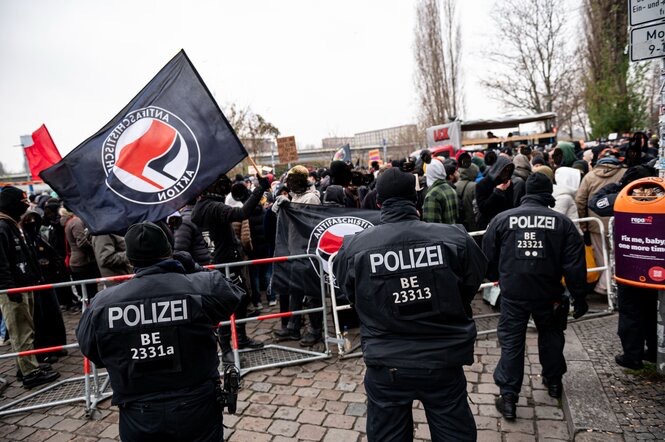
Plusieurs milliers de
personnes ont bloqué une manifestation d’extrême droite ce samedi 14
décembre à Berlin. 60 fascistes du nouveau groupe d’extrême droite «
Aktionsbündnis Berlin » ( Alliance d’Action Berlin) s’étaient rassemblés
sous la bannière: « Pour la loi et l’ordre : contre tout extrémisme de
gauche ».30 antifascistes
ont bloqué la rue en faisant un sit-in, la police est intervenue pour
dégager violemment le parcours des nazillons, ces derniers ont alors
repris leur marche accompagnées des forces de l’ordre. 2 500 à 3 000
contre-manifestants se sont rassemblés dans les rues adjacentes pour
faire front. Des pierres et des engins de pyrotechnie ont été lancés,
des voitures de police garées ont été détruites. Les policiers postés
derrière des barrières ont répondu avec du gaz poivré, des barricades
ont été construites à partir de poubelles et d’autres meubles de rue
pour couper lesitinéraires
alternatifs aux militants d’extrême droite. Au bout de la Gürtelstraße,
plus de 1 000 antifascistes ont fait blocus. La police accompagnée de
brigades canines s’étaient déployées et ont interpellées 120 personnes .
Pour les militants d’extrême droite, c’était la fin du parcours, ils
ont été conduits dans un espace vert et ont été tenus d’y rester. La
police a dissout la manifestation avant la fin du parcours prévu.
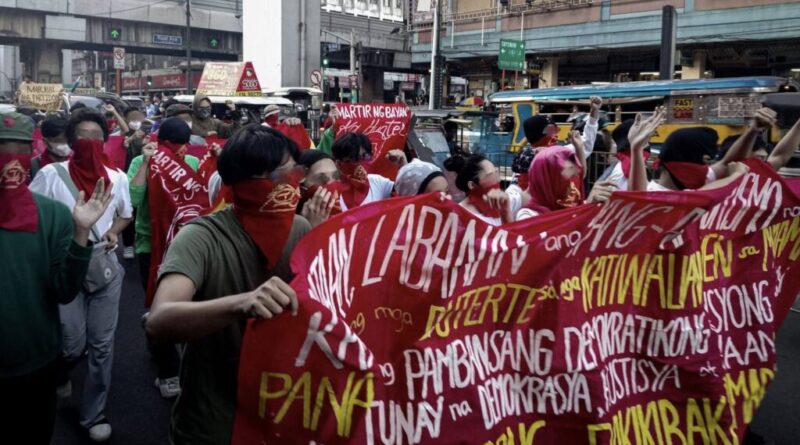
Kabataang Makabayan (KM) members marched on Recto Avenue in Manila on
December 16 to commemorate their 56th anniversary and the second year
of Comrade Jose Maria Sison’s martyrdom. Amid the crowded place, members
of the secret revolutionary organization boldly shouted their call for
the people to join the people’s war.
In the few minutes of program in the middle of the street, KM called
for the overthrow the Marcos and Duterte regimes amidst their
bureaucratic-capitalist conflicts. They condemned the regime for
spending millions of pesos on a terrorist and fascist campaign against
the youth and the people while neglecting social services.
In the past two weeks, KM chapters in various universities and
communities in Metro Manila, Baguio City, Quezon, Iloilo, and other
provinces launched the Oplan Pinta (graffiti)-Oplan Dikit (postering)
(OP-OD) to commemorate their anniversary on November 30. Meanwhile,
KM-Central Luzon published a special issue of Kalayaan for this
occasion.
Through their activities, KM emphasized their call to the youth to
join the New People’s Army (NPA) and thwart the US-Marcos regime’s
attempt to suppress and completely crush the revolutionary movement in
the country.
Today December 18, the trial against 62 activist who, as Antigeitonies
reports, dare to defend the right of assembly facing the reactionary
prohibitions that the government impose on the pretext of spreading
COVID took place. The activist are , since December 6, 2020, the day of
the demonstration on the murder of Alexandros Grigoropoulos, juridically
struggling for their impunity.
Antigeitonies
also denounce that, as is shown now, four years after the pandemic “it
is clear that the government used health protection as a pretext to ban
and suppress any attempt at popular mobilization. Gatherings throughout
Greece (Athens, Thessaloniki, Ioannina, Heraklion, etc.) at that time
were beaten up by the police and there were arrests, repression and
brutal violence. These arrests were a continuation of dozens of fines
but also of brutal repression and prohibitions for this anniversary at
the Polytechnicum in 2020 and the ban on strike gatherings on February
26. It was the state’s attempt to suppress political action under the
pretext of the pandemic.”
During these weeks, KKE (m-l) has been carrying out different actions, calling on support during the trial of the 62 activists.
On December 14, pickets were done in Gyzi and a call to come on December 18 to the trial to support activists.