
UN Experts Raise Alarm: JSW Steel Project in Odisha Under Global Human Rights Scrutiny
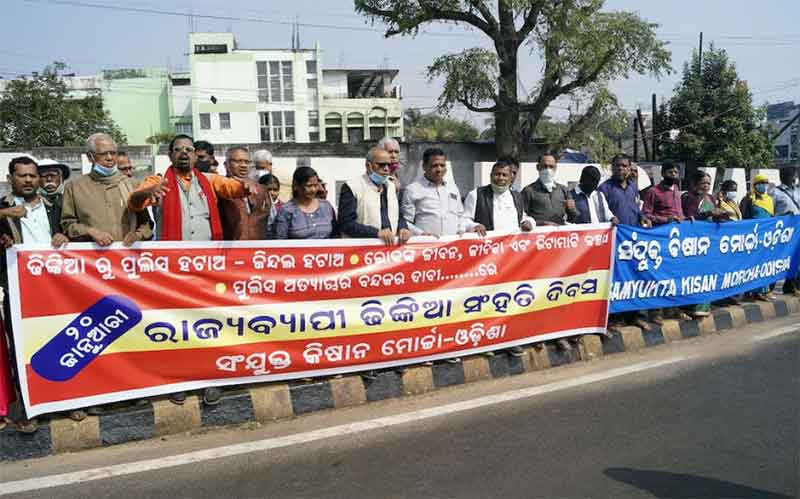
In a significant intervention that underscores the growing global concern over corporate-led resource extraction in India, a group of United Nations Special Rapporteurs has issued a strongly worded communication to JSW Steel Ltd., flagging serious allegations of human rights violations linked to its proposed integrated steel plant in Odisha’s Jagatsinghpur district.
The letter dated 17 November 2025, sent under the UN Human Rights Council’s Special Procedures, points to potential violations affecting over 30,000 people—primarily Adivasis, forest dwellers, Dalits, and fishing communities—whose lives and livelihoods are deeply intertwined with the region’s fragile coastal ecology. At stake are not only rights to food, water, health, and a clean environment, but also cultural survival and democratic participation.
Raising concerns over forced displacement, denial of forest rights, and the erosion of free, prior and informed consent, the UN experts warn that the project risks repeating the unresolved injustices that led to the withdrawal of POSCO from the same site in 2017.
Below is the full Letter
Mandates of
the Special Rapporteur on the right to food; the Working Group on the
issue of human rights and transnational corporations and other business
enterprises; the Special Rapporteur in the field of cultural rights; the
Special Rapporteur on the human right to a clean, healthy and
sustainable environment; the Special Rapporteur on the promotion and
protection of the right to freedom of opinion and expression; the
Special Rapporteur on the rights to freedom of peaceful assembly and of
association; the Special Rapporteur on the situation of human rights
defenders and the Working Group on the rights of peasants and other
people working in rural areas
Ref.: AL OTH 142/2025
(Please use this reference in your reply)
17 November 2025
Dear Mr. Jindal,
We have the honour to address you in our capacities as Special Rapporteur on the right to food; Working Group on the issue of human rights and transnational corporations and other business enterprises; Special Rapporteur in the field of cultural rights; Special Rapporteur on the human right to a clean, healthy and sustainable environment; Special Rapporteur on the promotion and protection of the right to freedom of opinion and expression; Special Rapporteur on the rights to freedom of peaceful assembly and of association; Special Rapporteur on the situation of human rights defenders and Working Group on the rights of peasants and other people working in rural areas, pursuant to Human Rights Council resolutions 58/10 , 53/3, 55/5, 55/2, 52/9, 59/4, 52/4 and 54/9.
We are independent human rights experts appointed and mandated by the United Nations Human Rights Council to report and advise on human rights issues from a thematic or country-specific perspective. We are part of the special procedures system of the United Nations, which has 59 thematic and country mandates on a broad range of human rights issues. We are sending this letter under the communications procedure of the Special Procedures of the United Nations Human Rights Council to seek clarification on information we have received. Special Procedures mechanisms can intervene directly with Governments and other stakeholders (including companies) on allegations of abuses of human rights that come within their mandates by means of letters, which include urgent appeals, allegation letters, and other communications. The intervention may relate to a human rights violation that has already occurred, is ongoing, or which has a high risk of occurring. The process involves sending a letter to the concerned actors identifying the facts of the allegation, applicable international human rights norms and standards, the concerns and questions of the mandate- holder(s), and a request for follow-up action. Communications may deal with individual cases, general patterns and trends of human rights violations, cases affecting a particular group or community, or the content of draft or existing legislation, policy or practice considered not to be fully compatible with international human rights standards.
In this connection, we would like to bring to the attention of your company information we have received regarding alleged violations of the rights of rural, forest- dwelling communities and Indigenous Peoples in Erasama Tehsil, Jagatsinghpur District, Odisha, India, whose lives and livelihoods are reportedly threatened by the proposed integrated steel plant project of a subsidiary of the company led by you, M/s JSW Utkal Steel Ltd. (JUSL). These allegations concern violations of the rights to food, water, health, a clean sustainable environment, and cultural rights.
The Special Procedures mandate holders have previously issued two communication letters (JAL IND 1/2018 and JAL 7/2013) when the project in question was being undertaken by the POSCO Group, raising allegations of forced evictions, displacement, and intimidation of local communities. While we acknowledge that JUSL became involved in the project only after POSCO’s withdrawal in 2017, the core concerns affecting affected communities remain unchanged. This letter therefore serves as a follow-up to those previous communication letters.
According to the information received:
The JUSL project involves the establishment of an integrated steel plant and captive coal power plant in Paradeep, Jagatsinghpur District, Odisha. The project was initially proposed in 2005 by the South Korean steelmaker POSCO, which had sought to build a steel plant in the same area. Following sustained and peaceful opposition from local communities, POSCO withdrew from the project in 2017.
Following the withdrawal, the Government of Odisha transferred the land to JSW Group for the development of a new steel industrial complex. The project reportedly requires approximately 3,700 acres of land, including 2,677.80 acres of forest land and 272.51 acres of non-forest land, as well as an additional 25 acres for a rehabilitation colony and 500 acres for a township for company officials.
The affected population includes Scheduled Tribes (STs) and Other Traditional Forest Dwellers (OTFDs) who hold customary rights over forest land under the Forest Rights Act (FRA), 2006. The OTFD population from surrounding panchayats is estimated at 18,000 individuals. Approximately 28 families from the Santhal tribal community also reside in the area.
In addition, Dalit communities including Keuta, Pana, Dama, Bauri, Kandara and Domb comprise approximately 12,000 individuals. The majority of residents across the three affected panchayats reportedly belong to Other Backward Classes (OBCs) and Dalit communities. In total, it is estimated that over 30,000 people are at risk of forced eviction, denial of forest rights, and loss of livelihoods as a result of the project. The directly impacted villages reportedly include Dhinkia Gram Panchayat (Dhinkia, Gobindapur, Mahala, Patana, Trilochanapur), Nuagaon Gram Panchayat (Nuagaon), and Gada Kujanga Gram Panchayat (Gada Kujanga, Nolia Sahi, Polanga, Bhunyapala, Bayanala Kandha). Indirectly affected villages include Bamadeipur and Balei Gram Panchayats. The project’s implementation would reportedly displace entire families dependent on agricultural and forest lands for survival.
The forests in the region provide crucial livelihood resources such as fuelwood, wild vegetables, housing materials, berries, tubers, medicinal plants, pandanus flowers, and green leafy vegetables. Families also cultivate fruits and vegetables on these lands.
Fisheries represent another cornerstone of the local economy. Fishing in the Bay of Bengal and the Jatadhar River sustains approximately 20,000-25,000 fishermen. Women from fishing communities supplement household incomes by processing and selling dried and salted fish (mina). Some families also engage in animal husbandry, contributing to both income generation and food security. Collectively, these activities form a diverse and sustainable livelihood base now directly threatened by the proposed industrial development.
According to a 2022 briefing by the Centre for Research on Energy and Clean Air (CREA), emissions from the proposed steel plant are expected to exceed the limits established by the World Health Organization (WHO). Pollutants such as particulate matter, nitrogen oxides, and sulphur dioxide could lead to premature deaths, asthma-related emergencies, and preterm births, placing local communities at high risk of respiratory, cardiovascular, and skin diseases.1
The project’s reliance on freshwater sources raises further concerns about potential water contamination from industrial waste, leading to gastrointestinal and related illnesses.
The project reportedly entails the construction of a cargo jetty, which would damage a fragile coastal ecosystem. The coastline is internationally recognized as the world’s largest mass nesting site for the endangered Olive Ridley turtle, protected under national and international law. Their population is already in decline. With only three global breeding grounds remaining for this species, the loss of this site would have irreversible ecological consequences.
Moreover, mangrove forests are reportedly being cleared, increasing the region’s vulnerability to cyclones. Sand dunes have been flattened, and deer deaths are reported almost weekly. The National Green Tribunal (NGT) has issued orders against irresponsible dredging in the Jatadhar River, but reports indicate that such dredging continues, adversely impacting agriculture, rice and betel cultivation, and fishing.
The project site lies in proximity to a severely polluted area.2 The establishment of another major polluting industry nearby would further exacerbate environmental stress and public health risks.
The Government of Odisha has reportedly presented the land transfer for the JUSL project as compliant with legal procedures and reflective of Free, Prior and Informed Consent (FPIC). However, multiple independent reports and community testimonies contest this claim.
During Gram Sabha (village-level) meetings convened to consider the project, a heavy police presence allegedly deterred villagers from participating. Supporters of the project were given disproportionate opportunities to speak, while villagers opposed to the project were intimidated or prevented from voicing concerns.
A public consultation held on 20 December 2019 in Gadakujang village allegedly lacked transparency, as key project documents including the Environmental Impact Assessment (EIA) and Social Impact Assessment (SIA) reports were not made available to the public. The Common EIA report was reportedly published only in January 2022, more than two years after the consultation.
In the case of Prafulla Samantara v. Union of India of 20 March 2023, the National Green Tribunal (NGT) concluded that any consent obtained could not be considered informed under domestic law due to these procedural deficiencies. Nevertheless, reports indicate that project activities have continued despite these findings.
As of today, JSW continues several construction operations within the Coastal Regulation Zone (legally designated area along India’s coastlines where certain activities are regulated or restricted to protect the coastal environment, including mangroves, sand dunes, wetlands, and marine ecosystems), including the digging of large bore wells for groundwater extraction, tree cutting, sand mining, and the destruction of sand dunes. Additionally, the company is expanding the laying of electric cables through Dhinkia, despite strong and ongoing opposition from local villagers.
While we do not wish to prejudge the accuracy of the above allegations, the information received raises serious concerns regarding the potential impacts of the ongoing construction of JUSL project, on the rural and forest-dwelling communities in the Odisha, with grave implications for their rights and livelihoods. These concerns include risks of acute food insecurity, harm to health, biodiversity loss, and the erosion of cultural practices, water resources, identities, and traditional ways of life. It is equally alarming that the only public consultation held in the village with heavy police protection, failed to make critical project documents available, including the EIA and SIA reports, effectively excluding the rural, forest-dwelling communities and Indigenous Peoples from meaningful participation and decision-making processes, violating their right to FPIC and to take part in decision-making processes that have an impact on the exercise of cultural rights.
We are concerned that the environmental destruction caused by the project represents a profound loss of resources essential for maintaining, expressing, developing, and transmitting the cultural identity and cultural, natural and spiritual heritage of affected communities. It reportedly undermines their ability to sustain their traditional and chosen ways of life.
We are further concerned that the construction of the proposed cargo jetty threatens fragile coastal ecosystems, including mangroves and sand dunes that protect nearby villages from cyclones, as well as the world’s largest mass nesting site of the endangered Olive Ridley turtles. The establishment of a major industrial complex in such proximity to an already stressed ecosystem could exacerbate existing environmental degradation, heighten public health risks, and further endanger the livelihoods and cultural survival of rural, forest-dwelling communities and Indigenous Peoples. This development risks displacing a way of life that has coexisted harmoniously with nature for generations, replacing it with an industrial model that neither sustains the environment nor respects the rights of affected populations.
Therefore, it is with regret that we note that your company may be failing to implement adequate human rights due diligence measures to guarantee that its actions do not lead to human rights abuses, as set out by the United Nations Guiding Principles on Business and Human Rights.
We are deeply concerned that the rural, forest-dwelling communities and Indigenous Peoples, whose ancestral lands have allegedly been taken without any prior consultation, face increasing risks because of the loss of their territories. Such loss undermines their rights to participate in economic, political, social and cultural development, including self-determination over their natural wealth and resources. We are equally troubled by the serious impact that these developments would have on their right to a clean, healthy and sustainable environment.
In connection with the above alleged facts and concerns, please refer to the Annex on Reference to international human rights law attached to this letter which cites international human rights instruments and standards relevant to these allegations.
As it is our responsibility, under the mandates provided to us by the Human Rights Council, to seek to clarify all cases brought to our attention, we would be grateful for your observations on the following matters:
- Please provide any additional information and/or comment(s) you may have on the above-mentioned allegations.
- Please provide information on what human rights due diligence policies and processes to identify, prevent, mitigate and remedy adverse human rights impacts of the activities of your company, in particular, with respect to the human rights of the rural, forest-dwelling communities and Indigenous Peoples and of other rights holders affected by the land conflicts and evictions, in line with the United Nations Guiding Principles on Business and Human Rights.
- Please provide information on the measures taken by your company to ensure meaningful and good faith consultations with the affected communities and defenders of their rights to assess the impacts of the land acquisition by your company, with due consideration for their rights. Furthermore, where the land acquisition affects rural, forest- dwelling communities and Indigenous Peoples, please inform on the measures taken to ensure the respect of their right to the FPIC.
- Please provide information on the measures taken to ensure that adequate remedies have or will be provided to all affected rights-holders in line with the UN Guiding Principles on Business and Human Rights and in accordance with international human rights standards.
- Please provide information on the steps undertaken by your company to establish, implement and/or enforce an operational-level grievance mechanism, in line with the UN Guiding Principles on Business and Human Rights. Please also inform on possible actions to ensure that, if in place, such grievance mechanism is truly accessible to affected rural, forest-dwelling communities and Indigenous Peoples. Please also indicate the steps that your company has taken, or is considering taking, to cooperate with legitimate remedial mechanisms to address adverse human rights and environmental impacts that may have caused, contributed to, or be linked with.
- Please indicate what measures your company has taken to ensure that human rights defenders and civil society can freely exercise their right to freedom of expression and conduct their peaceful activities and advocacy without fear of threats, acts of intimidation or harassment of any sort, including when they expose abuses and voice concerns about your company’s activities.
- Please describe any other measures that your company has taken, or plans to take, to prevent the recurrence of such situations in the future.
This communication and any response received from you will be made public via the communications reporting website within 60 days. They will also subsequently be made available in the usual report to be presented to the Human Rights Council.
While awaiting a reply, we urge that all necessary interim measures be taken to halt the alleged violations and prevent their re-occurrence and in the event that the investigations support or suggest the allegations to be correct, to ensure the accountability of any person(s) responsible for the alleged violations.
Please be informed that a letter on this subject matter has also been sent to the Government of the Republic of India.
Please accept, Dear Mr. Jindal, the assurances of our highest consideration.
Michael Fakhri: Special Rapporteur on the right to food
Pichamon Yeophantong: Chair-Rapporteur of the Working Group on the issue of human rights and transnational corporations and other business enterprises
Alexandra Xanthaki: Special Rapporteur in the field of cultural rights
Astrid Puentes Riaño: Special Rapporteur on the human right to a clean, healthy and sustainable environment
Irene Khan: Special Rapporteur on the promotion and protection of the right to freedom of opinion and expression
Gina Romero: Special Rapporteur on the rights to freedom of peaceful assembly and of association
Mary Lawlor: Special Rapporteur on the situation of human rights defenders
Carlos Arturo Duarte Torres: Chair-Rapporteur of the Working Group on the rights of peasants and other people working in rural areas
Notes
1 Centre for Research on Energy and Clean Air (CREA). (2022). MYTH-BUSTING: Is Fossil Gas Actually Cleaner? CREA 2022 Assessment.
2 State Pollution Control Board, Odisha Bhubaneswar July 2020, Action Plan for Abatement of Pollution In Industrial Areas of Paradeep
Annex
Reference to international human rights law
The Universal Declaration of Human Rights (UDHR) recognizes that everyone has the right to a standard of living adequate for the health and well-being of himself and of his family, including food, clothing, housing and medical care and necessary social services, and the right to security in the event of unemployment, sickness, disability, widowhood, old age or other lack of livelihood in circumstances beyond his control. Although not legally binding, the provisions under the UDHR enjoy undisputed international recognition as to be considered part of customary international law.
India is signatory to the International Covenant on Economic, Social and Cultural Rights (ICESCR), demonstrating its commitment to upholding the rights articulated in this Covenant. Article 11(1) of the Covenant explicitly recognizes “the right of everyone to an adequate standard of living for himself and his family, including adequate food, clothing, and housing, and to the continuous improvement of living conditions.” To ensure this right is realized, article 2(2) of the Covenant obliges states to guarantee that the rights enunciated are exercised without discrimination of any kind, including on the basis of race, colour, sex, or socioeconomic status. Furthermore, article 12 of the ICESCR provides for the right of everyone to the enjoyment of the highest attainable standard of physical and mental health, which is defined as “an inclusive right extending not only to timely and appropriate health care but also to the underlying determinants of health, such as access to safe and potable water and adequate sanitation, an adequate supply of safe food, nutrition and housing, healthy occupational and environmental conditions, and access to health-related education and information” (general comment No. 14, CESCR, para. 11). Article 15 of the ICESCR provides for obligations concerning the right to take part in cultural life, which includes the right to the right to take part in the development of the community to which a person belongs, and in the definition, elaboration and implementation of policies and decisions that have an impact on the exercise of a person’s cultural rights, as well as obligations from States to respect and protect cultural heritage in all its forms.
In connection with the above alleged facts and concerns, we would like to highlight the UN Guiding Principles on Business and Human Rights, which were unanimously endorsed in 2011 by the Human Rights Council in its resolution (A/HRC/RES/17/31) after years of consultation with governments, civil society, human rights defenders and the business community. The guiding principles have been established as the authoritative global standard for all States and businesses to prevent and address business-related adverse human rights impacts.
These guiding principles are based on the recognition of: a) “The existing obligations of States to respect, protect and fulfil human rights and fundamental freedoms. b) The role of business enterprises as specialized bodies or corporations performing specialized functions, which must comply with all applicable laws and respect human rights. c) The need for rights and obligations to be matched by appropriate and effective remedies when they are violated”.
The guiding principles also make clear that companies have an independent responsibility to respect human rights. Principles 11-24 and 29-31 provide guidance to
companies on how to meet their responsibility to respect human rights and to provide remedies where they have caused or contributed to adverse impacts. The guiding principles have identified two main components of the corporate responsibility to respect human rights, which require “business enterprises to: a) Prevent their own activities from causing or contributing to adverse human rights impacts and address those impacts when they occur. b) Seek to prevent or mitigate adverse human rights impacts directly related to operations, products or services provided through their business relationships, even where they have not contributed to those impacts”. (guiding principle No. 13).
The commentary to guiding principle 13 notes that companies can be affected by adverse human rights impacts, either through their own activities or as a result of their business relationships with other parties (…) The ‘activities’ of business enterprises are understood to include both actions and omissions; and their ‘business relationships’ include relationships with business partners, entities in their value chain and any other non-State or State entities directly linked to their business operations, products or services.
To meet their responsibility to respect human rights, companies should have in place policies and procedures appropriate to their size and circumstances: a) A policy commitment to uphold their responsibility to respect human rights. b) A human rights due diligence process to identify, prevent, mitigate and account for how they address their human rights impact. c) Processes to redress any adverse human rights impacts they have caused or contributed to (guiding principle No. 15). According to guiding principles 16-21, human rights due diligence involves: a) Identifying and assessing actual or potential adverse human rights impacts that the enterprise has caused or contributed to through its activities, or that are directly related to the operations, products or services provided by its business relationships. b) Integrate the results of impact assessments into relevant business functions and processes and take appropriate action in accordance with their involvement in the impact. c) Monitor the effectiveness of the measures and processes adopted to address these adverse human rights impacts in order to know whether they are working. d) Communicate how adverse effects are addressed and demonstrate to stakeholders – particularly those affected – that appropriate policies and processes are in place to implement respect for human rights in practice.
This process of identifying and assessing actual or potential adverse human rights impacts should include substantive consultation with potentially affected groups and other stakeholders (guiding principle No. 18).
Where an enterprise causes or is likely to cause an adverse human rights impact, it should take the necessary steps to end or prevent that impact. “The establishment of operational-level grievance mechanisms for those potentially affected by corporate activities can be an effective means of redress provided they meet certain requirements listed in principle 31 (guiding principle No. 22). Furthermore, business enterprises should remedy any actual adverse impact that they cause or to which they contribute. Remedies can take a variety of forms and may include apologies, restitution, rehabilitation, financial or non-financial compensation and punitive sanctions (whether criminal or administrative, such as fines), as well as the prevention of harm through, for example, injunctions or guarantees of non-repetition. Procedures for the provision of
remedy should be impartial, protected from corruption and free from political and other attempts to influence the outcome (commentary to guiding principle No. 25).
In December 2018, the General Assembly adopted the United Nations Declaration on the Rights of Peasants (UNDROP). States are required to regulate business enterprises according to Article 2(5), and to ensure private companies act in compliance with the rights contained in UNDROP.
The full texts of the above human rights instruments and standards are available at www.ohchr.org or can be made available upon request.

No comments:
Post a Comment